
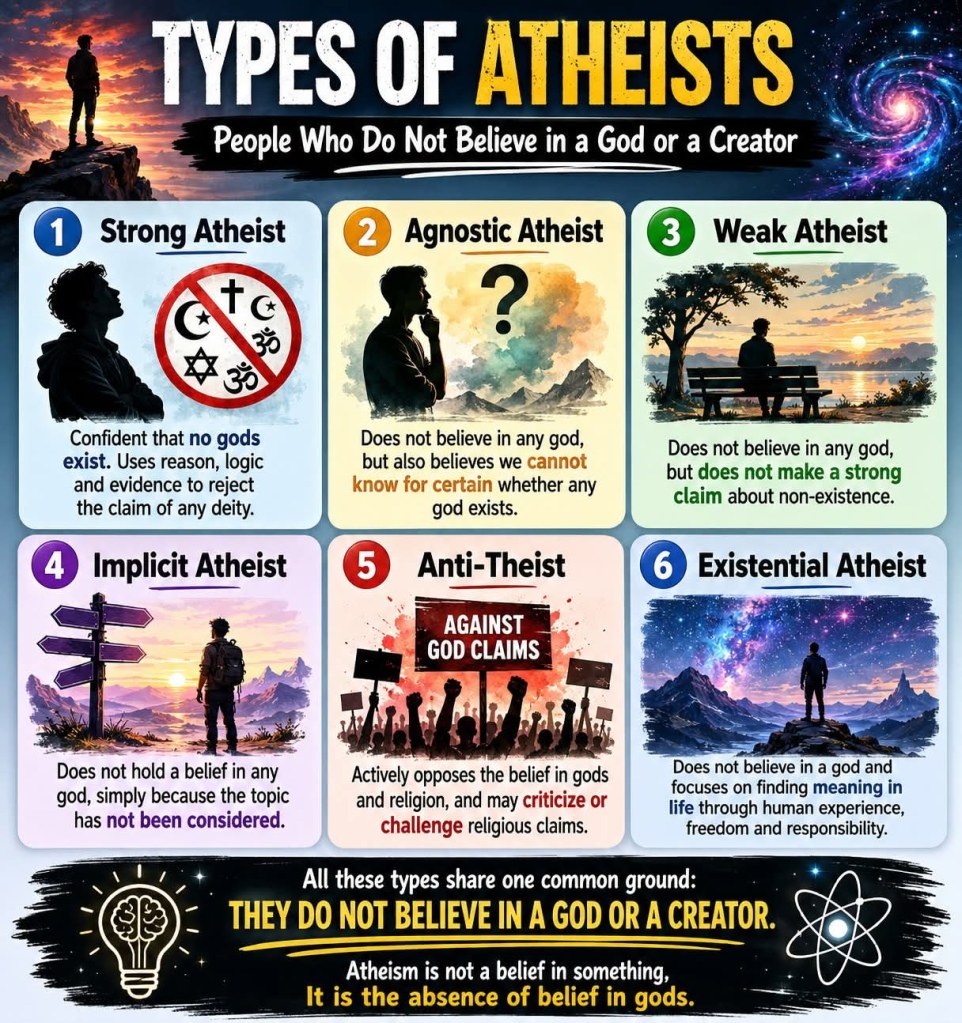
Many people use the word “atheist” as if it describes a single, unified worldview. In reality, atheists are not all the same.
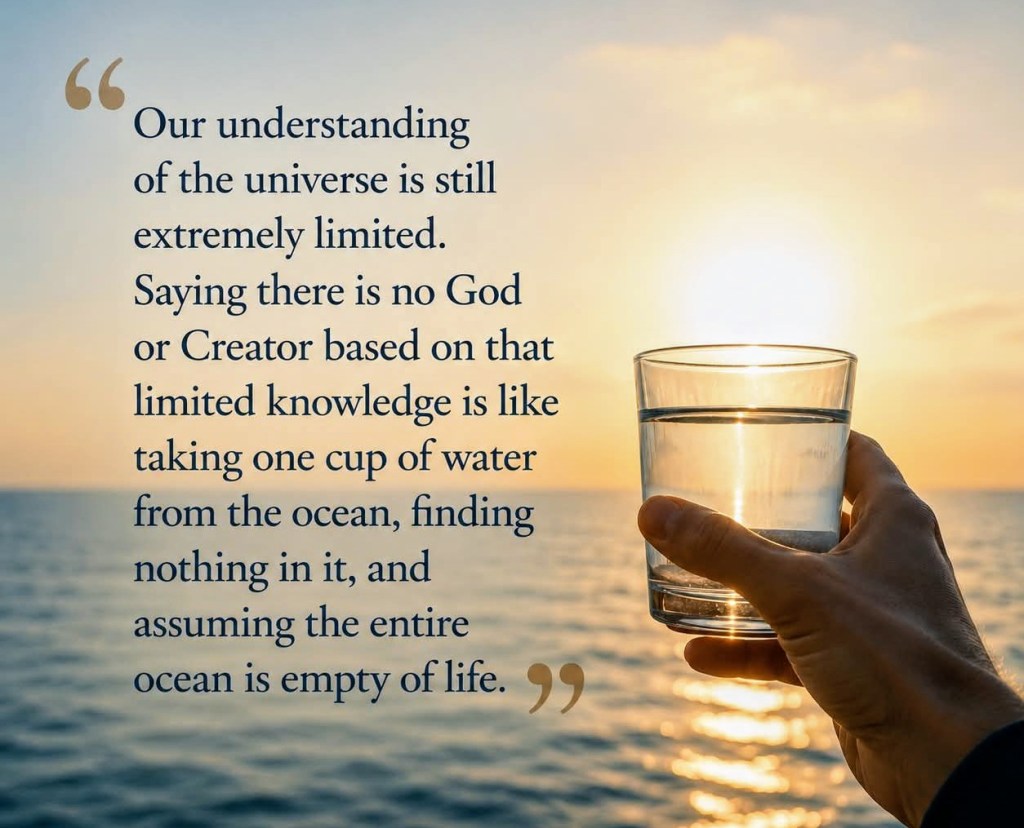
While they share one common characteristic—a lack of belief in God or a creator—the reasons behind that position can vary significantly.
1. Strong (Positive) Atheist
A strong atheist goes beyond simply lacking belief in God. They actively believe that no God exists. In other words, they make a positive claim about reality and argue that there is sufficient reason or evidence to conclude that deities do not exist.
2. Weak (Negative) Atheist
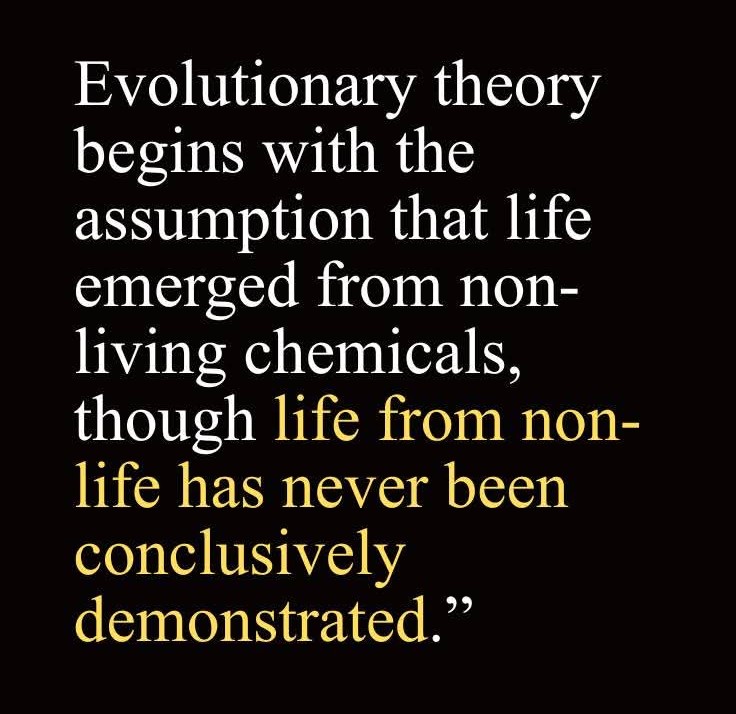
A weak atheist does not believe in God but does not claim with certainty that no God exists. Their position is often based on a lack of convincing evidence rather than a definite conclusion. This is one of the most common forms of atheism.
3. Agnostic Atheist
An agnostic atheist does not believe in God but also believes that the existence or non-existence of God cannot currently be known with certainty. They combine non-belief with intellectual uncertainty.
4. Apatheist
An apatheist is largely indifferent to the question of God’s existence. Rather than arguing for or against God, they simply do not consider the issue important in their daily lives.
5. Implicit Atheist
An implicit atheist lacks belief in God without having consciously adopted atheism as a philosophical position. This category can include people who have never seriously considered religious claims or were never exposed to them.
6. Anti-Theist
An anti-theist not only lacks belief in God but also actively opposes religion or certain religious beliefs. Their criticism is often directed at what they perceive as harmful religious doctrines, institutions, or practices.
One Important Thing They All Share
Despite their differences, all of these categories share a common characteristic: they do not currently hold a belief in a God or creator. However, their reasons, certainty levels, and attitudes toward religion can differ dramatically.
Understanding these distinctions can help improve discussions between people of different worldviews. Too often, conversations become unproductive because people assume that everyone who identifies as an atheist thinks exactly the same way.
The deeper questions remain fascinating for believers, atheists, agnostics, and everyone in between:
- Why does the universe exist?
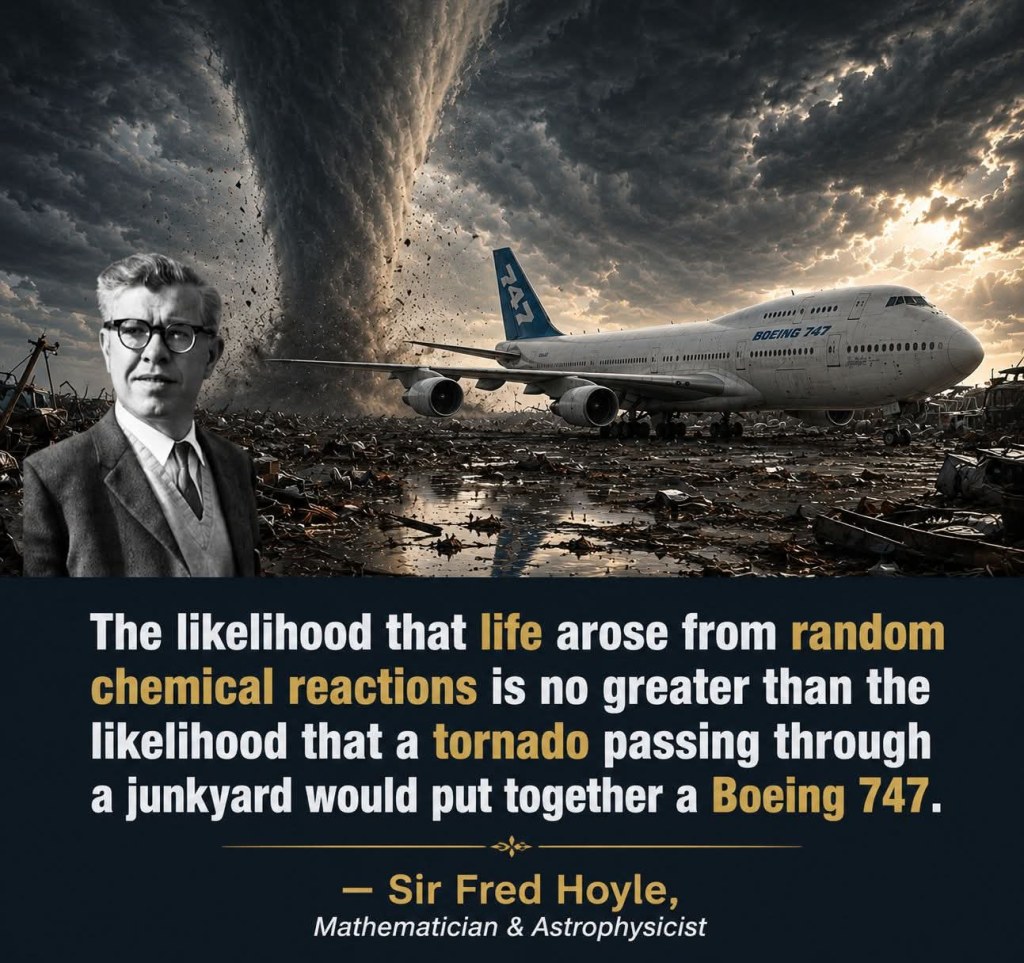
- What is the origin of life?
- Why do the laws of nature appear so precise?
- What is consciousness?
- Is there a purpose behind reality?
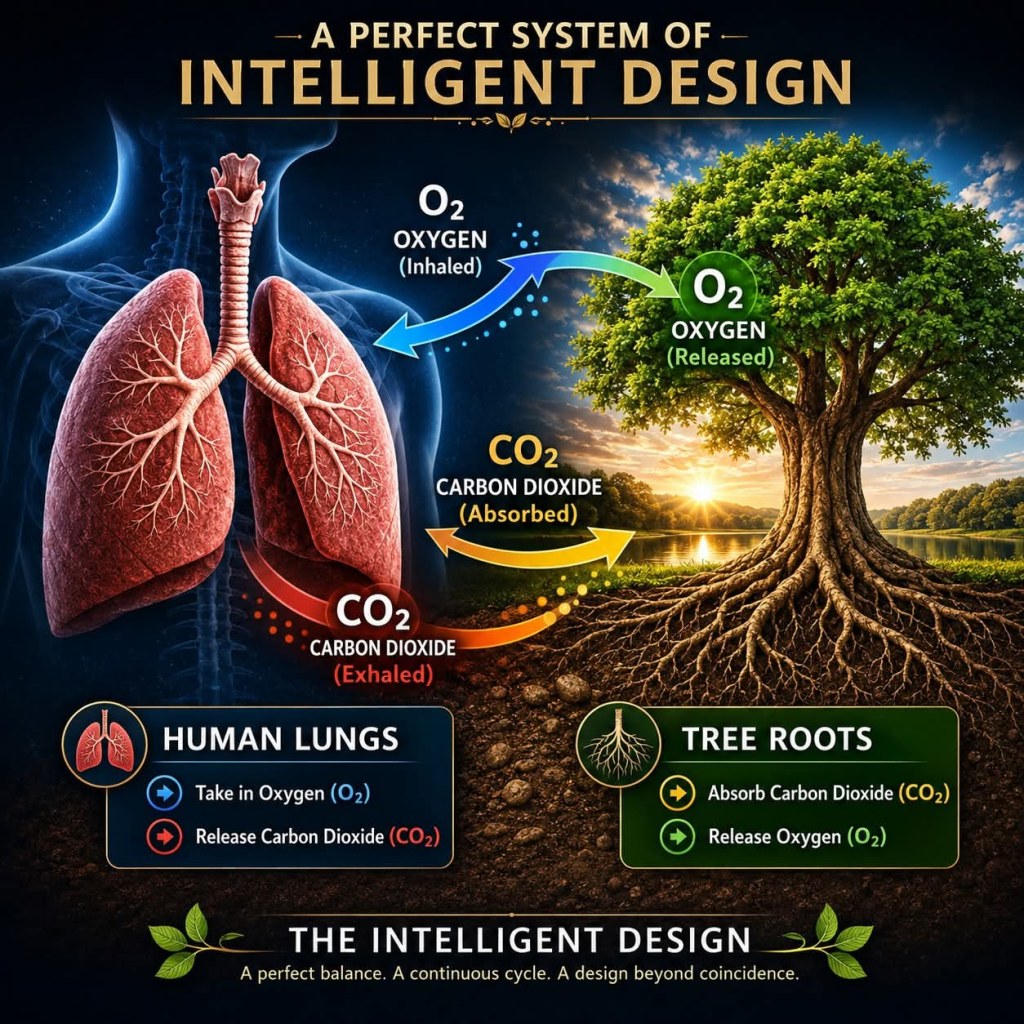
People arrive at different answers to these questions, but exploring them respectfully can lead to greater understanding, regardless of where we stand.
Which category do you think best describes most atheists today, and why?
To receive free email notification, when we post new articles like this, sign up below. Clever Journeys does & will not sell or share your information with anyone.
In God We Trust

______________
Please Support This Stellar American Owned Business
Get Your Natural Vitamins A & D from the Sea!

Green Pasture Here














☆☆☆☆☆


☆☆☆☆☆



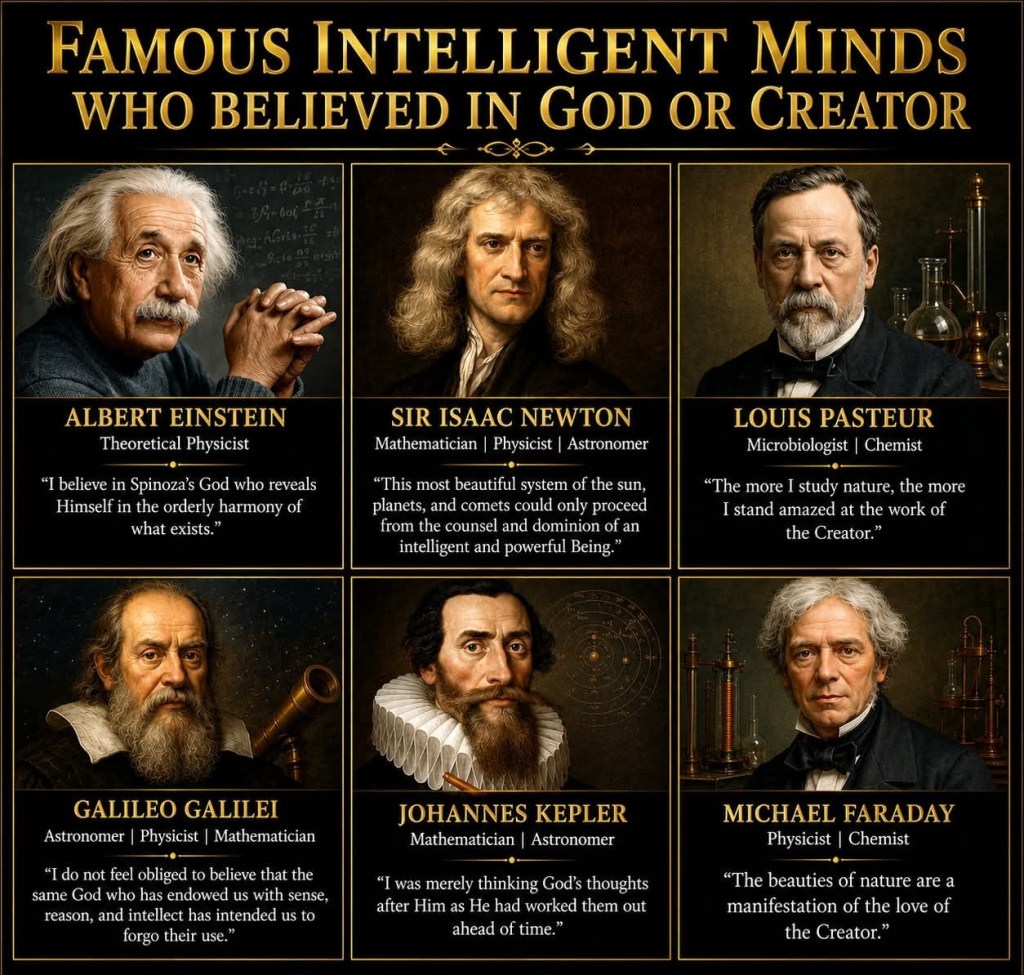
I have only known a few atheists, but it struck me that they were all rather afraid of the Almighty, and felt great relief at the idea that He isn’t. Some are eager to argue over it, and some want to be left alone. It, judging from these fantastic quotes you have up here from believers, seems that these are willing to expend a lot of energy in finding out God’s works, and are excited to do so, whereas atheists tend to flatline into laziness. They lack oxygen; they don’t stimulate life.
LikeLiked by 2 people