
Nicodemus appears three times in the Gospel of John. Most Christians have read all three appearances without ever noticing that they tell a single story. A story about a man who began in darkness and ended in daylight.
And what happened between those two moments is one of the most quietly devastating portraits of transformation in the entire New Testament.
The First Appearance
The first appearance is in John 3.
“Now there was a man of the Pharisees named Nicodemus, a ruler of the Jews. This man came to Jesus by night.”
By night.
Two words that John does not include by accident.
Nicodemus was not visiting at night because of scheduling. He was not dropping by after a long day of teaching. He was coming in the dark because he did not want to be seen.
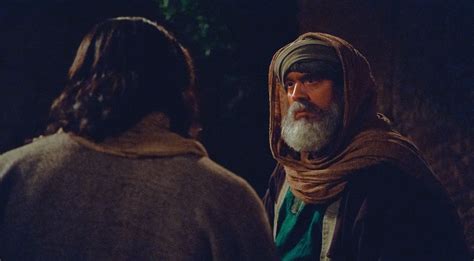
He was a Pharisee. A member of the Sanhedrin — the seventy-one men who held religious and legal authority over all of Israel. He was one of the most powerful and respected figures in Jewish society.
And he was drawn to Jesus in a way he could not explain and could not afford to be seen expressing.
So he came at night.
He opened with a statement that was almost a confession.
“Rabbi, we know that you are a teacher come from God, for no one can do these signs that you do unless God is with him.”
He knew. He had seen. He could not deny it. But he could not say it in public.
Jesus did not ease him into the conversation. He went directly to the thing Nicodemus had not asked about.
“Truly, truly, I say to you, unless one is born again he cannot see the kingdom of God.”
Nicodemus pushed back.
“How can a man be born when he is old? Can he enter a second time into his mother’s womb and be born?”
And Jesus said something that should have stopped him cold.
“Are you the teacher of Israel and yet you do not understand these things?”
Not a teacher of Israel. The teacher. The definite article in the Greek. The most distinguished teacher of his generation.
And he did not understand.
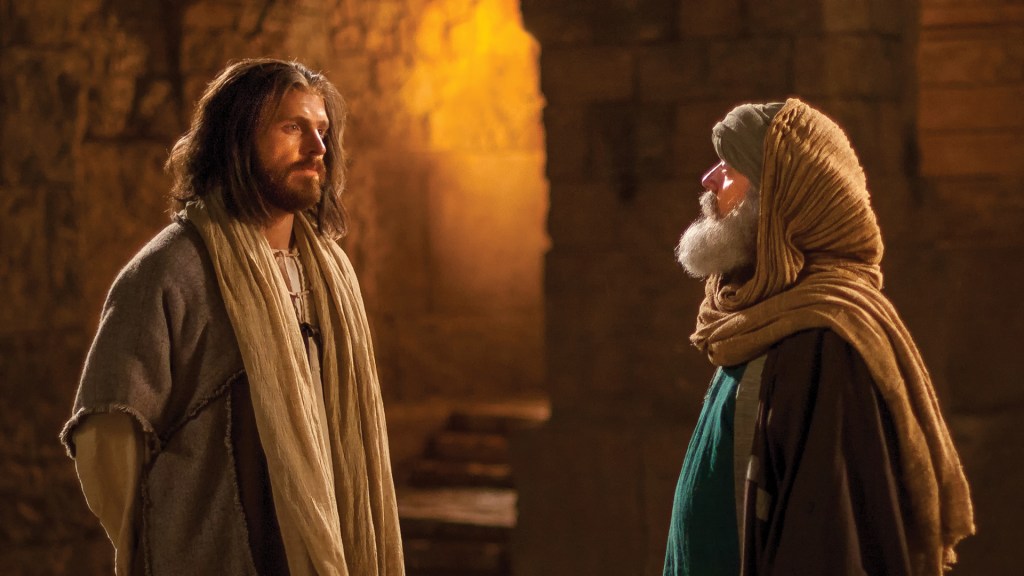
Jesus was pointing him to something in the Hebrew Scriptures — to Ezekiel 36, where God had promised to give His people a new heart, to put His Spirit within them, to cause them to walk in His ways. A new birth. Written centuries before. And Nicodemus — who had spent his entire life in the Scriptures — had not seen it.
He came in darkness looking for answers.
He left, it seems, with more questions than he arrived with.
The Second Appearance
The second appearance is in John 7.
The chief priests and Pharisees have sent officers to arrest Jesus. The officers returned empty-handed.
“No one ever spoke like this man,” they said.
The Pharisees turned on them.
“Have you also been deceived? Have any of the authorities or the Pharisees believed in him?”
And then a voice came from inside the council.
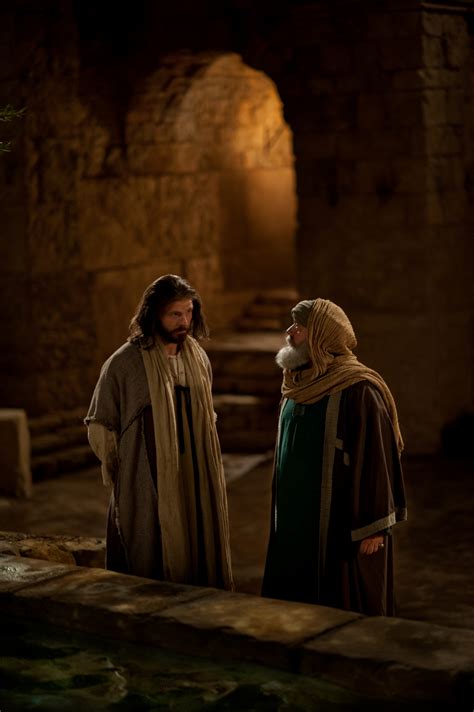
“Does our law judge a man without first giving him a hearing and learning what he does?”
It was Nicodemus.
Not a declaration of faith. Not a public confession. But a procedural defense — the kind of argument a careful lawyer makes when he cannot yet say what he actually believes.
The council turned on him immediately.
“Are you from Galilee too? Search and see that no prophet arises from Galilee.”
The most famous declaration of the love of God in all of Scripture was spoken into the darkness, to a man who was not yet ready to step into the light.
And by John 19, he had stepped into it.
They dismissed him.
And Nicodemus said nothing more. He had spoken. It had cost him something. And he had retreated back into the safety of silence. He was still not fully in the light.
But he had taken a step toward it.
The Third Appearance
The third appearance is in John 19.
Jesus is dead.
The disciples have scattered. Peter has denied Him three times. The men who had walked with Jesus for three years are hiding behind locked doors. And Nicodemus appears.
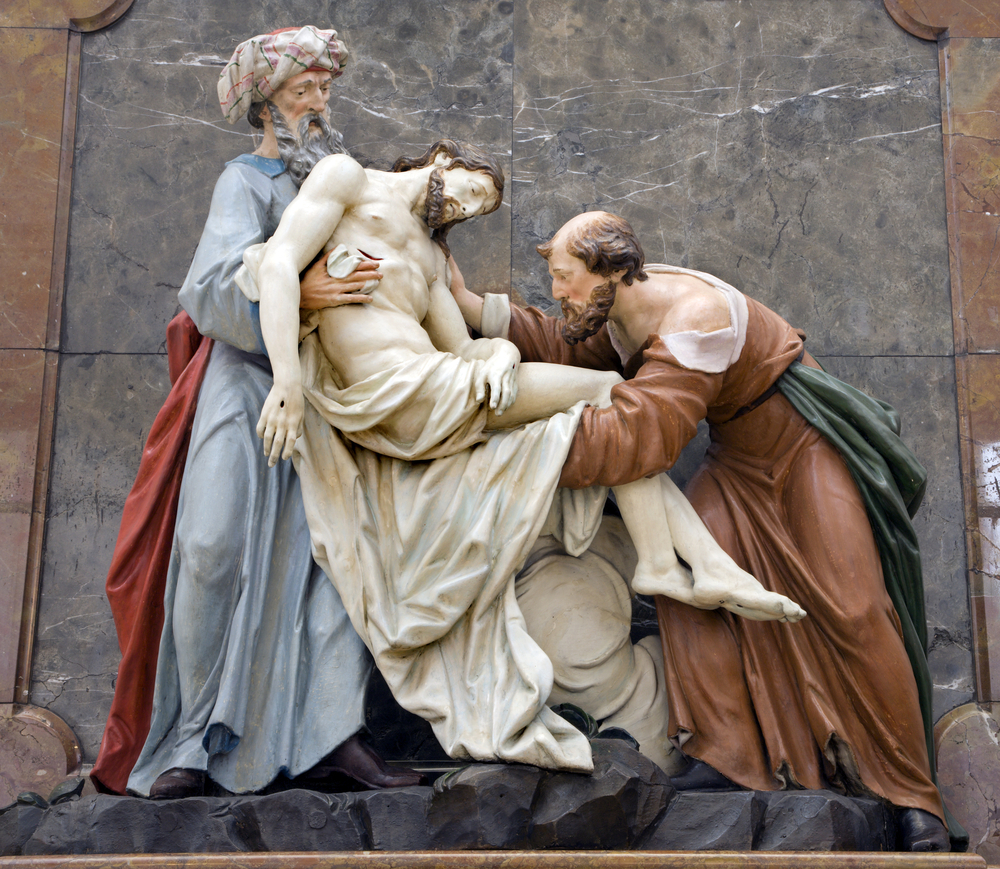
“Nicodemus also, who earlier had come to Jesus by night, came bringing a mixture of myrrh and aloes, about seventy-five pounds in weight.”
John makes sure we remember. The man who came by night is no longer coming by night.
He is standing at the cross in broad daylight, with seventy-five pounds of burial spices, publicly identifying himself with a man the Sanhedrin had just condemned to death.
In the hours when every disciple was hiding, the man who had come in secret was standing in the open. He had risked nothing on the night he first came to Jesus. He was risking everything now.
Three appearances. One arc.
Darkness. Shadows. Daylight.
Secret visit. Cautious defense. Public declaration at the cost of everything.
The man who could not be seen with Jesus in John 3 was the man standing beside His body in John 19 — holding spices that would have cost a small fortune, announcing to everyone who saw him exactly whose side he was on.
His Only Begotten Son
John tells us something about that night in John 3 that most readers have never noticed.
After Jesus speaks to Nicodemus about being born again, the conversation ends. And then John records words that most Christians have heard hundreds of times — possibly the most quoted verse in the entire Bible.
“For God so loved the world, that he gave his only Son, that whoever believes in him should not perish but have eternal life.” –John 3:16.
Most Christians do not know who Jesus was speaking to when He said those words.
He was speaking to Nicodemus. The man in the dark. The man who came in secret. The man who was afraid to be seen.
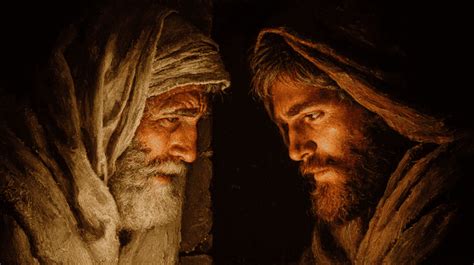
Not because he was brave.
Because something had happened to him between that first night and that last afternoon that the Gospel of John does not fully explain — because it does not need to.
The evidence is in the spices. Seventy-five pounds of myrrh and aloes. The quantity used for a king. More than any ordinary burial required. A public, expensive, irreversible declaration from a man who had spent years calculating the cost of being seen.
He was done calculating.
Most Christians have read all three appearances of Nicodemus and never seen the arc. Not because it is hidden.
John placed those three scenes in deliberate sequence — darkness, shadows, light — to tell the story of what happens to a person who encounters Jesus and cannot walk away unchanged, even when the change is slow, even when it happens in stages, even when the full declaration does not come until after the cross.
Nicodemus did not become a follower in a moment of dramatic public conversion. He became one the way most people actually do.
Slowly. Quietly. At great personal cost. One step at a time, moving from the safety of darkness toward the exposure of daylight.
Because context changes everything. Every single time. Did you know that the seventy-five pounds of burial spices Nicodemus brought was the quantity typically reserved for royalty?
Ordinary burials used much less — and that the extravagance of what Nicodemus brought was a public statement about who he believed Jesus to be?
This was about a man who had come in secret to avoid being associated with Jesus who ended by burying Him like a king?
John’s Gospel is structured around a repeated movement from darkness to light — beginning with the prologue’s declaration that “the light shines in the darkness.”
Nicodemus is one of the clearest embodiments of that movement in the entire book. John placed him there deliberately as a portrait of the journey every person makes.
The question Nicodemus asked on that first night — “How can a man be born when he is old?” — is a question John expects any reader to answer by the end of the Gospel.
By John 19, standing at the cross with seventy-five pounds of spices, Nicodemus had answered his own question without ever using words. It is all there…in the Holy Bible.
In God We Trust
Thank you for reading CleverJourneys.




IN GOD WE TRUST

Thanks for supporting independent true journalism with a small tip. Dodie & Jack



This is really good. And something else – the Hebrew daily cycle goes from darkness to light; i.e., each day begins when the sun goes down. ‘The evening and the morning were the first day…’
LikeLiked by 3 people
This is excellent!🙌🏽
LikeLiked by 3 people
Absolutely beautiful. I have seen this sequence, but never better depicted.
Nicodemus’ gift of myhrr and aloes was like Mary of Bethany’s oil of spikenard; worth a fortune, all poured onto Jesus.
LikeLiked by 1 person