
Have you ever heard of Gary Underhill? Do you recognize the name Earl Cabell?
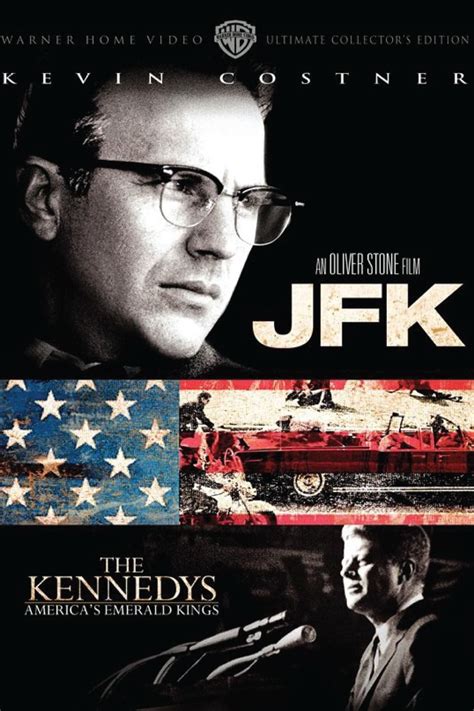
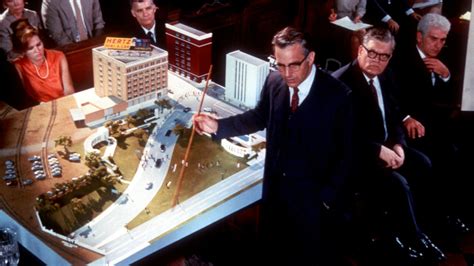
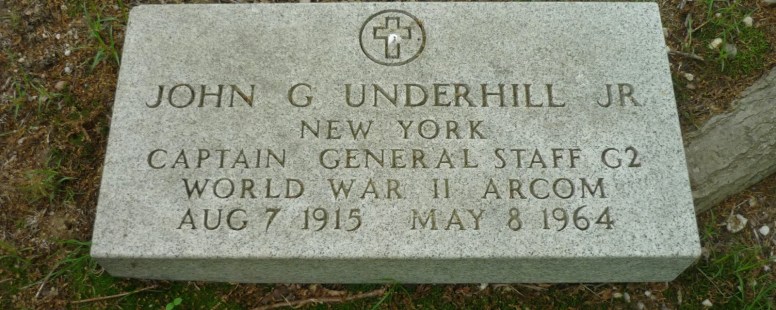
In Oliver Stone’s 1991 movie JFK, Kevin Costner played the role of Jim Garrison, the District Attorney from Louisiana who conducted an investigation into the 1963 assassination of President John F. Kennedy. Among the witnesses Garrison sought out was John Garrett Underhill, Jr. known as “Gary.”

Most Americans haven’t heard or know much about Underhill, yet his story provides a compelling window into the events surrounding Kennedy’s assassination on November 22, 1963.
He served as a World War II military intelligence officer. Later, he worked for the CIA on classified special assignments. This experience gave him insider knowledge of the intelligence community’s operations.
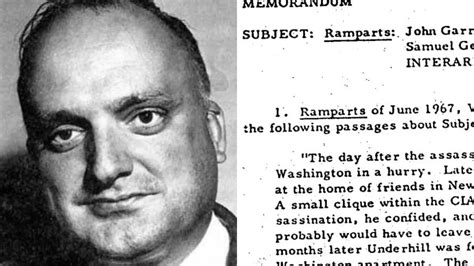
He also worked as a photojournalist for Life magazine between 1938 and 1942.
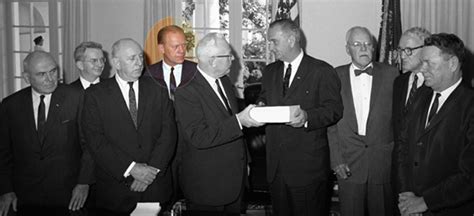
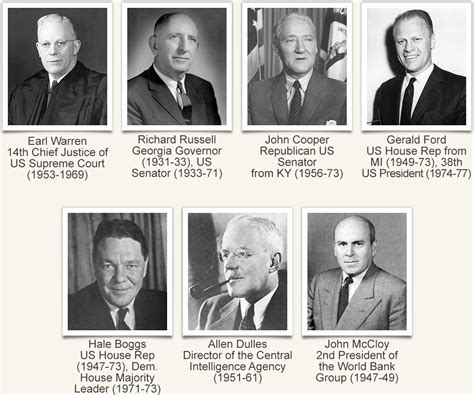
While serving as a leading member of the Warren Commission, future U.S. President Gerald Ford also acted as an inside informant for J. Edgar Hoover and the FBI.
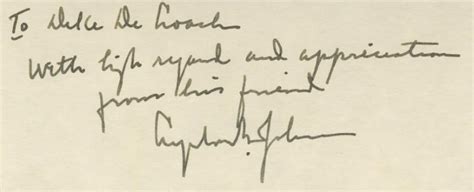
Several months after Ford’s death in 2006, a cache of declassified documents revealed that he, then a U.S. congressman, had approached FBI Assistant Director Cartha DeLoach and offered to confidentially keep the Bureau informed on the Commission’s deliberations.

Among Ford’s many leaks was the revelation that two unnamed members of the Commission—most likely Richard Russell and Hale Boggs—remained unconvinced by FBI evidence that the kill shot had been fired from the Texas School Book Depository.
Shortly after the Warren Commission officially determined in 1964 that Lee Harvey Oswald had acted alone in assassinating President Kennedy, Underhill traveled from Washington D.C. to New Jersey. He went there to confide in friends.
What he revealed was explosive. According to 2025 unredacted reports by the Trump Administration, Underhill attributed Kennedy’s murder to “a CIA clique which was carrying on a lucrative racket in gunrunning, narcotics, and other contraband and manipulating political intrigue to serve its own ends.”
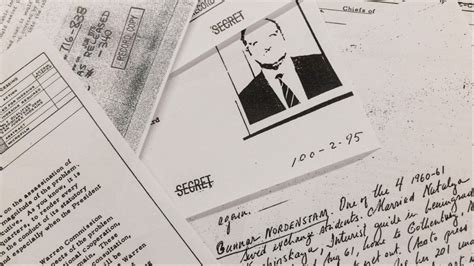
One notable difference between what Trump’s administration information differs from Joe Biden’s 2021 release is that it includes more information on Samuel George Cummings. He operated the weapons company Interarms. Underhill believed this company to be associated with the assassination.
This memo states that the CIA owned Interarms before Cummings officially bought it in 1958.
He claimed Kennedy had “gotten wind that something was going on and was killed before he could blow the whistle on it.“
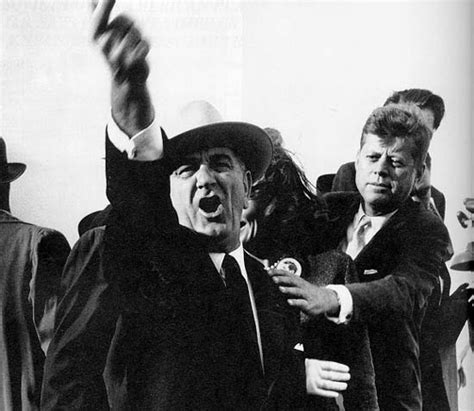
Six months later, Underhill was found dead. The official ruling? Suicide—by a gunshot wound to the left side of his head. The troubling detail that investigators seemingly overlooked: Underhill was right-handed.
A CIA memo found that there was interest by the New York Office in “using subject as a contact for foreign intelligence.”
He was advised that contact should be developed with caution.
A UP article written by Underhill for Esquire stated that the U.S. Army was shockingly weak and that Underhill served in military intelligence in World War II and Korea.
He had contacts with a man named Herman Axelbank who was trying to sell photographs of Soviet military subjects, the memo noted.
Cummings was described in the memo as an alleged member of the CIA who traveled abroad extensively buying foreign weapons.
The arms were being bought for the CIA and “intended for resistance elements behind the Iron Curtain,” it accuses, saying that Cummings was the principal agent of a CIA owned companies.
It was noted that Underhill, Cummings, and Interarmco had not appeared to date in any press or classified reports of the Garrison investigation in New Orleans into the Kennedy assassination “with the tenuous exception of the Ramparts article cited at the outset of this memorandum.”
This article is partially based on a transcript of reporting by Carl Higbie of NewsMax.
“People have come forward with information that incriminates big people or organizations that end up dead,” notes the transcript. The pattern is disturbingly familiar to those who follow such cases.
The Route Change: A Fatal Detour
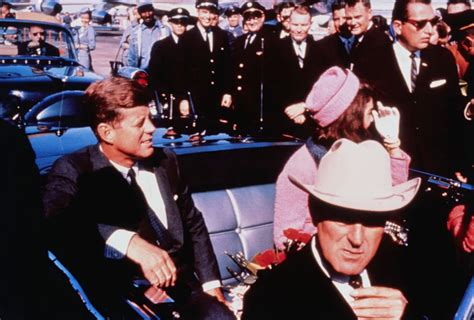
One of the most suspicious circumstances surrounding Kennedy’s assassination was the last-minute change to his motorcade route in Dallas. Who authorized this change? The mayor of Dallas, Earl Cabell.
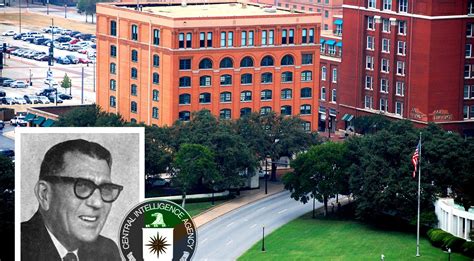
What makes this detail particularly troubling is that Cabell was, at the time of the shooting, a CIA asset. Even more damning, his brother Charles had been a senior CIA member who had been forced to retire from the agency the year before—by none other than President Kennedy himself.
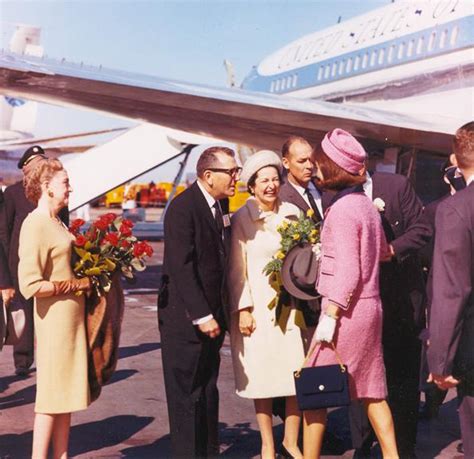
This connection provides crucial context for understanding the tensions between Kennedy and the intelligence community that may have contributed to his death.
Kennedy vs. The Intelligence Community: A Fatal Rivalry
The Bay of Pigs and Kennedy’s Vow
The relationship between President Kennedy and the CIA had deteriorated significantly following the Bay of Pigs disaster in April 1961.
This failed invasion attempt of Cuba, which relied on faulty intelligence, left assets stranded in a swamp. Kennedy’s decision to deny air support ultimately doomed the operation.
In the aftermath, Kennedy famously declared he would “splinter the CIA into a thousand pieces and scatter it to the winds.”
These weren’t empty words—Kennedy took concrete action by disbanding the International Cooperation Administration (ICA), an agency that had served as cover for various intelligence operations.
USAID: Not What It Seemed
In place of the ICA, Kennedy established USAID. While publicly presented as a humanitarian organization, its creation was actually part of Kennedy’s strategy to bring covert operations under greater accountability through the State Department.
This restructuring represented a direct challenge to the intelligence community’s autonomy and was perceived as a threat by entrenched interests within these agencies.
The Warren Commission: Investigation or Cover-Up?
The Convenient Appointment
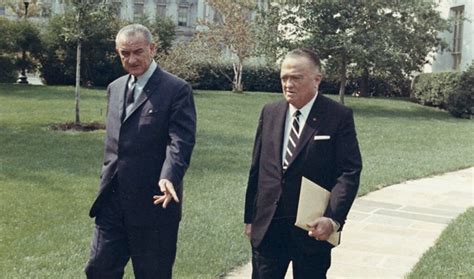
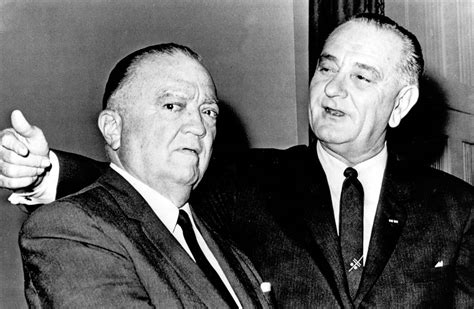
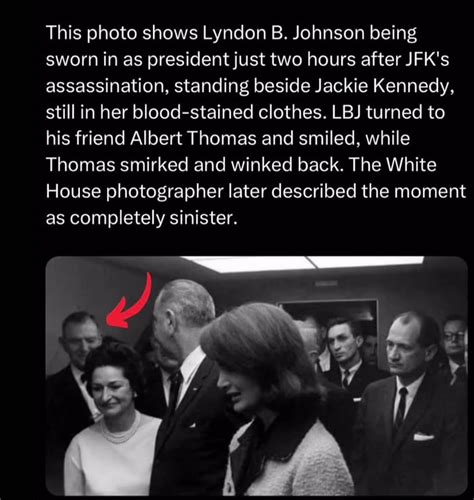
One of President Lyndon B. Johnson’s first acts after Kennedy’s assassination was establishing the Warren Commission to investigate the killing. The commission’s leadership raises serious questions about its objectivity and purpose.
Who led this supposedly independent investigation? Allen Dulles—the former CIA director whom Kennedy had fired. This glaring conflict of interest suggests the commission may have been designed not to uncover the truth, but to conceal it.
Policy Reversals Under Johnson
Following Kennedy’s death, several significant policy reversals occurred under President Johnson’s administration. Most notably, while Kennedy had intended to withdraw American forces from Vietnam, Johnson dramatically escalated U.S. involvement in the conflict.
These 180-degree policy shifts raise questions about whether Kennedy’s assassination may have been motivated by opposition to his foreign policy agenda.
The Israeli Connection: What Remained Hidden
Perhaps the most intriguing revelation from recently declassified documents concerns what the CIA was most determined to keep secret. According to the transcript, the intelligence agency had “no oppositions to releasing most of this stuff years ago, but they did have one request for redactions: Any mention of Israel or Israeli intelligence.“
Over a dozen instances cited in the recently released documents indicate that references to Israel were systematically redacted from previously released materials. While these documents don’t explain why this information was considered so sensitive, the pattern of redaction raises profound questions about potential Israeli involvement or knowledge of the assassination plot.
The Oswald Question: Lone Gunman or Patsy?
The official narrative has long maintained that Lee Harvey Oswald acted alone, motivated by his meetings with Cuban officials in Mexico City prior to the assassination. The Warren Commission suggested the killing was carried out as retaliation related to the Bay of Pigs invasion.
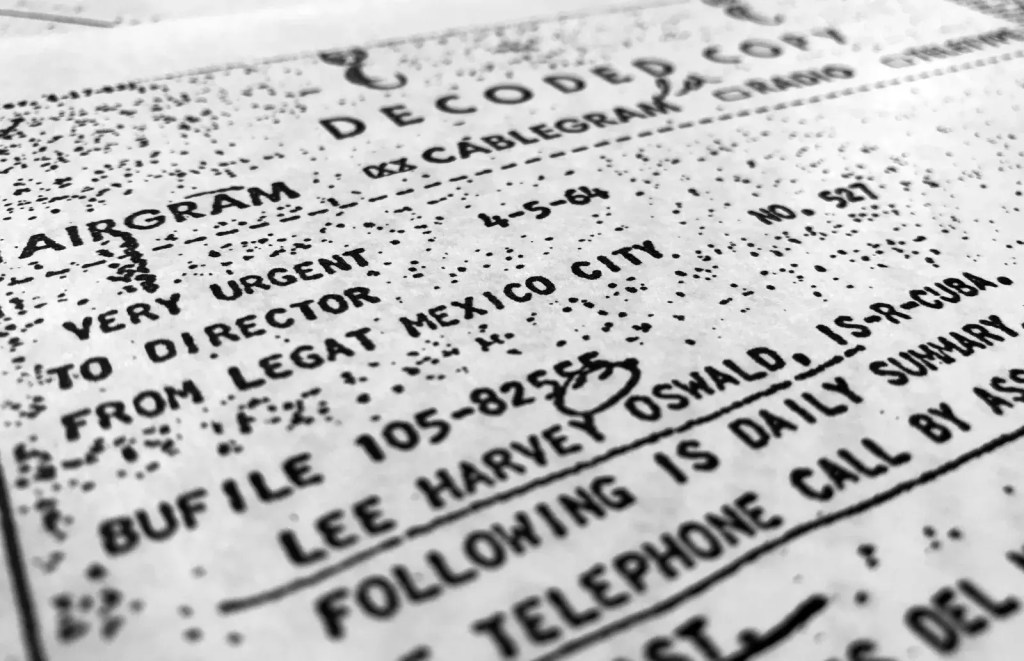
But the evidence increasingly suggests Oswald may have been exactly what he claimed to be when he stated, “I’m just a patsy”—a convenient scapegoat for a more complex conspiracy.
Systematic Disclosure
What’s particularly troubling about the JFK assassination files is not just what they contain, but how they’ve been released.
The government has “systematically leaked parts of the files over decades to the public, allowing for theories to be perpetuated for decades. Some of them were widely accepted as fact, even.“
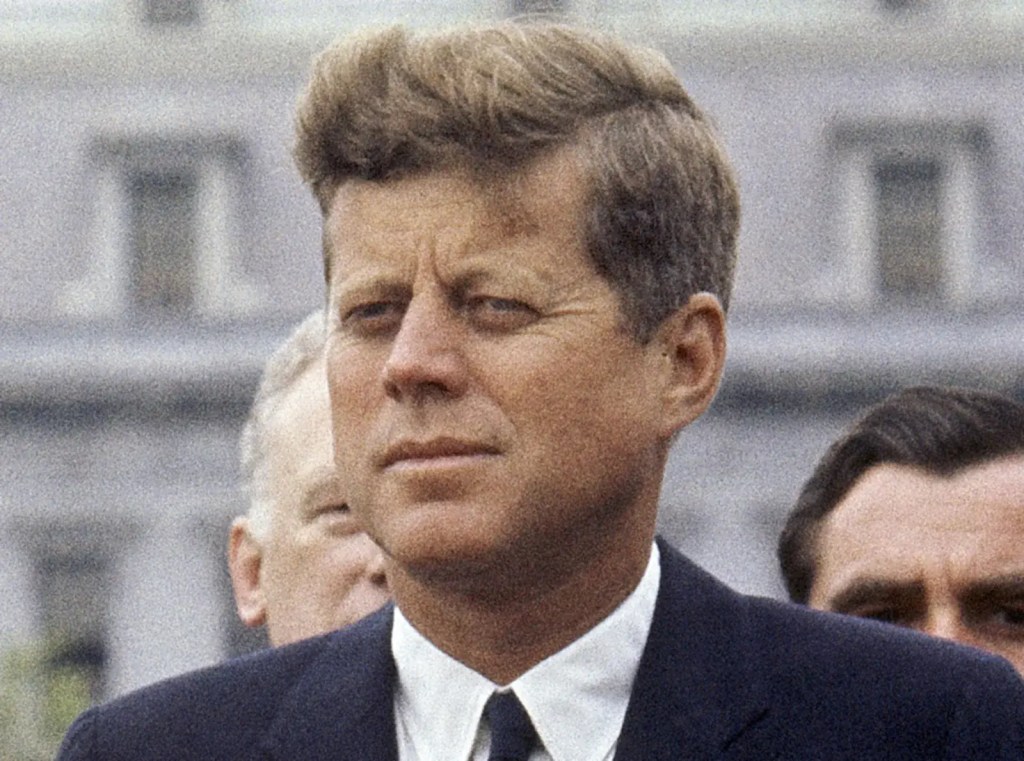
This pattern of selective disclosure raises the possibility that the drip-feed of information was itself a strategy. It was designed to confuse the public. It aimed to discredit legitimate questions. Ultimately, it sought to protect those truly responsible for Kennedy’s death.
Conclusion: Trust, Transparency, and Truth
The newly declassified JFK files don’t provide all the answers. They confirm what many have long suspected. The full truth about Kennedy’s assassination has been deliberately withheld from the American people.
As Chuck Schumer once candidly admitted regarding President Trump’s conflicts with intelligence agencies:
“You take on the intelligence community, they have six ways from Sunday at getting back at you.“
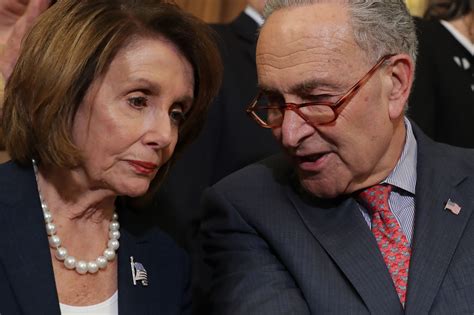
This statement takes on chilling significance. This is especially true when viewed through the lens of what happened to President Kennedy. He challenged the CIA’s authority.
The JFK assassination remains one of America’s most profound tragedies—not just because we lost a president, but because the truth about his death has been obscured by the very institutions tasked with protecting our democracy.
To receive free email notification, when we post new articles like this, sign up below. Clever Journeys does & will not sell or share your information with anyone.
IN GOD WE TRUST
Thanks for supporting independent true journalism with a small tip. Dodie & Jack




CLICK HERE for GREEN PASTURE BENEFITS

Use Code CLEVER10 for a 10% discount on Green Pasture products today!

☆☆☆☆☆

☆☆☆☆☆

 Clever Journeys
But in the end, it’s going to be shouted from the rooftops. What’s horrible is how very deep and tortuously twisted the truth is.
LikeLiked by 3 people
Johnson was the dirtiest politician in Washington for his entire career. Will the truth ever be known? Doubtful. LBJ was involved in some way, most people know that, but they will not squeal. The same cover-up is going on with the attempted Trump assassination and the little moron on the roof that seems to have no history.
LikeLiked by 3 people
The assassins/attempted assassins all appear to be smokescreens.
LikeLiked by 2 people
From my understanding, Lady Bird was the undisclosed owner of an arms company. The Johnsons stood to lose big money if Kennedy pulled troops out of Viet Nam. Of course, Kennedy gave the Mafia plenty of reasons to assassinate him, too. 😦
LikeLiked by 3 people
LBJ and the Killing of JFK with Roger Stone
LBJ and the Killing of JFK with Roger Stone
Interview with the Grassy Knoll JFK Shooter – James Files – Part One
EXPLOSIVE HISTORICAL INTERVIEW with the grassy knoll JFK shooter
LikeLiked by 2 people
Evil sure hates exposure.
LikeLiked by 2 people
And if people don’t believe LBJ was in this up to his eyeballs there’s really something wrong. LBJ stood to lose a lot and he didn’t like playing second fiddle to anyone.
>
LikeLiked by 2 people
This is the main reason I am not buying another motor bike, there are to many dizzy bad drivers on the road now more so than in the 80s and 90s when I was a rider with my Kow 750 Gpz. what put me over the edge was my friend and his friend were hit head on by a drunk driver, Ed lost his leg and Tom almost lost his right arm, I was looking for another 750 Gpz, found one then the accident happened, forget it
LikeLiked by 2 people
So very sorry this happened to your friends. Agree motorcycle riding is not like it used to be.
LikeLiked by 1 person