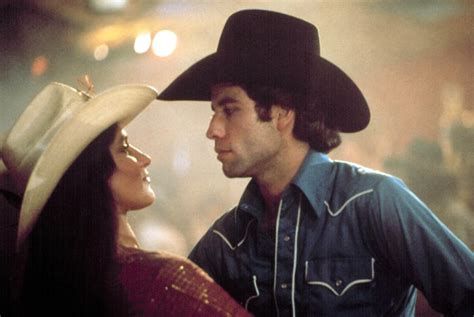
John Travolta was nearly passed over for “Urban Cowboy” (1980) because Paramount Pictures initially doubted he could convincingly embody the rugged grit of a Texas oilfield worker.
According to Travolta, the studio wanted someone who looked more traditionally masculine, someone tougher, rougher around the edges.
In a 2020 interview, he revealed that producer Robert Evans wasn’t confident about casting him after his iconic turn in “Saturday Night Fever” and “Grease”, fearing he might be too polished for the part of Bud Davis. But Travolta fought for the role.
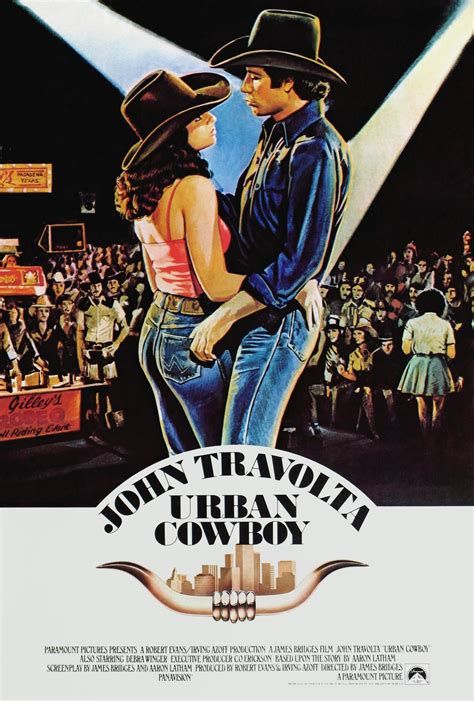
He flew himself to Texas, stayed near Pasadena, and immersed himself in the local honky-tonk culture to prove he could live inside Bud’s boots.
He said he walked into Gilley’s, the famous Pasadena bar that inspired the film, alone, wearing a cowboy hat and boots, and tried blending in with the regulars.
“I wanted to be invisible in there,” Travolta recalled. “If they thought I was just another local guy trying to ride the mechanical bull, I’d won.”
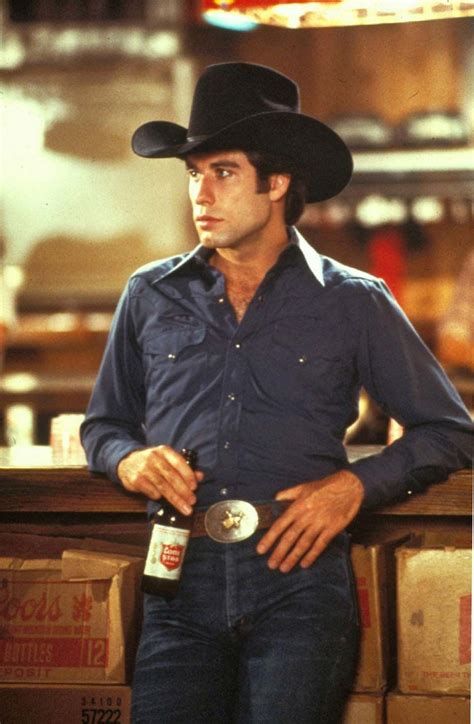
His effort paid off. After spending several weeks riding bulls, working with locals in oil yards, and learning the Texas dialect, he convinced the filmmakers he could play Bud authentically. The final nod came after a screen test where he rode the mechanical bull so fiercely that the crew burst into spontaneous applause. That sealed it.
For the film, Travolta learned to ride a real mechanical bull from scratch.
He trained with actual Gilley’s regulars, and many of them doubted a Hollywood star could hang on for more than a few seconds. But John turned that skepticism into motivation. He practiced obsessively between takes, often staying after hours to ride.
His instructor, bull-riding champ Charles Daniels, said Travolta would come in early every morning and train until his thighs and hands bled. “He didn’t care about the pain. He wanted to move like a real cowboy,” Daniels said.
One of the hardest scenes for Travolta to film was the bull-riding competition between Bud and Wes.
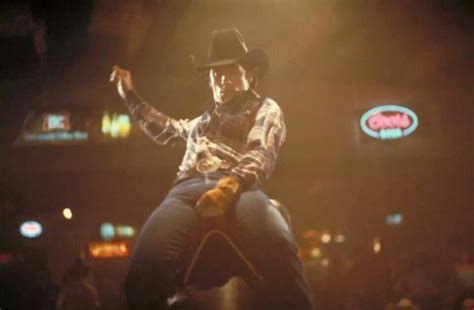
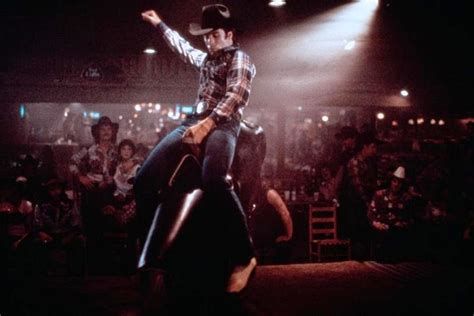
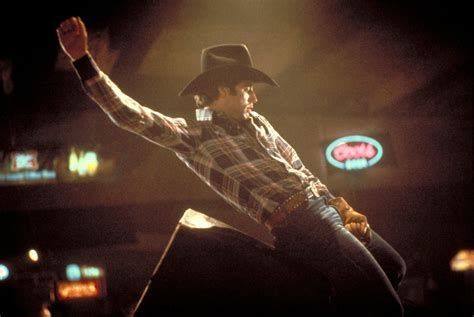
It wasn’t just about physical stamina—it was about understanding how Bud used the bull as a symbol of his pride and control.
Travolta later explained that he wasn’t simply acting when he rode the bull; he was channeling Bud’s inner war, his need to regain dominance in his relationship and life. “Bud wasn’t trying to win a prize,” he said. “He was trying to prove he still mattered.”
He also shared a lesser-known incident during the shoot when he suffered a minor back injury. During a rehearsal, he was thrown off the bull, landing hard. For a brief moment, he couldn’t feel his legs. Instead of calling for a doctor immediately, he asked the crew for a break, iced his back, and was back on set in a couple of hours.
He later admitted that pain became part of the character. “Bud walked stiff sometimes because I was stiff,” he laughed. “It helped me stay in character.”
Travolta’s chemistry with Debra Winger, who played Sissy, also emerged from authentic, sometimes challenging moments.

During early rehearsals, they clashed over character interpretations. Winger wanted Sissy to be more rebellious and emotionally raw, while Travolta saw Bud as someone more reserved and wounded. But instead of creating distance, those differences created a believable tension on screen.
“We didn’t always agree, and that’s what made Bud and Sissy feel real,” Travolta said in a 2015 podcast. He even admitted he respected Winger’s fearlessness. “She challenged me in ways I hadn’t expected. That tension made everything electric.”
Even years later, Travolta described “Urban Cowboy” as one of his most transformative roles. He said it forced him to stretch beyond the dancefloor glamour and tap into something grittier, more grounded.
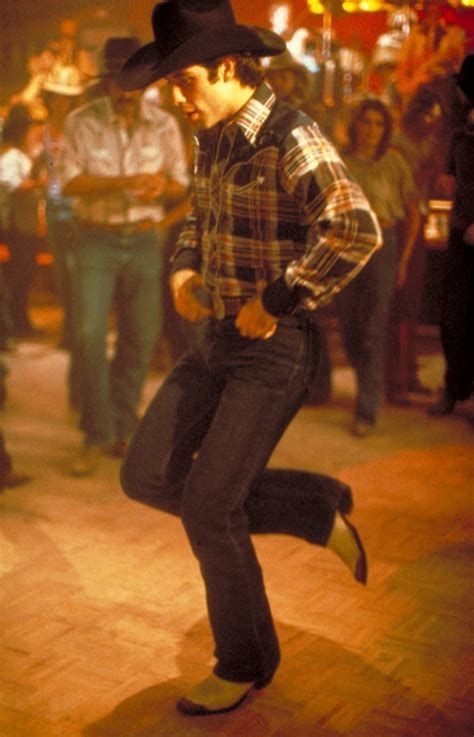
His portrayal of Bud was a personal turning point, showing that he could embody raw masculinity without losing emotional complexity.
John Travolta became Bud Davis not through appearance or attitude alone, but by surrendering fully to a world far from his own.
☆☆☆☆☆
To receive free email notification when we post new articles like this, sign up below. Clever Journeys does & will not sell or share your information with anyone.
☆☆☆☆☆
IN GOD WE TRUST
Thanks for supporting independent true journalism with a small tip. Dodie & Jack

Dodie & Jack Dennis are regular customers of Green Pasture. Highly recommended.
Green Pasture Here!


Use Code CLEVER10 for a 10% discount on other Green Pasture products today!

Get Your Natural Vitamins A & D from the Sea!

☆☆☆☆☆

See details here!



Oh man, good read. That movie gave birth to the urban cowboy craze. Everybody had a hat with big feathers and new boots. I went to Gilly’s and had a Lone Star longneck. Didn’t ride the bull, but have ridden the one at Billy Bobs in Fort Worth. I think Travolta did a great job with his character; his extra work paid off.
LikeLiked by 4 people
Well shared. It was good to read about Travolta’s determination and commitment to the role of Bud. My appreciation for John Travolta has waxed and waned over the years. He was my favorite character on Welcome Back, Kotter; and for the most part I enjoyed the various films he was in. But I guess sometimes I let what I heard about his personal life cast a shadow over my enjoyment of his characters. This ‘tainting’ effect is worse for me when it comes to De Niro and Hanks and Sean Penn…. alas.
LikeLiked by 3 people
Yessir ~ you are not alone in that regard. 💜🎥
LikeLiked by 3 people
💙
LikeLiked by 3 people
I never saw it, so I’m getting an education here. I feel the same way about finding that people I admire have feet of clay, and then I remember, oh, yeah, so do I. Sigh.
You’ve gotta admire the way Travolta went after the part; says a lot about him.
Reading this, I remembered that George W. Bush was sent by his Dad one summer to work on a oil rig in the Gulf, and at first the guys laughed at him, but he toughened up. Wish he would have stuck to that the right way.
LikeLiked by 2 people