
I was having lunch with a dear friend this past week at a nice restaurant we have enjoyed many times over the years.
The past couple of years, more than just a few of our mutual friends have died (too many because of reactions to vaccines and certain medicines), so our conversation was sober and meaningful.
Our talk turned to spirituality and church.

“I don’t know Jack,” he started. “I haven’t had good experiences with churches. I told my mother when I was 16 that I didn’t want to go there anymore and I didn’t. I know it broke her heart, but I didn’t feel like I was getting anything out of it.”
I asked him to explain. He replied he never felt “that spiritual” going to church.
“I feel spiritual when I am sitting on the back porch, watching birds, clouds moving and feeling a breeze on my face,” he said.

“That’s when I feel close to the Lord, and it’s what satisfies me. How do you like those beans? (Meaning that’s his story and he was sticking to it). “
“Well, since you mentioned beans,” I laughed. “I can tell you I have been in a few restaurants over the years where I became sick after eating in them.”
“Like you said about churches,” I continued. “Those restaurants, well, I didn’t have such good experiences from them, and I never went back. But they didn’t keep me from going to other restaurants. I would have missed out on some awesomely good food if I had allowed those places to dictate my eating habits.”
He smiled and saw where I was going.
“It’s the same way with churches. Like restaurants, they are not all the same,” I grinned back. “Sometimes you just have to go visit some to find out if it suits your spiritual palate.”


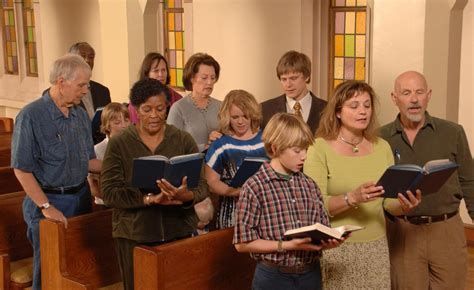


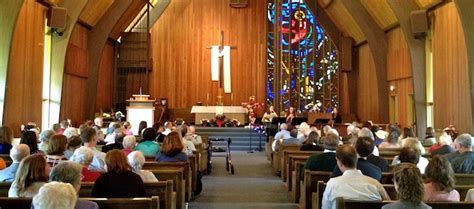
It seems like everyone is “spiritual” nowadays. Doing a little research later, I found a USA Today survey indicating that even most atheists consider themselves “spiritual.”
But whenever spirituality is written about publicly or discussed privately, whether in the culture at large or within the Church, it seems the focus is always on individual spirituality.
Cultural spirituality—whether the emphasis is on meditation, mindfulness, yoga, or any of an infinite number of expressions—usually implies, You have your spirituality, and I have mine. You do what works for you, and I’ll do what works for me.
Comparatively, in cultural spirituality, there seems to be no widely accepted standard of what spirituality is, beyond the assumption that your spirituality should improve your life and make you a better person.

By contrast, key distinctives of true, biblically based, Christian spirituality include:
● the final authority is God’s Word (the Bible),
● the standard is Christ, and
● the power comes from the Holy Spirit, not merely just sitting on the porch or some self-effort.
But even where these things are fervently believed, spirituality still tends to be considered primarily as an individual matter.
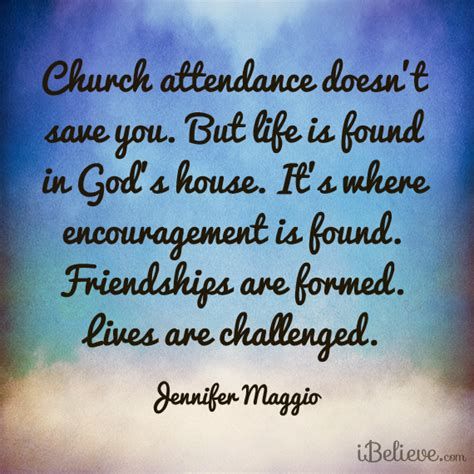
“How’s your prayer life? Tell me about your quiet time,” I asked him.
“You got me,” he answered. “Mainly, I appreciate those birds and clouds because they help quiet my mind.”
Doing some quick web surfing, we learned that Bible sales in 2024 were up 22 percent from 2023.
U.S. book sales were up less than 1% during that same period, meaning the Bible’s growth in sales far outpaced what was happening more generally in the print literary space.

The Wall Street Journal crunched the numbers and found Bible sales increased from 9.7 million in 2019 to 14.2 million in 2023. In the first 10 months of 2024, 13.7 million copies were sold, with still two months left to count.
It is little wonder that:
● 44% of Gen Z adults between the ages of 18-26 are either very or extremely curious about Jesus and/or the Bible.

● Nearly half of Gen Z say the Bible has transformed their lives.
● Among older Gen Z adults aged 18-21, 49% reported this transformation, with 52% of those aged 22-26 stating the same.
True Spirituality
● The focal point of worldly spirituality is primarily the self.
In general, it teaches that your greatest problems are outside you and that the solution is within you. Change your thinking and your habits, and you can overcome your problems.
● Biblical spirituality declares that your biggest problems are within you—sin against God and separation from God—and that the only solution is outside you: Jesus Christ.

● So, the center of Christian spirituality is Jesus. The Gospel, that is, the Good News about Jesus, is that His sinless life and His substitutionary death on the cross can erase all our sins and make us right with God forever.
And by His resurrection, Jesus provided incontrovertible evidence that all He claimed to be and to do for us is true.
The only response Jesus requires for us to enjoy these incomparable realities is to turn from the self-centeredness of our sin and to trust in what He’s done for us.
This means forsaking reliance upon ourselves and our spirituality and believing that the person and work of Jesus alone is sufficient to bring us to God and to experience the spiritually “abundant life” (John 10:10) that God offers to us.
☆☆☆☆☆
To receive free email notification when we post new articles like this, sign up below. Clever Journeys does & will not sell or share your information with anyone.
☆☆☆☆☆
IN GOD WE TRUST

Thanks for supporting independent true journalism with a small tip. Dodie & Jack

Dodie & Jack Dennis are regular customers of Green Pasture. Highly recommended.
Green Pasture Here!


Use Code CLEVER10 for a 10% discount on other Green Pasture products today!


Get Your Natural Vitamins A & D from the Sea!

☆☆☆☆☆


See details here!


 Clever Journeys
Hallelujah! His Word is getting out there….❤️🎉📖💜
LikeLiked by 3 people
Truly excellent explanation. Holy Spirit was in this one!
LikeLiked by 3 people
Your analogy comparing the restaurant and the church is one I’ll be sharing whenever I have the opportunity. Your clarification of worldly spirituality versus Biblical spirituality is fantastic. And praise the Lord for the upswing in Bible sales! Fabulous post, Jack. 🐑
LikeLiked by 2 people