
There have been 224 shootings in American schools since 2018. There were 39 school shootings with injuries or deaths in 2024. There were 38 in 2023, 51 in 2022, 35 in 2021, 10 in 2020, and 24 each in 2019 and 2018.

In the last 25 years, over 250,000 American students were on school grounds when someone opened fire at their school. Think of all the antidepressant and/or anti-anxiety medications prescribed before and after these tragedies.
(Research, published in 2021 from the Proceedings of the National Academy of Sciences of the United States of America, found that antidepressant use among those under 20 rose by 21.4% on average in local communities in the 2 years following a fatal school shooting).
As of this writing on March 15, there have been three school shootings in 2025 that resulted in injuries or deaths.
It’s estimated that around 78 million people in America are on at least one psychiatric drug, with antidepressants accounting for the highest percentage, followed by anti-anxiety drugs, then those prescribed for ADHD. (1)
Out of those 78 million people, more than 1 million are under the age of six.

Broken down even further:
- 274,804 of them are younger than a year old.
- 370,778 are aged 2-3.
- 500,948 are aged 4-5.
There are approximately eight million children between the ages of 6-17 walking around the halls of our schools on one or more psychiatric drugs (1) – a number which pretty much everyone agrees is actually underreported.
If you have a son, there’s a one in five chance (a 42% increase since 2003) he will be diagnosed with ADHD and put on some kind of psychiatric drug by the time he’s in high school.
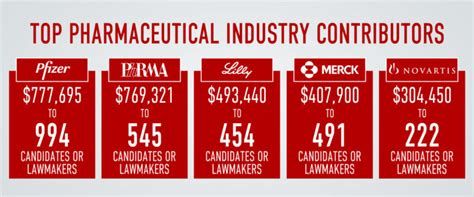
There’s an even higher chance that it will be a misdiagnosis or unnecessary. Why? There are the usual suspects, of course…Big Pharma and their contributions to lawmakers, kickbacks to pediatricians, the claim of better diagnostic criteria, greater disease awareness, lack of proper psychiatric training by the diagnosing doctor, and so on.

On his first directive as Secretary of Health and Human Services, Robert F. Kennedy Jr. has expounded on psychiatric medications and their use among children into the national spotlight.
President Donald Trump introduced the initiative “Make our Children Healthy Again Assessment” in a February executive order that aims, in part, to “assess the prevalence of and threat posed by the prescription of selective serotonin reuptake inhibitors, antipsychotics, mood stabilizers, stimulants, and weight-loss drugs.”
RFK, Jr. mentioned that the class of drugs known as selective serotonin reuptake inhibitors, or SSRIs, are harder to give up than heroin, and that school shootings became prevalent after the introduction of Prozac, a common SSRI drug defended heavily by Big Pharma.

Regardless if depression is overdiagnosed and America has a habit of over-prescribing mind-altering medications, there’s little doubt that SSRIs have a risk of increasing violence in patients, even in patients who have no previous history of violence or aggression before taking the medication.
Black Box Warnings
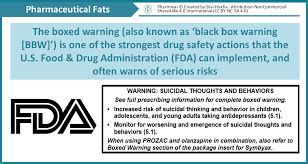
This risk of violent behavior, both to the individual taking the medication and those around them, is so significant, it has led to the FDA mandating a “black box warning” on all SSRI medications.
These black box warnings are designed to provide information and draw attention to the fact that the medication has serious and life-threatening risks.
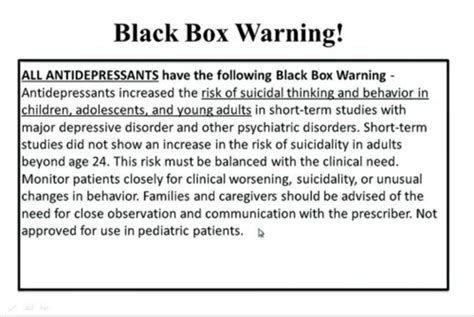
As of 2004, all antidepressants in the US are labeled:
“Anxiety, agitation, panic attacks, insomnia, irritability, hostility, aggressiveness, impulsivity, akathisia, hypomania, and mania have been reported in adult and pediatric patients being treated with antidepressants for major depressive disorder as well as for indications, both psychiatric and nonpsychiatric.”
A study from Rutgers-Columbia found that low-income families with children on Medicaid were four times more likely to be put on psychiatric drugs than children from more affluent families who could afford private insurance. The children on Medicaid were more likely to be prescribed psychiatric meds for less severe, off-label reasons.
Medicaid often pays less, so healthcare providers who focus on Medicaid patients seem to have developed a different (read: less time-consuming) standard for medicating poor children – even though there are guidelines in place that are supposed to monitor the prescribing of these drugs. Additionally, it’s thought that the more economically-challenged families will be less likely to take the time to actually go to therapy or pay any out of pocket cost for drugs. To counter this, Medicaid eliminates cost-sharing for prescriptions for most low-income families, thus making it easier to medicate the child.
By 2011, Medicaid was spending $8 billion on psychotropic drugs – thirty percent of its total budget for drug spending.
Brief History of Education, Big Pharma & Political Connections
In 2024, nearly every school district benefited to some degree from federal programs geared toward children who need extra support, including Title I for students from low-income families, IDEA for students with disabilities, Title III for English learners, and the McKinney-Vento program for students experiencing homelessness.
● In 1965, the Elementary and Secondary Education Act (ESEA) was passed during the Lyndon B. Johnson Administration and it allocated massive federal funds and opened school doors to a flood of psychiatrists, psychologists, social workers and the psychiatric programs and testing needed to validate them. This paved the way for a massive restructuring of our educational system away from academics and more towards one pushing behavior-modification programs.
● ESEA was followed by the Education for all Handicapped Children Act of 1975 under Gerald Ford’s Administration, which ensured that children with physical handicaps had access to public education.
● In 1990, during George Bush’s Administration, that law was reauthorized and the name was changed to the Individuals with Disabilities Education Act (IDEA.) “Handicap” was changed to “Disability”, and the IDEA legislation provided schools with an additional $400 per year for each child in special education.
● In 1991, the US Department of Education Office of Special Education and Rehabilitative Services released a memo stating that a child diagnosed with ADHD qualified for special education.
The production and use of methylphenidate (Ritalin) increased almost 6-fold between 1990-1995 to meet the explosion of children newly diagnosed with ADHD. This, despite the fact that even though teachers weren’t (and still aren’t) legally allowed to diagnose a student, they carried significant influence. One school administrator told me in 2004 that all staff had to do was say the child was a disruption in class, which could lead to administrators threatening parents to either medicate the child or have them face expulsion or perhaps a visit from CPS for not providing proper medical care.
IDEA has led to an increase in vague psychiatric disorder diagnoses such as “Mathematics Disorder” and “Disorder of Written Expression,” as well as ADHD.
Never mind that perhaps the issue was just a child being forced to learn in an unnatural environment with social engineering, critical race theory and gender studies in, while civics, prayer and the Pledge of Allegiance are out.

IDEA also contains a “child-find” provision which requires states to actively seek out children who may qualify for special education in order to receive federal special education funding. In Colorado, this “child-find” program STARTS AT BIRTH.
These increases have led to a cash windfall to school districts.
● In 1996, the state of Illinois alone had received $72,500,000 in federal Medicaid money.
● By the 2013-14 school year, the federal government provided an additional $11.5 billion in special education funding through IDEA part B for special education programs around the country.
When we combine state and federal funding, there was at least $30.5 billion in additional revenue provided for special education programs in 2013-14, which equates to approximately $4,700 in revenue per special education student.
● By 2014–15, the number of children and youth served under IDEA was 6.6 million, or 13 percent of total public school enrollment.
The current budget, until October 2025, indicates total budgets for IDEA spending is:
● IDEA Part B–Grants to states: $14.2 billion.
● IDEA Part B–Preschool grants: $420 million.
● IDEA Part C–Infants, Toddlers: $540 million.
● IDEA Part D–Personnel Preparation: $115 million.
● National Center for Special Education Research: $64.3 million
Are schools in the behavior-modification business and is ADHD a goldmine?
☆☆☆☆☆
To receive free email notification when we post new articles like this, sign up below. Clever Journeys does & will not sell or share your information with anyone.
☆☆☆☆☆
IN GOD WE TRUST
Thanks for supporting independent true journalism with a small tip. Dodie & Jack

CLICK HERE for GREEN PASTURE BENEFITS

Use Code CLEVER10 for a 10% discount on Green Pasture products today!


CINDY LEAL MASSEY, TEXAS AUTHOR


CleverJourneys is on Gab.com

 Clever Journeys
Wowzer, Jack, when you put the statistics out there, it’s sickens me. The American society has a drug problem, not just with street drugs, but prescription. Did all of these teens that shot up the schools take doctor prescribed drugs? I read somewhere they did, but don’t recall the media reporting it. Add social media that makes one an instant star for almost anything, this is what we get. The schools must have armed guards and armed teachers as well.
LikeLiked by 4 people
So agree. What have we done to our children?
LikeLiked by 3 people
Wow, wow, wow. This article practically leaves me speechless (no mean feat!). We’ve come a long way from The Blackboard Jungle, eh? I sincerely hope RFKJr and his minions can break this cycle! It’s all scary, but those numbers about children 6 and younger? Schnikeys! What the heck is ANYONE thinking giving that $4!7&!! to children so young??? Then again, the number of vaccinations administered to children by the time they are 1 year old is crazy ridiculous, too. Man. Heaven help us. ~Ed.
LikeLiked by 4 people
Heaven help us!
LikeLiked by 3 people
Really good article. Well done!
Here in Wa we’re fighting just to try to restore some parental consent. For most medical care, in most places, parental consent is required for minors. WA makes so many exceptions that parental rights are virtually non existent. You can be declared to be either a “homeless youth” or a “mature youth” or you can have a school nurse or medical clinic advocate on your behalf as your designated adult. The age of consent for abortion and all reproductive care, including transgender care, is 13. No parental consent is required for mental health services.
Adults are hardly qualified to critically think their way through the complications of Big Pharma and the medical establishment and to advocate for their loved one’s. Kids don’t stand a chance against such huge and powerful systems.
LikeLiked by 3 people
I was wondering how the West Coast navigated through this. Thanks again.
LikeLiked by 2 people
For children with ADHD, why don’t we use exercise, play, work and a more natural diet instead of these drugs? As for special education, I think that it should be used only when absolutely necessary. I think that there is still a stigma. When the expectations for these children are reduced, then the children will have less expectations of themselves. This can lead to anger and frustration or depression.
LikeLiked by 3 people
Yes, good old common sense.
LikeLiked by 2 people
I hope and pray that this initial exposure by Trump and RFKJr. will blow this ugly, destructive system out of the water so high that no one can ignore it, and keep it coming. Big Pharma and the government between them have created a nation of drug slaves. Think of it: ever since the 60’s this monster predation has been growing and sucking the psyches and health out of everyone it touches. People MUST regain the authority over their own lives.
LikeLiked by 2 people
Yes, the readership on this one is sky high..
LikeLiked by 2 people
Great post, I can’t believe the amount of money spent on psychiatric drug for kids! I am glad that when I was in school in the 60s and 70s I did not have all of these drugs pushed on me. I was depressed one day and flying high the next just normal kid interactions especially with girls, LOL. And I was always “acting up” in class, but if I like the class I got on my report card “good participation” if I did not like the class I got ” disruptive in class”. If any one went too far with a teacher we would get a paddling and everyone knew the line not to cross after that. Life was hard enough as a kid in school all these drugs would have wreaked me.
LikeLiked by 1 person
Yes, that paddle was enough incentive for most of us. We appreciate your comment & thank you for your readership.
LikeLiked by 1 person
[…] View Source […]
LikeLiked by 1 person