
What should you do if you find a pigeon laying on the ground in trouble?
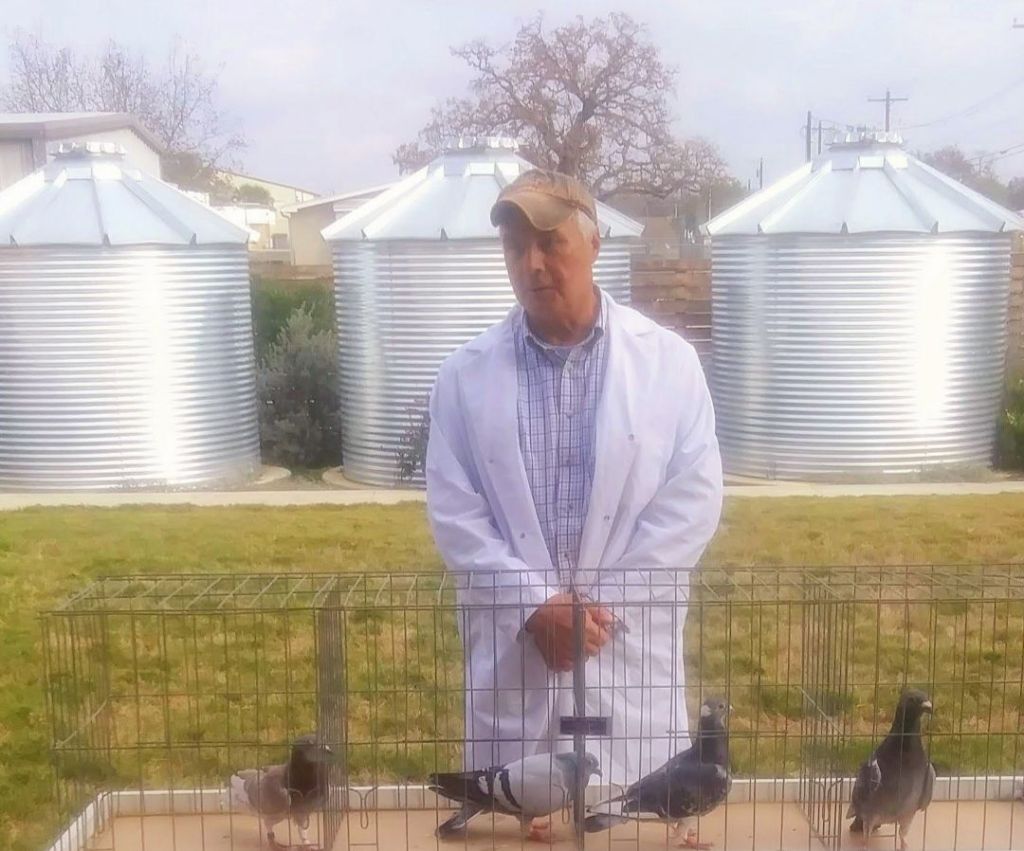
Harvey Young moved to Medina, Texas five years ago where he was an active member of an Illinois pigeon club.
While he and his wife, Jill love raising animals–they care for chickens, dogs, Pickle (donkey), and Kizzie (horse)–Harvey missed the sporting aspect of pigeon racing.
He has learned from local pigeon fanciers that the breed of the birds in the Hill Country requires a much different type than what he was accustomed to in the Midwest.
“It’s a whole different breed here, because we are in the hills and the heat make it different” than the environments of birds that fly over more flat terrain.
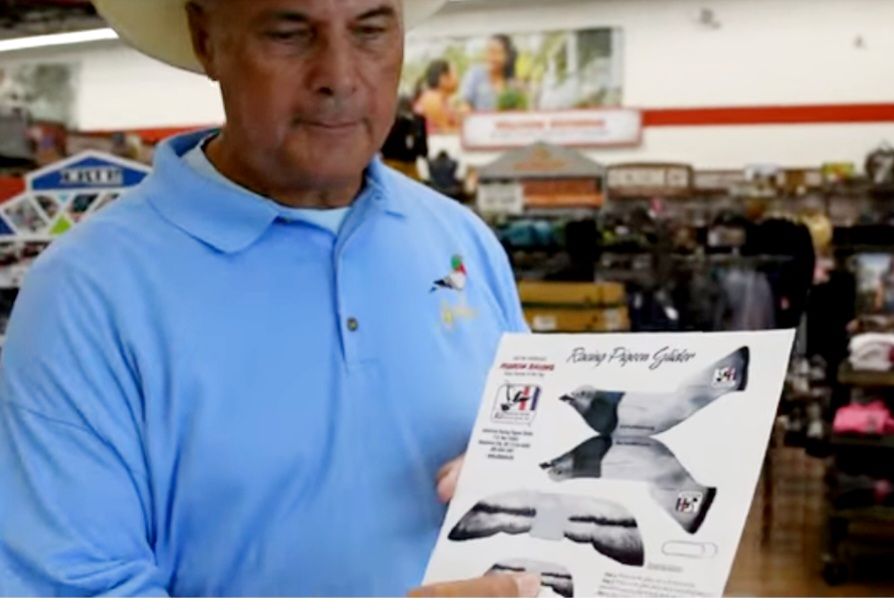
Young is the current president of the Heart of the Hills pigeon racing club, where in “2019 our club membership declined down to three active members,” he said. “After regrouping and doing pigeon presentations at our local library and Tractor Supply and with the help of Trey Crook for the last three years, we have grown to eleven members.”
Today, ordinances and other governmental restrictions are a limiting factor on the growth of the racing pigeon sport and despite population increases, membership in the American Pigeon Racing Union (AU) has not varied substantially in the past 35 years.
“Ordinances are one element in the lack of growth, but a more significant factor is the wide variety of leisure activities now available to young and old that did not exist until after the Second World War,” they report.
So what does one do if they find a worn out pigeon?
● WATER: Most found birds are hungry and thirsty. Water is necessary before all else. Since pigeons drink by suction, any water container should be at least 1 in. deep. An open container, i.e., a dish, an old margarine container tub, etc., is best. While a thirsty bird may drink immediately, it also may not. A bird which has gone without water for a while is sometimes a bit less than itself. It may be so exhausted, it doesn’t even realize that water is in front of it, especially if the water container you use is different from what it is familiar with. One trick is to trickle a few drops of water into a container to make a splashing sound.
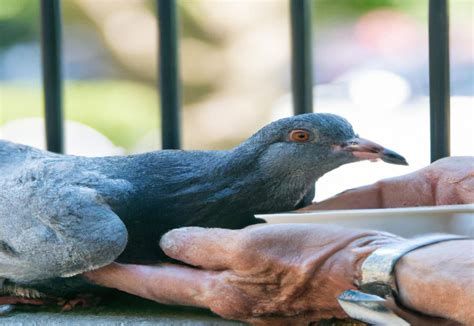
If a bird looks really exhausted, Gatorade or other proprietary sports drink may be added to the water. A teaspoon or two per cup of water will help replenish electrolytes.
● FOOD: Pigeons are grain eaters. While park pigeons will eat bread, most domestic birds have been raised on a multi-grain mixture and have never seen a slice of it. In fact, they would likely ignore it as possible food.
Instead of bread, try feeding them something else from around the house. Popcorn (maize), rice, split peas, barley, buckwheat (kasha), canary seed, etc., are all good first options to feed a found bird with. THESE GRAINS SHOULD NOT BE COOKED OR POPPED BUT FED RAW. Water should also be provided since pigeons normally drink immediately after eating.
● HOUSING: Any container that a dog, cat or some other animal can’t get into will work. An old bird cage will hold the pigeon for a day or so with no problem, as will a cardboard box – a screen on top of such a box is better than simply closing the flaps since there will then be enough light for the bird to see to eat and drink.
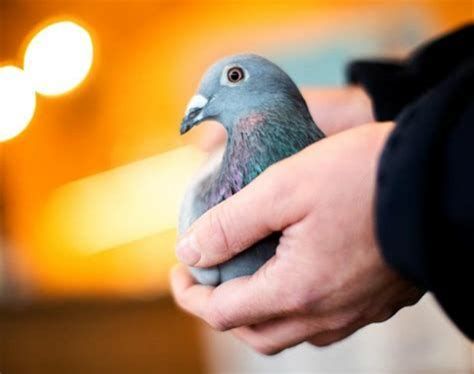
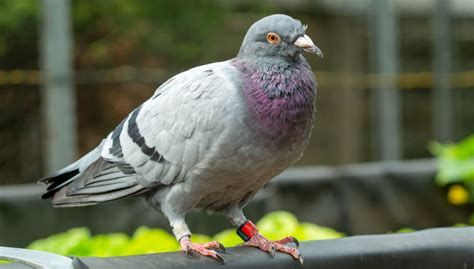
● FINDING THE OWNER: The bird may have a band on its leg. The owner can sometimes be traced through one of the national pigeon organizations. However, this is often not even necessary. After twenty-four to forty-eight hours rest with food and water, most homing pigeons are more than capable of finding their way home on their own.
Simply release the bird in an area free of wires or other obstacles and it will usually head home immediately.
NEVER try to attach a note to the owner by rubber banding it to the bird’s leg. This cuts into their leg and blood circulation and often leads to gangrene and amputation of the limb.
● WHAT IF IT WON’T GO HOME? Many birds can be traced to their owner by the numbered band (ring) on their leg. In North America, homing pigeons normally carry bands with a combination of the year plus the initials:

At their last local meeting, Young thanked Bill Miller, Don Craighead, along with Danial Dorca of the Texas Hill Country Invitational Club “for the generous donation of young birds to help our new members. Bill and Don donated 22 outstanding young birds, and Danial donated 11 outstanding birds.”
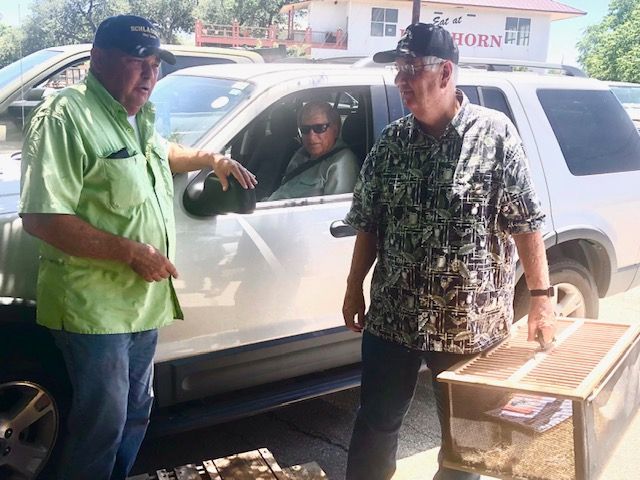
Harvey also recognized David Anderson for donating young birds “and Jason Weller for stepping up and providing our club with a great location, Car Quest Auto Parts of Kerrville, as our meeting place.”
Understanding How to Read a Pigeon Band
The American Racing Pigeon Union registered bands have a specific format. Once you understand how to read the band number, you will find it easy to locate the club that issued the band on our Band List page.
Band numbers are in a series of letters & numbers as shown below.
EXAMPLE= the band may read–>AU 99 ABC 1234
(1) – AU – is the national organization that has registered the bird, in this case the American Racing Pigeon Union, Inc. The band can also have IF, CU, ATB, NBRC, or IPB in this position.
(2) – 99 – is the year the bird was hatched and banded/registered.
(3) – ABC – is a letters representing the pigeon club the band is registered to (no two clubs have the same registration letters – and they have one, two or three letters).
(4) – 1234 – A one-up number unique to each pigeon based on the club letters. Now that you understand how to read the band, you can go back to our band list to find the club that the bird you found belongs to.

NOTE: (PERSONALIZED BANDS) Sometimes the band may just have the owners name, phone and/or address on it that you may call or write them.
☆☆☆☆☆
IN GOD WE TRUST

Thanks for supporting independent true journalism with a small tip. Dodie & Jack

Dodie & Jack Dennis are regular customers of Green Pasture. Highly recommended.
Green Pasture Here!


Use Code CLEVER10 for a 10% discount on other Green Pasture products today!

DANGER CLOSE

Byrne’s DANGER CLOSE is available here.
☆☆☆☆☆

 Clever Journeys
Racing pigeons? Who knew that would be a thing? Maybe I’ll give it a try one day.
LikeLiked by 3 people
These guys are as enthusiastic as any little league baseball team.
LikeLiked by 2 people
Pretty cool. I haven’t learned so much about these birds since I read Nancy Drew and the Mystery of Larkspur Lane. Yep, Nancy was an investigator of everything interesting too!
LikeLiked by 2 people
Ha. I would read Hardy Boys & sneak some of my sister’s Nancy Drew books in between. Heck, I may just go check out a Nancy Drew book just for old times sake if they still have them at the library.
LikeLiked by 2 people
Our library still has them. I checked out all they had, a few years ago, and found a whole bunch more at a second-hand shop, and so got to read almost the entire series. Lots of fun. Never grow up too much, it’s bad for us.
LikeLiked by 1 person
Spectacular point!
LikeLiked by 1 person