There is a Science of Respiratory Protection – Time for Authorities to Apply that Science
Guest post by Dr. Artaud
Dr. Artaud provides a lengthy detailed analysis and insight to mask wearing. To read more of his posts, click here.
Respirator use, in a variety of forms, was a daily thing for most employees at my former employer (I’m retired).
N95 Respirators are Filtering Facepiece Respirators (FFR). Essentially an N95 Filter is shaped into a Facepiece to cover the nose and mouth.
Elastomeric Respirators are rubber or silicone, they usually have 2 removable filters, cartridges, or Combination Filter/Chemical Cartridges.
The respirators shown below are representative of 1/2 Face Elastomeric Respirators.The cartridges shown on the left respirator would work, but also has a chemical cartridge.
Asimpler filter or filter cartridge is available. The cartridges on the right respirator are not suitable for covid-19 and variants, but a filter cartridge is available.
In Negative Pressure Air Purifying Respirators:
• Both N95 FFR and 1/2 Face Respirator (though both cover the nose and mouth, usually 1/2 Face refers to an Elastomeric Respirator that covers those areas), have an Assigned Protection Factor of 10, therefore 1/10 i.e. 10%, of the Contaminants may get past the Face-to-Facepiece Seal (Unfiltered) and be Inhaled by the user.
• Full Face Respirators, shown below, but not otherwise discussed in this Blog, covers the nose, mouth, and eyes, and have an Assigned Protection Factor of 50, therefore 1/50, i.e. 2%, of the Contaminants may get past the Face-to-Facepiece Seal (Unfiltered) and be Inhaled by the user.
The Respirators shown below are representative of Full Face Elastomeric Respirators, the cartridges shown on the Left Respirator may work, but also has a Chemical Cartridge, a Simpler Filter or Filter Cartridge is available.
The cartridges on the right respirator are not suitable for covid-19 and variants, but a filter or filter cartridge is available.
If an OSHA-covered employer requires respirator use, they must provide each employee required to use a respirator with an Initial Physical or Medical Questionnaire, a yearly Fit Test, and have a Training Program on Respirator Care, Use, Storage, etc.
The respiratory protection standard requires an initial medical evaluation to determine the employee’s ability to use a respirator before the employee is fit tested or required to use the respirator in the workplace. At a minimum the employer must provide additional evaluations if an employee shows signs or symptoms that are related to their ability to wear a respirator. There is not a specific annual requirement for medical evaluations in the standard. However, the physician or other licensed healthcare provider (PLHCP) may prescribe annual tests to ensure employees’ continued ability to wear a respirator.
Voluntary use of Filtering Facepiece Respirators by employees doesn’t require Physicals, Fit Tests, or a Training Program, but:
If you permit the use of respirators other than filtering facepieces, you must pay for required medical evaluations for voluntary users and provide voluntary users with appropriate facilities and time to clean, disinfect, maintain, and store respirators.
As I was required by my employer to use respiratory protection, I had these Respirator Fit Tests done yearly:
1/2 Face Negative Pressure Air Purifying Respirator
Full Face Negative Pressure Air Purifying Respirator
Positive Pressure SCBA Full Facepiece (SCBA = Self Contained Breathing Apparatus); alternately at work, we used Supplied Air Respirators (same Facepiece) with an Emergency Escape Cylinder (SAR/ESCBA).
There are qualitative and quantitative tests, our was Quantitative. It measures the particles outside the Facepiece and via an adapter cartridge, and it measures the particles inside the Facepiece to see the actual reduction in particles stopped by the filter. If the fit is poor, more particles get past the Face-to-Facepiece seal and are recorded.
One does not merely sit stationary during the Fit Test, according to OSHA. The following movements and other requirements must be done or made while the Fit Test is in progress, each done for a predetermined time, see b after 8 below:
So, under OSHA for employers that require respiratory use, you go through the above Fit Test while clean shaven, Trained about Use, Care, and Limitations of Respirators, are Issued a Specific Make, Model, and Size Respirator.
You must always use that Same Make, Model, and Size Respirator, (or be Fit Tested for a different Make, Model, or Size Respirator) and if it’s an N95 FFR or 1/2 Face Elastomeric Air Purifying Respirator, and you’re Clean Shaven, as you must be when using the Respirator, 10% of the Contaminants will still leak in, 10% or more.
As you Talk, Make Facial Expressions, Breathe Deeply, Turn your Head, Nod your Head, Bend Over to Work, and more, the contaminant leaks in at varying amounts. The bottom line is that even with leaks, is the average exposure still less than the Permissible Exposure Limit to the Contaminant?
But what is the Permissible Exposure Limit to covid-19 pathogens?
Negative Pressure Air Purifying Respirators are only for use in Non-IDLF (Immediately Dangerous to Life and Health) environments.
Though many pathogens may not be considered Immediately Dangerous to Life and Health, how many Air Borne Pathogens for covid can safely be inhaled? Are they not significantly dangerous to Life and Health? Will leaking 10% or more into the Respirator still leave the user adequately protected?
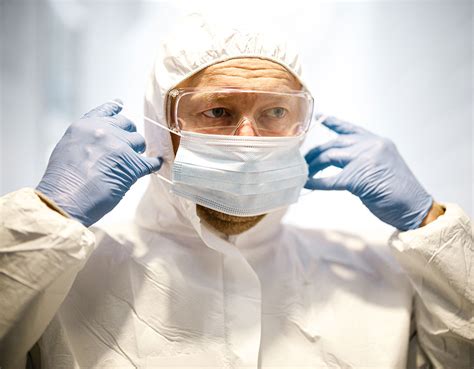
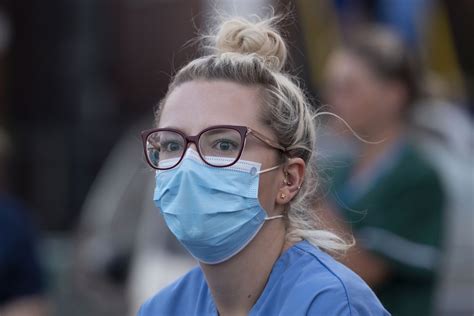
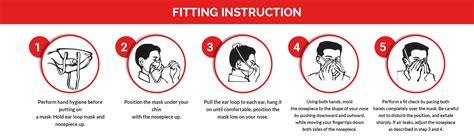
Masks, i.e. Surgical Masks, have NO FACE-TO-FACEPIECE SEAL, they DO NOT HAVE AN ASSIGNED PROTECTION FACTOR. That means, as far as Airborne Contaminants, they are free to enter the respiratory system by circumventing the Mask.
One Industrial Hygiene specialist said Doctors and Nurses are instructed, if needing to sneeze, to face the area where the sterile conditions are important, because the Sneeze exits from the Side of the Mask, and after sneezing, the Mask must be changed, hands washed, etc.
Is this: Coughing and Sneezing: If you are ill, you should not be in the operating room at all. Sometimes, even if well, the need to cough or sneeze will sometimes overpower you. If you have time to move completely away from the patient before sneezing or coughing, do that.
If you are standing at the patient’s side and suddenly must cough or sneeze, look directly at the surgical wound while sneezing. That way, the fine aerosol that is created by the sneeze will shoot out the sides of your mask (and not into the wound.) If you try to turn your head away from the wound, you will likely spray the aerosol out the side of your mask and right into the wound.
From the Conclusion Section (underlining and bold emphasis is mine):
The pooled results of RCTs (randomised controlled trials) did not show a clear reduction in respiratory viral infection with the use of medical/surgical masks.
There were no clear differences between the use of medical/surgical masks compared with N95/P2 respirators in healthcare workers when used in routine care to reduce respiratory viral infection.
Hand hygiene is likely to modestly reduce the burden of respiratory illness, and although this effect was also present when ILI (influenza‐like illness) and laboratory‐confirmed influenza were analysed separately, it was not found to be a significant difference for the latter two outcomes. Harms associated with physical interventions were under‐investigated.
There’s leakage at the N95 (FFR), 1/2 Face, or Full Face, Negative Pressure Air Purifying Respirator Face-to-Facepiece Seal.
I am incredulous that the N95 (FFR) is touted as removing 95% of the Contaminants.
• Due to the aforementioned leakage, 10% of the Contaminants are likely to enter the Facepiece due to Face-to-Facepiece Seal Leakage. Therefore, an N95 (FFR) will not reduce 95% of the exposure, rather 10% and likely more of the Contaminants may enter the Respiratory System Unfiltered.
•A N95 (FFR) would be akin to being 90% Effective at removing the contaminants under Ideal Circumstances, not 95%.
• 1/2 Face Negative Pressure Elastomeric Respirators; using N95 Filters, Cartridges, or N95 Combination Filter/Chemical Cartridges; may still leak 10%, thus the Respirator, as worn, may still only stop 90% of the contaminants under Ideal Circumstances, not 95%.
• An N95 Filter itself (Not an FFR) stops 95% of particles 0.3 Microns or larger, but covid-19 is 0.125 Microns and Smaller. It seems more particles will directly penetrate the Filter.
Three Mechanisms work to stop particles smaller than the Filter is designed for.
The air travels around the Fibers in the Filter, requiring the air to redirect to do so. The Contaminants have greater mass and may become entangled in the fibers from not being able to redirect as quickly.
Massing of smaller particles, viruses don’t necessarily travel as individual particles, rather they may cluster together, broadening the profile of the cluster and becoming entangled in the Filter fibers.
Electrostatic Charges serve to pull the contaminants into the Filter Fibers. I think that N95 Filtering Facepiece Respirators that have become moist by breathing through them wouldn’t be likely to benefit by this mechanism. I believe that Elastomeric Respirators with Intake and Exhaust Valves (not permitted on Respirators worn by those infected as the Exhaust Valves allow pathogens to escape the Respirator unfiltered) benefit by those valves in preventing moist breath from going through the Filter Media.
I’ll bet much of this is news to the readers. There’s a Science to Respirator and Mask Use, but the Science is not being applied, the authorities are more interested in Compliance than facts.
I had, early in the Pandemic, purchased 20 N95 Filtering Facepiece Respirators, I always used them Clean Shaven.
They were not Fit Tested. I never cheated the Respirator by wearing it below my nose (it’s easier to do with Masks).
I never wore a mask. I think N95 worn correctly, used correctly, in combination with Hand Washing before and after handling, may have some value on some pathogens (Tuberculosis pathogen is 3 microns in diameter, N95 will easily stop that). I think Masks have some ability to block some Droplets.
Wearing an N95 (FFR), or Elastomeric Respirator without Fit Testing, Training, Proper Use, Understanding Limitations, etc., or wearing a Mask without Training, Proper Use, Understanding Limitations, etc., is likely to cause people to enter infected areas because they feel safe due to what they are wearing, and I’m not sure the facts support the efficacy of these devices.
That’s what science is all about, looking at facts. I don’t see these facts being applied for N95 (FFR) and masks regarding their use against covid-19 and variants.
This Blog is not meant to suggest that people disregard requirements for Respiratory Protection against covid-19 and variants, but it is to inform the reader that proper Respirator Use is much more complicated than slapping a piece of cloth over your mouth and nose. Why haven’t the authorities told you the complexities of Correct Respirator usage? Are they afraid of the Science?
“Dr. Artaud” is a Technical School trained Optician (and several years as a dispensing optician). He is a mostly trained Pharmacy Technician (all but completed training, went to work in Electrical Maintenance in Heavy Industry). He was also a Union Safety Representative for about 8 years, most of that time doing the Negative Pressure Air Purifying Respirator segment of the Company’s Industrial Hygiene Classes for 1200+ Union Brothers and Sisters, as well as Supervisors; in classes of 30 to 35; yearly for over 7 years.
Great article by Dr. Artaud! I worked in the refining business for 39 years. I was certified on full face negative respirators and SCBA. I worked in Hydrogen Sulfide, Benzene and other toxic environments. Everything he mentioned I went through. The fit test is exactly as he describes it. It takes training and practice to use all these devices correctly. My personal belief is no covering type mask is much, if any, help against COVID. Again, my personal belief. Self Contained Breathing Air (SCBA) keeps the inside of the mask pressurized ensuring any leakage is out not in. But that is not a realistic or manageable approach for society against COVID. It is a mystery our government never once mentioned the correct use of mask other than to advise covering the mouth and nose. Maybe they knew mask didn’t work in the first place.
PAPRs and the newer CAPRs (Powered Air Purifying Respirator and Controlled Air Purifying Respirator) Maintain a Positive Pressure, or Flow, of Purified Air, into the Tight Fitting Facepiece or Loose Fitting Helmet/Hood combination, so all leakage is out of the Facepiece or Hood. With specific approved loose fitting Helmet/Hoods, no Fit Test is required.
In my industry, we had Hydrogen Sulfide, Hydrogen Cyanide, Benzene, Carbon Monoxide, and Nitrogen (short list). Air Purifying Respirator, Breathing Air, Supplied Air, were common forms of Respirators used. One contractor, working in a vessel with Catalyst in place, Oxygen was displaced by Nitrogen to suppress the Catalyst Action. Breathing Air was used, a Manifold Outside the vessel permitted 2 sources of Breathing Air to be used, in case one failed. Most noteworthy was the Facepieces were clam shelled and bolted together onto the contractors heads, they couldn’t be removed. Though I had never seen that before, there was no oxygen in the vessel, if they panicked and removed their Supplied Air Facepiece, there still was no Oxygen to breathe.
Thanks for your comments. The subject is much more complex than the experts revealed.
Thank you Dr-Artaud for your comprehensive analysis of the true science behind Respiratory Protection. My heart goes out to all who were exposed to so many toxic chemicals/gasses throughout your careers.
We were instructed not to take shortcuts through the plant. If a person walking in front of you collapses to the ground, we were instructed to turn around, go to a gas rescue shelter, and call for help. One person collapsed one day due to toxic gas, and 4 people collapsed trying to rescue him, all survived.
Hydrogen Sulfide (H2S) and Hydrogen Cyanide (HCN) were present in tremendous amounts. One fellow employee said if you’re exposed to H2S, when walking, it’ll feel like your knee is lifting so high it hits your chest. One day, while walking at work, I experienced that, absolutely bizarre.
Nitrogen displaces oxygen. One former boss said he was working on a job as an hourly employee years before. Nitrogen was present in the area, and he was overcome by it and fainted. He awoke on the metal grating. He had no awareness of being deprived of Oxygen. A scuba diving enthusiast explained why, and I researched and confirmed. The feeling of being short of air is keyed to too much Carbon Dioxide in the blood, not to there being too little Oxygen. Over exposure to CO2 Fire Extinguishers causes an Increase in Rate and Depth of Respiration and an Increased Heart Rate. Nitrogen displacement assured too much CO2 didn’t occur, so no warning, and voila, someone is unconscious.
We wore 4-Gas Monitors in the Breathing Zone at work, H2S, CO, Oxygen, and LEL. Every employee had a 4-Gas Monitor.
Complex aspects to Respiratory Protection, thanks for Posting this and Adding Graphics. Nicely done.
Thanks again for Posting this, thanks for adding graphics to it. Although I didn’t anticipate people understanding it fully without time and experience, it was my desire to show that Respiratory Protection is a complex topic that we just touched upon here, that Training on use, care of Respiratory Protection Products, Limitations, etc., are very important. The difference between effectively using Respiratory Protection Products, not simple decrees from the govt telling people to wear anything over their face, was proof to me that the govt never took Respiratory Protection against covid very seriously. NIOSH (National Institute of Occupational Safety and Health) is the premiere institute for Respiratory Protection Research, they make Recommendations that OSHA may or may not adopt, but NIOSH is overseen by the CDC, therefore anything that NIOSH Knows, the CDC Knows.
Well said. Well, over 33,000 people have read it so far. The shelf life for an article can be at least a week or two. But some can be a month. Others may come back & reshared.
What this article does, by the mere fact of sharing this information, is to show the complete picture of just what the Deep State considers us to be: “useless feeder.” Unsuspecting, frightened people were treated like dumb cattle and great has been the destruction.
“My people perish for lack of knowledge.” This article gives us that knowledge, and hopefully, will encourage some to ask questions, learn, and understand that at this time, the people claiming authority are out for our very lives. Thank you for putting this together.













Great article by Dr. Artaud! I worked in the refining business for 39 years. I was certified on full face negative respirators and SCBA. I worked in Hydrogen Sulfide, Benzene and other toxic environments. Everything he mentioned I went through. The fit test is exactly as he describes it. It takes training and practice to use all these devices correctly. My personal belief is no covering type mask is much, if any, help against COVID. Again, my personal belief. Self Contained Breathing Air (SCBA) keeps the inside of the mask pressurized ensuring any leakage is out not in. But that is not a realistic or manageable approach for society against COVID. It is a mystery our government never once mentioned the correct use of mask other than to advise covering the mouth and nose. Maybe they knew mask didn’t work in the first place.
LikeLiked by 4 people
Didn’t know this. Very interesting.
LikeLiked by 3 people
PAPRs and the newer CAPRs (Powered Air Purifying Respirator and Controlled Air Purifying Respirator) Maintain a Positive Pressure, or Flow, of Purified Air, into the Tight Fitting Facepiece or Loose Fitting Helmet/Hood combination, so all leakage is out of the Facepiece or Hood. With specific approved loose fitting Helmet/Hoods, no Fit Test is required.
In my industry, we had Hydrogen Sulfide, Hydrogen Cyanide, Benzene, Carbon Monoxide, and Nitrogen (short list). Air Purifying Respirator, Breathing Air, Supplied Air, were common forms of Respirators used. One contractor, working in a vessel with Catalyst in place, Oxygen was displaced by Nitrogen to suppress the Catalyst Action. Breathing Air was used, a Manifold Outside the vessel permitted 2 sources of Breathing Air to be used, in case one failed. Most noteworthy was the Facepieces were clam shelled and bolted together onto the contractors heads, they couldn’t be removed. Though I had never seen that before, there was no oxygen in the vessel, if they panicked and removed their Supplied Air Facepiece, there still was no Oxygen to breathe.
Thanks for your comments. The subject is much more complex than the experts revealed.
LikeLiked by 3 people
Very Enlightening
LikeLiked by 2 people
Thank you Dr-Artaud for your comprehensive analysis of the true science behind Respiratory Protection. My heart goes out to all who were exposed to so many toxic chemicals/gasses throughout your careers.
LikeLiked by 4 people
We were instructed not to take shortcuts through the plant. If a person walking in front of you collapses to the ground, we were instructed to turn around, go to a gas rescue shelter, and call for help. One person collapsed one day due to toxic gas, and 4 people collapsed trying to rescue him, all survived.
Hydrogen Sulfide (H2S) and Hydrogen Cyanide (HCN) were present in tremendous amounts. One fellow employee said if you’re exposed to H2S, when walking, it’ll feel like your knee is lifting so high it hits your chest. One day, while walking at work, I experienced that, absolutely bizarre.
Nitrogen displaces oxygen. One former boss said he was working on a job as an hourly employee years before. Nitrogen was present in the area, and he was overcome by it and fainted. He awoke on the metal grating. He had no awareness of being deprived of Oxygen. A scuba diving enthusiast explained why, and I researched and confirmed. The feeling of being short of air is keyed to too much Carbon Dioxide in the blood, not to there being too little Oxygen. Over exposure to CO2 Fire Extinguishers causes an Increase in Rate and Depth of Respiration and an Increased Heart Rate. Nitrogen displacement assured too much CO2 didn’t occur, so no warning, and voila, someone is unconscious.
We wore 4-Gas Monitors in the Breathing Zone at work, H2S, CO, Oxygen, and LEL. Every employee had a 4-Gas Monitor.
Complex aspects to Respiratory Protection, thanks for Posting this and Adding Graphics. Nicely done.
LikeLiked by 3 people
This is an important subject and we are grateful for your knowledge. Thank you for allowing us to share it.
LikeLiked by 3 people
Thanks again for Posting this, thanks for adding graphics to it. Although I didn’t anticipate people understanding it fully without time and experience, it was my desire to show that Respiratory Protection is a complex topic that we just touched upon here, that Training on use, care of Respiratory Protection Products, Limitations, etc., are very important. The difference between effectively using Respiratory Protection Products, not simple decrees from the govt telling people to wear anything over their face, was proof to me that the govt never took Respiratory Protection against covid very seriously. NIOSH (National Institute of Occupational Safety and Health) is the premiere institute for Respiratory Protection Research, they make Recommendations that OSHA may or may not adopt, but NIOSH is overseen by the CDC, therefore anything that NIOSH Knows, the CDC Knows.
LikeLiked by 3 people
Well said. Well, over 33,000 people have read it so far. The shelf life for an article can be at least a week or two. But some can be a month. Others may come back & reshared.
LikeLiked by 3 people
What this article does, by the mere fact of sharing this information, is to show the complete picture of just what the Deep State considers us to be: “useless feeder.” Unsuspecting, frightened people were treated like dumb cattle and great has been the destruction.
“My people perish for lack of knowledge.” This article gives us that knowledge, and hopefully, will encourage some to ask questions, learn, and understand that at this time, the people claiming authority are out for our very lives. Thank you for putting this together.
LikeLiked by 2 people