At one time, I admit to having a soft spot for Phil Gramm. However, I have never liked Bill Clinton.
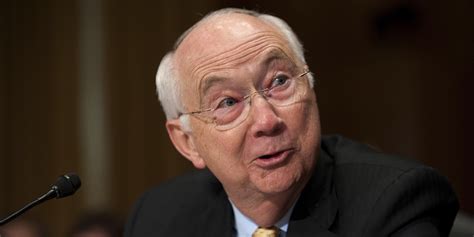
Gramm, the former Texas senator and onetime economist at Texas A&M University, amassed awesome campaign war chest to run for the Republican presidential nomination in 1995, only to exit the race in February 1996 after suffering humiliating defeats in Iowa and New Hampshire.
That year’s Republican nominee, Bob Dole, would later lose to President Bill Clinton.
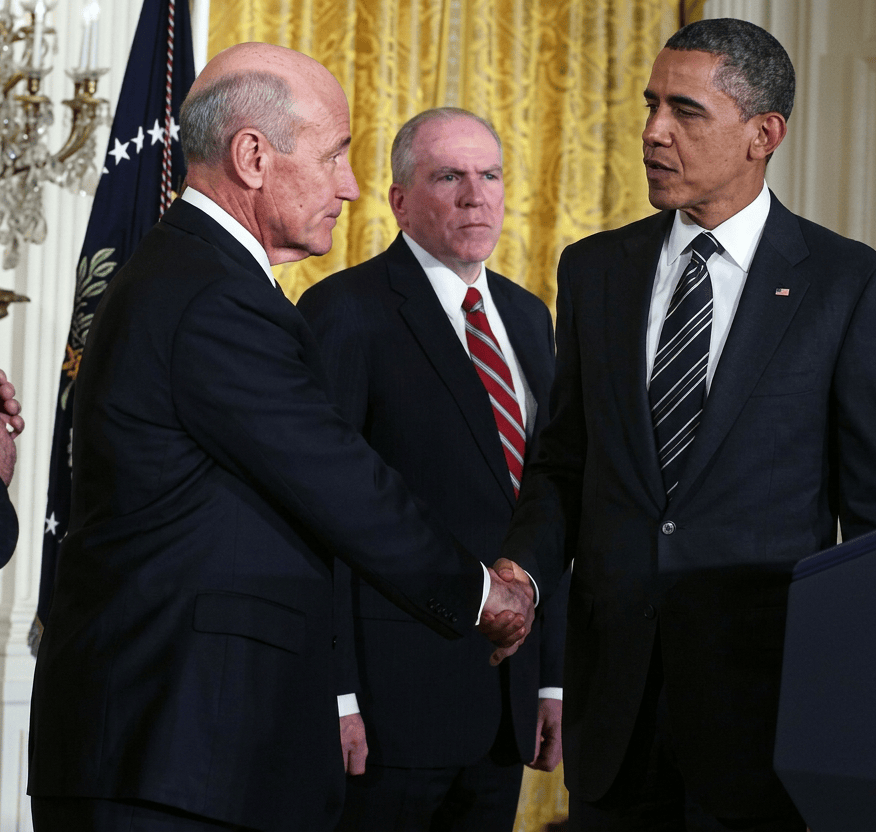
Twelve years later, Gramm inadvertently helped Democrat Barack Obama defeat John McCain for president by basically ignoring the Great Recession.
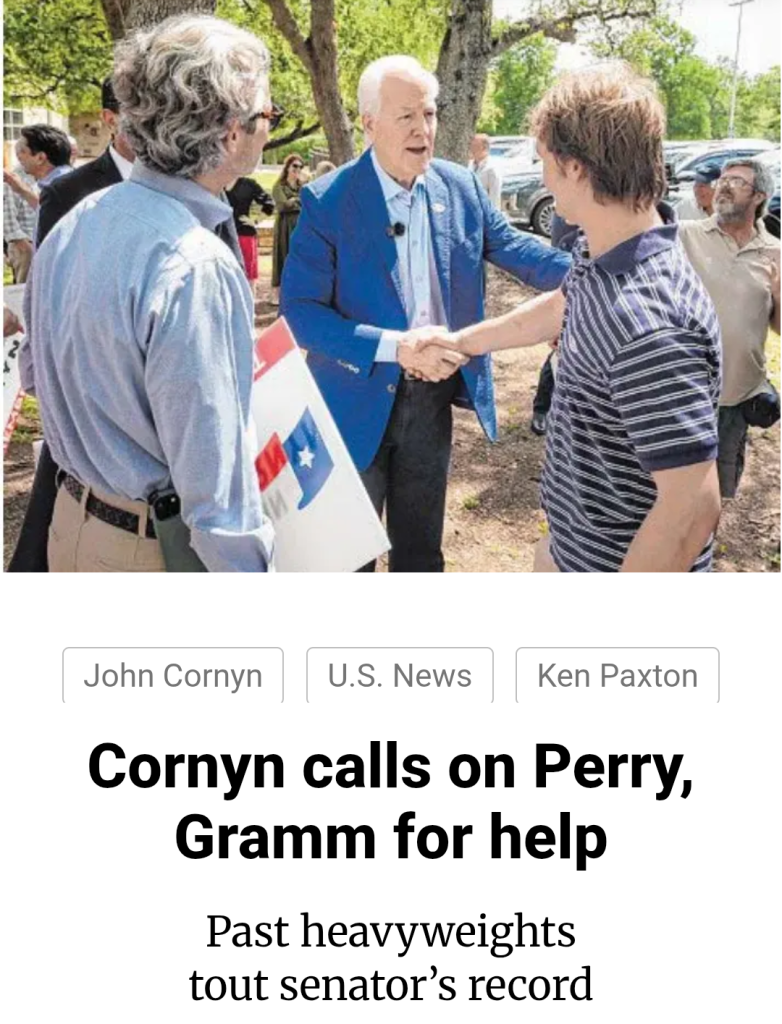
Earlier in 2026, former Texas Gov. Rick Perry, 76, and Gramm, 83, were among those campaigning for John Cornyn’s senate reelection–which thankfully failed.
Gramm was a well-paid executive at a Swiss bank when he cochaired Arizona Sen. John McCain’s presidential campaign and advised the candidate on economic matters. He was significantly mentioned as a possible Treasury secretary if McCain would have won.
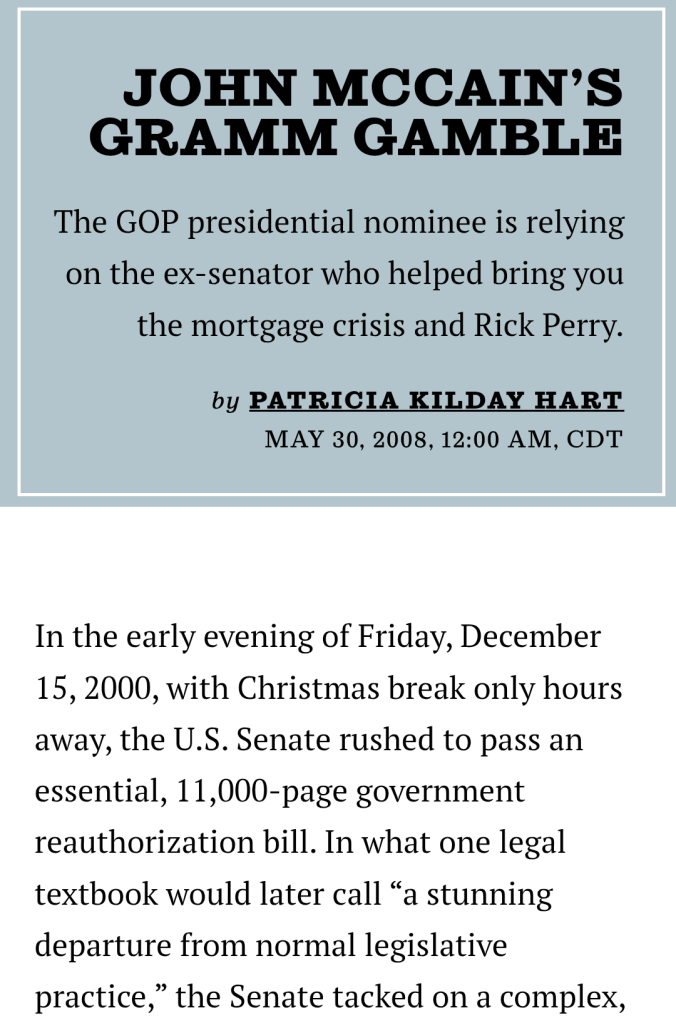
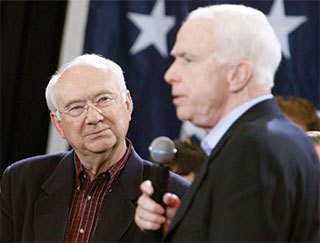
At one time Gramm was actually a Democrat, but switched to Republican in 1983. He served as a U.S. senator from 1985 to 2002. He was a strong advocate for deregulation which benefited the Enron Corporation.
Gramm ran unsuccessfully for the Republican Party nomination in the 1996 presidential election. He already had raised $8 million by as early as July 1994 and actually tied for first place with Robert Dole in the 1995 Iowa Straw Poll.
Not long after a fierce scandal broke out when it was discovered he had previously invested in the porn movies industry, which led the New York Post to nickname him “Porno-Gramm.”
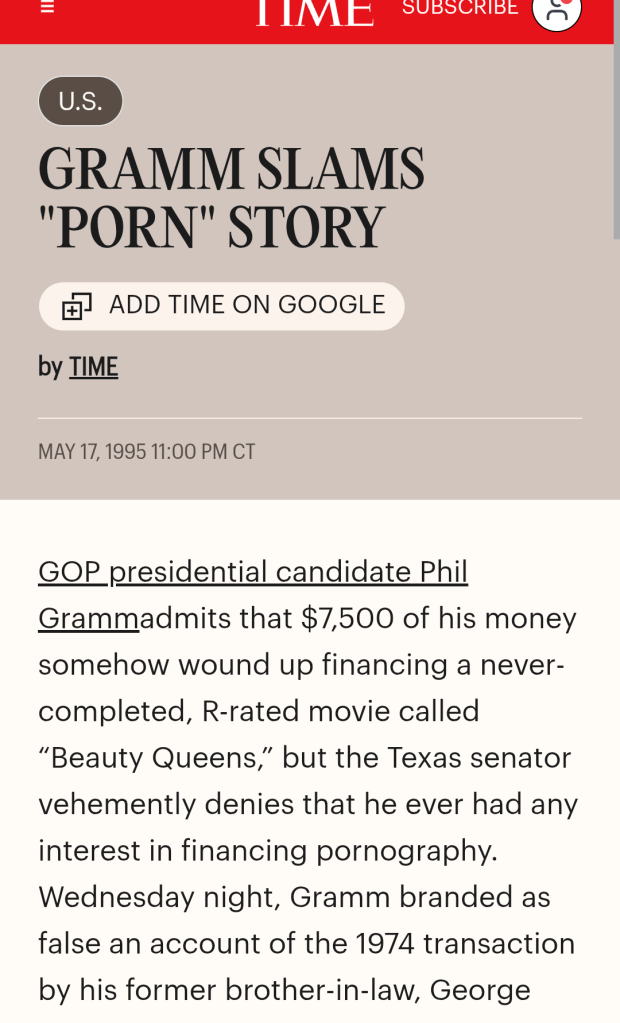
After Porno-Gramm
After leaving his presidential bid, Gramm turned back on his bid for a third Senate term. He won what would be his final term in the Senate.
During this time, FBI Special Agent Michael E. Anderson lead the historical and massive investigations regarding the most financial corruption in American history up until the recent revelations discovered by DOGE (Elon Musk), Kash Patel’s FBI and others in President Donald Trump’s cabinet.
Under Anderson, FBI agents conducted more than 1,800 interviews, collected more than 3,000 boxes of evidence, and analyzed more than four terabytes of digitized data.
The five-year investigation led to jury convictions of top Enron officials who enriched themselves by cheating investors with sham accounting and guilty pleas from many others who were in on it.
Enron Code of Ethics from 2000, signed by Enron’s Chairman and CEO Kenneth Lay, included this foreword of the Code of Ethics stating that Enron “enjoys a reputation for fairness and honesty… but no matter [what]… Enron’s reputation… depends on its people, on you and me.”
The Enron executives defrauded thousands of people out of their life savings, leading to financial ruin for many of the employees.
Twenty-two people were convicted for their actions related to the fraud, including Enron’s chief executive officer, president/chief operating officer, chief financial officer, treasurer, chief accounting officer, and heads of business units.
“The Enron Task Force’s efforts resulted in the convictions of nearly all of Enron’s executive management team,” said Anderson at the time. “The task force represented a model task force—the participating agencies selflessly and effectively worked together in accomplishing significant results. The case demonstrated to Wall Street and the business community that they will be held accountable.”
Enron: OK to Lie
“Enron was a company where it was OK to lie; it was OK to cheat as long as you were making money for the company. And that attitude was permissible up to the top levels of the company. Both Skilling and Lay (the former CEOs of Enron), they agreed with that, and they allowed employees, they tolerated transgressions as long as employees were making money for the company,” Anderson continued.
Anderson revealed that it was the thousands of victims, hard-working employees who lost their pensions, and the desire to hold accountable those responsible for the failure of Enron, that motivated agents, analysts, and others on the Enron Task Force to press ahead on the massive case.

“They lost their retirements, their health insurance, their livelihoods. That kept everyone interested in pressing forward in spite of the huge personal sacrifices inherent in working a major case for over five years,” Anderson said. “If it’s some consolation to them, the people that were responsible for this fraud were punished for it.”
- Enron developed mutually beneficial relationships with federal regulators and lawmakers to support policies that significantly curtailed government oversight of their operations.
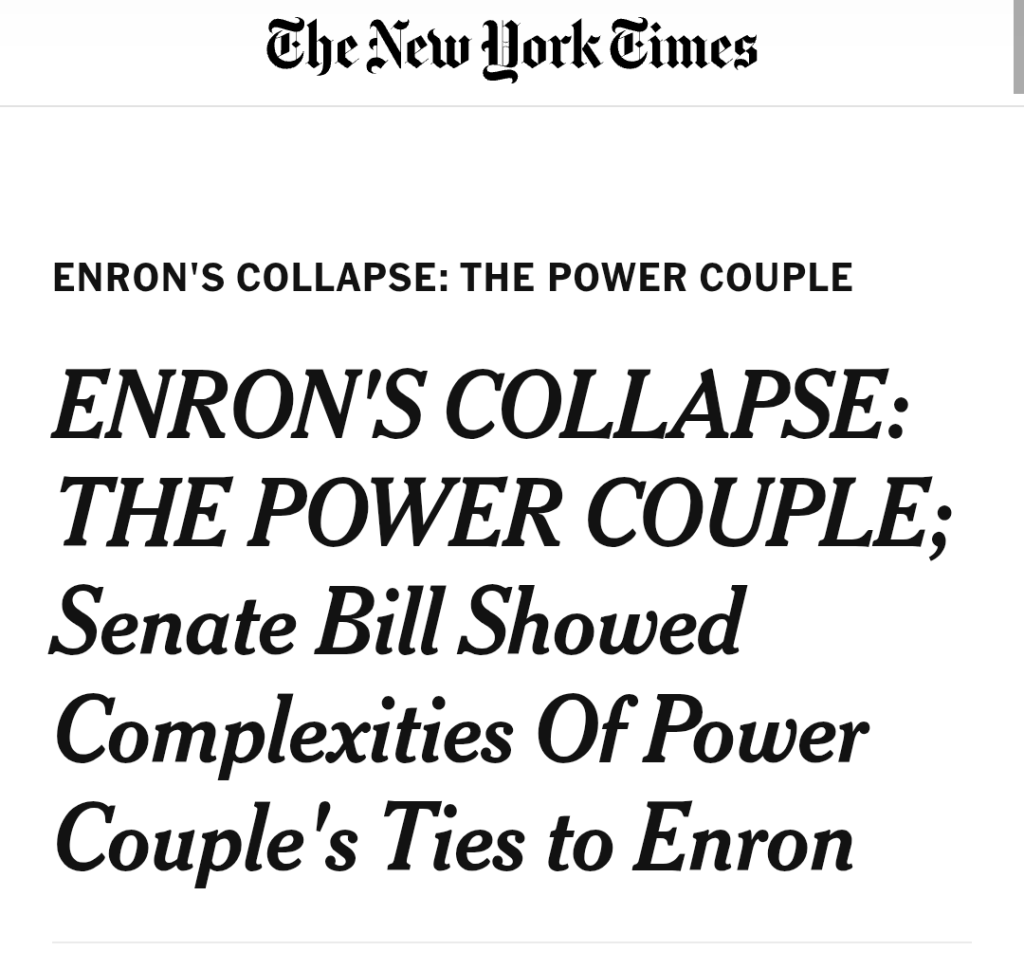
- Phil Gramm’s wife, Dr. Wendy Gramm, in her capacity as chairwoman of the Commodity Futures Trading Commission (CFTC), exempted Enron’s trading of futures contracts in response to a request for such an action by Enron in 1992. Enron was a significant source of campaign financing for her husband, U.S. Senator Phil Gramm. In fact, he was the second-largest recipient of campaign contributions from Enron.
- Only six days after she provided Enron the exemption they wanted, Wendy Gramm resigned her position at the CFTC. Five weeks after her resignation, Enron appointed her to its Board of Directors, where she served on the Board’s Audit Committee. Her service on the Audit Committee made her responsible for verifying Enron’s accounting procedures and other detailed financial information not available to outside analysts or shareholders.
- Following her appointment to Enron’s board, the company became a significant source of personal income for the Gramms. Enron paid her between $915,000 and $1.85 million in salary, attendance fees, stock option sales and dividends from 1993 to 2001. The value of Wendy Gramm’s Enron stock options swelled from no more than $15,000 in 1995 to as much as $500,000 by 2000. This was as Phil Gramm became the second largest recipient in Congress of Enron campaign contributions, receiving $97,350 since 1989.
- Days before her attorneys informed Enron in December 1998 that Wendy Gramm’s control of Enron stock might pose a conflict of interest with her husband’s work, she sold $276,912 worth of Enron stock.
- Enron spent $3.45 million in lobbying expenses in 1999 and 2000 to deregulate the trading of energy futures, among other issues.
- In December 2000, Phil Gramm helped muscle a bill through Congress without a committee hearing that deregulated energy commodity trading. This act allowed Enron to operate an unregulated power auction — EnronOnline — that quickly gained control over a significant share of California’s electricity and natural gas market.
- Phil Gramm’s legislation was in conflict with the explicit recommendations of the President’s Working Group on Financial Markets, which is composed of representatives from the Department of Treasury, the Board of Governors of the Federal Reserve, the Securities and Exchange Commission and the Commodity Futures Trading Commission. The Working group expressly recommended against deregulating energy commodity trading because the traders would be in strong positions to manipulate prices and supply.
- From June 2000 through December 2000 — prior to the bill’s passage — California experienced significant price spikes but only one Stage 3 emergency (requiring “rolling blackouts”).

- After passage of Gramm’s energy commodity deregulation bill in December 2000, Stage 3 emergencies increased from one to 38 until federal regulators helped end the crisis by imposing price controls in June 2001. Phil Gramm’s legislation, for which Enron was the primary lobbyist, allowed Enron’s unregulated energy trading subsidiary to manipulate supply in such a way as to threaten millions of California households and businesses with power outages for the sole purpose of increasing the company’s profits.
- Because of Enron’s new, unregulated power auction, the company’s “Wholesale Services” revenues quadrupled — from $12 billion in the first quarter of 2000 to $48.4 billion in the first quarter of 2001. This remarkable revenue increase came on top of the record revenue gain that Enron posted from 1999 to 2000, when full-year “Wholesale Services” revenues increased from $35.5 billion to $93.3 billion — a 163 percent increase.
- Investigations by state and federal officials concluded that power generators and power marketers intentionally withheld electricity, creating artificial shortages in order to increase the cost of power.
- Enron took advantage of lax oversight following deregulation and formed a complicated web of more than 2,800 subsidiaries — more than 30 percent (874) of which were located in officially designated offshore tax and bank havens.
- President George W. Bush’s presidential campaign received significant financial support from Enron ($1.14 million).
- Upon assuming office in 2001, Bush promptly scrapped plans put into place by former President Bill Clinton to significantly limit the effectiveness of these countries as tax and bank regulation havens. This action came at the height of high West Coast energy prices, Likely allowing Enron to siphon billions to its offshore accounts.
- At the same time, the Bush administration and certain members of Congress waged a legislative and public relations campaign against the imposition of federal price controls in the Western electricity market. Such price controls remove the ability of companies exercising significant market share to price-gouge by effectively re-regulating the market. Bush’s opposition to price controls unnecessarily extended the California energy crisis and cost the state billions of dollars.
- When federal regulators finally imposed strict, round-the-clock price controls over the entire Western electricity market on June 19, 2001, companies operating power auctions (like Enron) no longer had the ability to charge excessive prices and no longer had incentive to manipulate supply.
- While price controls clearly saved California, Enron suffered because it could no longer manipulate the market and price-gouge consumers. With no significant asset ownership to offset its losses, Enron’s unregulated power auction quickly accumulated massive debts. At the same time, the curtailed revenue flow made it more difficult for executives and members of the Board to conceal the firm’s accounting gimmicks. Amid the turmoil, CEO Jeff Skilling resigned in August. But shareholders and federal regulators did not learn of the severity of Enron’s financial trouble until November 2001. At this time, Enron’s top executives continued to receive significant bonuses.
- Due to Wendy Gramm’s position on Enron’s Audit Committee, she had intimate knowledge of Enron’s financial structure and had access to sensitive financial information not available to Wall Street analysts or average shareholders. It is therefore probable that she knew of Enron’s possibly fraudulent practices for some time and that her husband would have known as well. Enron’s 874 tax haven subsidiaries allowed Enron to funnel billions of dollars to offshore accounts.
- The Gramms’ close involvement with Enron’s corporate and legislative activities, the Gramms’ possible knowledge and/or connection to criminal misconduct relating to Enron’s collapse, and the effects of Enron’s layoffs and other economic impacts on Senator Gramm’s constituents may have been the leading factor in Gramm’s decision on September 4 not to seek re-election to the Senate in 2002.
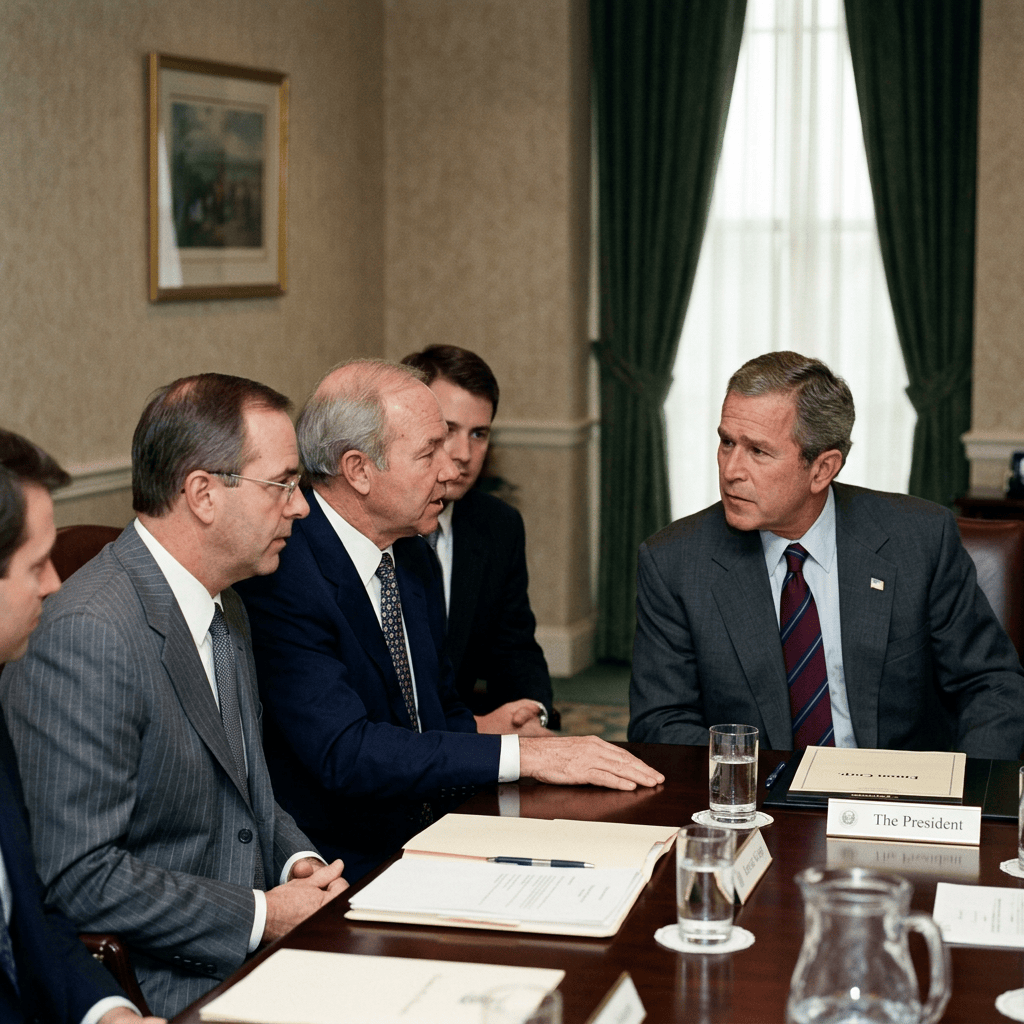
John E. Carbaugh, Jr. a former conservative Republican political operative, once noted that Gramm showed a politicization of Senate staff greater than any he had ever seen. “Great God, we would have thought this was illegal,” Carbaugh was quoted as declaring.
Gramm quickly denied any wrongdoing: there was simply nothing wrong with charging taxpayers at least $9000 just before his 1990 reelection campaign for a trip that he, his wife and two sons took to hunt on a south Texas ranch, followed by a trip to a college football game in El Paso.
He saw nothing wrong with using large numbers of his Senate staff in campaign-intense activities while still on the taxpayers’ tab. He spent $166,700.87 of the taxpayers’ monies in 1989-90 for his travel inside Texas, more than double the then runner-up Senator Alan Simpson who reported $64,337.75.
What led one assistant to quit Gramm was when the staff was organizing him to go to a church on Sunday in Texas. The aide asked staff closer to Gramm than he, “What denomination is he?” The reply: “Well, it really doesn’t matter. Find out who has a televised service and we’ll go there.”
By 2016, after the Iowa Caucus, Gramm deemed the presidential election cycle as “scary”. “I’ll have to admit I don’t find Trump much more reassuring” than Hillary Clinton or Bernie Sanders “in terms of economic policy” but did not believe Trump would be the nominee.
In God We Trust
Thank you for reading CleverJourneys.




IN GOD WE TRUST

Thanks for supporting independent true journalism with a small tip. Dodie & Jack


