
For just 12 seconds, two brothers changed the future of humanity forever.
On the cold morning of December 17, 1903, the winds swept across the sandy dunes of Kitty Hawk, North Carolina. A handful of witnesses stood nearby as two brothers prepared to attempt something most people believed was impossible.
They weren’t famous scientists or wealthy inventors.
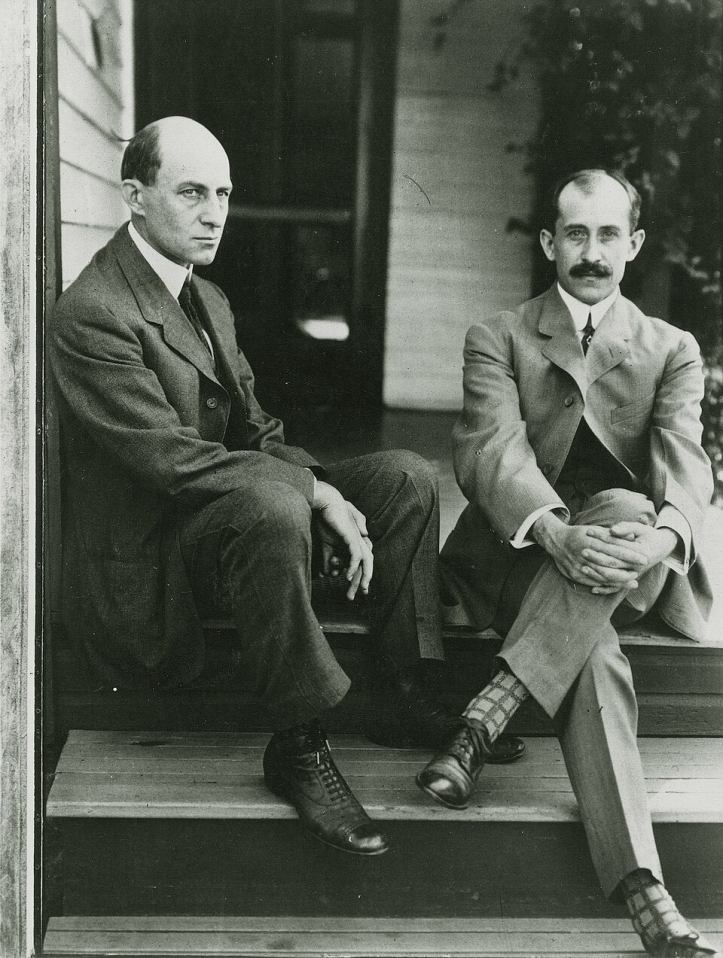
They were Orville and Wilbur Wright, two bicycle mechanics from Ohio who believed that if birds could fly, humans could learn to fly too.
For years, the Wright brothers had spent their days repairing bicycles and their nights studying flight. They read everything they could about birds, aerodynamics, and earlier aviation experiments. While others focused on building more powerful engines, the brothers realized that true flight required something even more important—control.
They designed their own gliders, built a small wind tunnel to test hundreds of wing shapes, and carefully recorded every success and failure. Each mistake became another lesson.
Many people laughed at their dream. Some newspapers ignored them completely. Others believed human flight would remain impossible for hundreds of years.
But the brothers refused to quit.
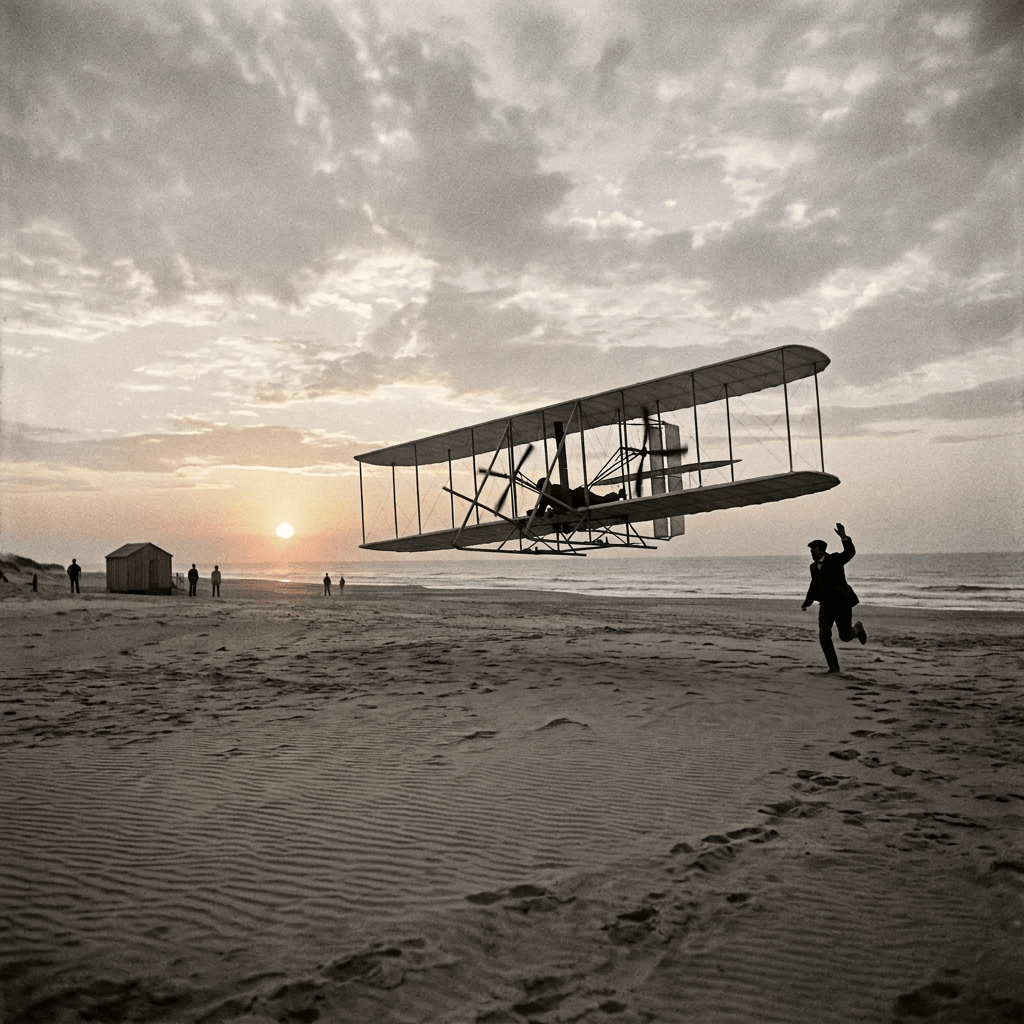
On that historic December morning, Orville Wright climbed into their machine, the Wright Flyer, while Wilbur ran alongside the aircraft as it accelerated down a wooden launch rail.
The engine roared.
The Flyer lifted into the air.
For 12 unforgettable seconds, it flew 120 feet (about 37 metres) before gently returning to the ground.
It may not sound impressive today, but in that brief moment, history changed forever.
Later that same day, the brothers completed three more flights. The final flight, piloted by Wilbur, lasted 59 seconds and covered 852 feet before strong winds damaged the aircraft beyond repair.
Even though the Flyer was broken, the impossible had become reality.
At first, few people believed their achievement. Some newspapers barely mentioned it, while others questioned whether it had happened at all. But the Wright brothers continued improving their designs, demonstrating longer, higher, and more controlled flights until the world could no longer ignore them.
Their invention transformed transportation forever.
Within just a few decades, airplanes carried passengers across countries and oceans. They connected continents, changed global trade, revolutionized warfare, and eventually made space exploration possible. Today, millions of people board aircraft every day without thinking twice about a dream that once seemed impossible.
The Wright brothers proved that history isn’t always written by those with the biggest budgets or the most powerful titles.
Sometimes it’s written by ordinary people who refuse to stop believing.
More than a century later, every airplane taking off from a runway carries a small piece of the courage, determination, and curiosity that began on the windswept sands of Kitty Hawk.
The first flight lasted less than a minute. Its impact will last forever.
IN GOD WE TRUST




To receive free email notification, when we post new articles like this, sign up below. Clever Journeys does & will not sell or share your information with anyone.

Thanks for supporting independent true journalism with a small tip. Dodie & Jack



An eloquently composed summary of the ‘story’ of the Wright Brothers. As visionary as they were, I believe they perhaps could not have foreseen the multiple and diverse impacts of their triumph.
LikeLiked by 3 people