
On Mustang Island, Port Aransas maintains stretches of pristine beach where sea turtles nest and shore birds patrol the tide line.
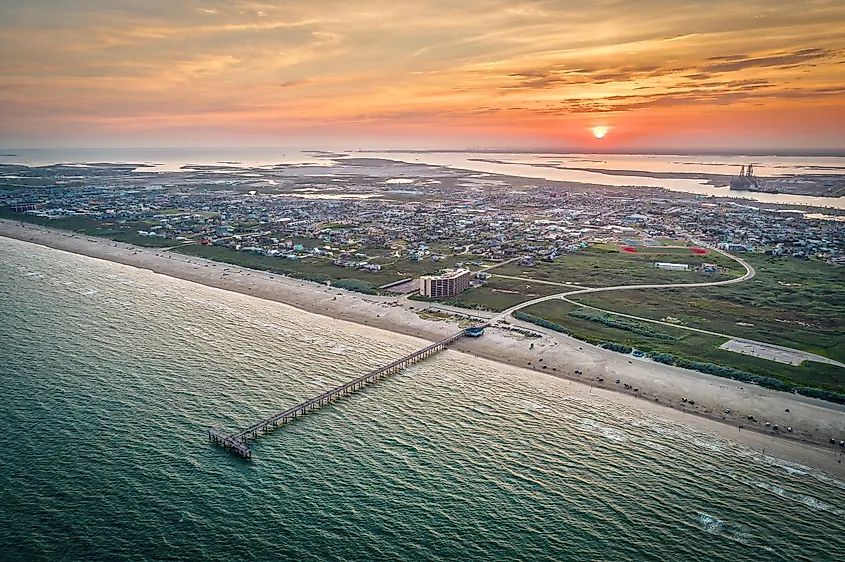
Unlike its more developed coastal neighbors, Port Aransas preserves natural areas where visitors can find solitude along windswept dunes. The Leonabelle Turnbull Birding Center provides quiet boardwalks through coastal wetlands, where roseate spoonbills and great blue herons wade through shallow waters.
The Port Aransas Nature Preserve protects 1,217 acres of coastal habitat, offering miles of quiet trails through dunes and salt marsh.
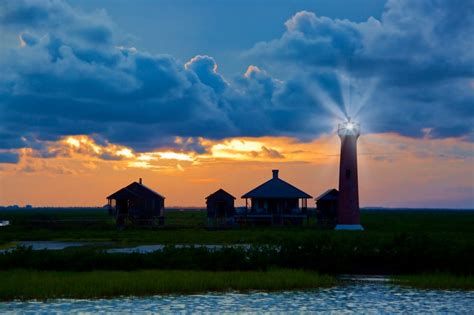
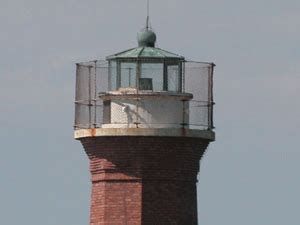
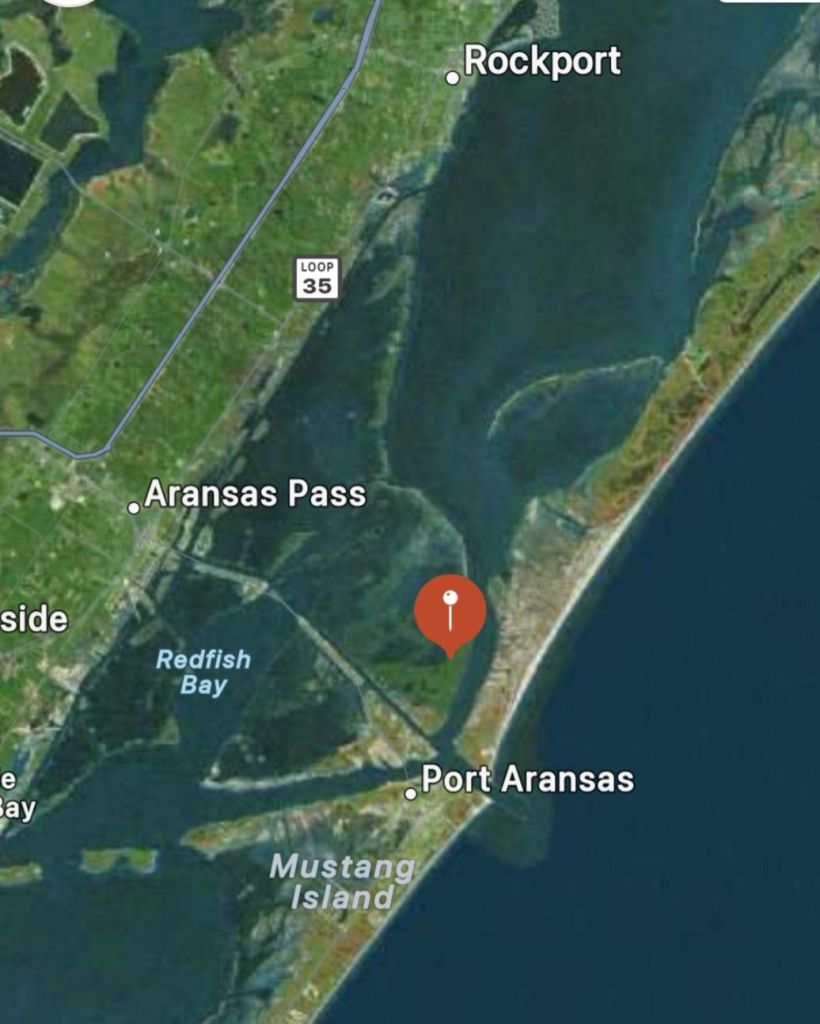
The Lydia Ann Lighthouse in Port Aransas has a deep history, having been standing just 21 years after the battle of the Alamo in San Antonio and three years before the 1860 presidential election of Abraham Lincoln, since 1857. To this day, it still guides ships through the Aransas Channel, while the surrounding waters provide sanctuary for whooping cranes and brown pelicans.
Local historians believe Lydia Ann Channel was named for Lydia Ann Dana Hastings Hull Wells, wife of James B. Wells, a veteran of the Texas Revolution who settled on St. Joseph Island with his family and raised cattle for several decades until his death in 1880.
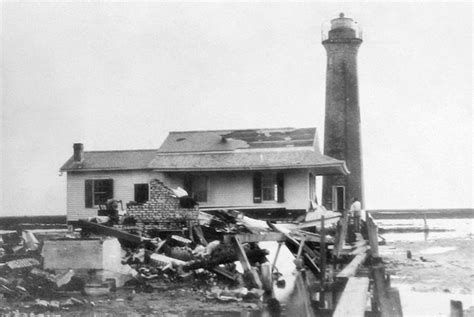
The vicinity of the lighthouse was the site of several skirmishes during the Civil War. Once, Union troops attempted to seize the lighthouse in order to guide federal ships through the pass. However, Confederate men removed the lens and buried it in the marsh after failing in an attempt to blow up the lighthouse. Removal of the lens deprived the Union of a guiding light through the dangerous channel.
In 1985, as a cost estimator for H-E-B Construction projects, I was called in to meet with Charles Butt, the president of H-E-B, and Ralph Mehringer, the vice-president of construction at our new headquarters at the historical San Antonio Arsenal (of Civil War fame).
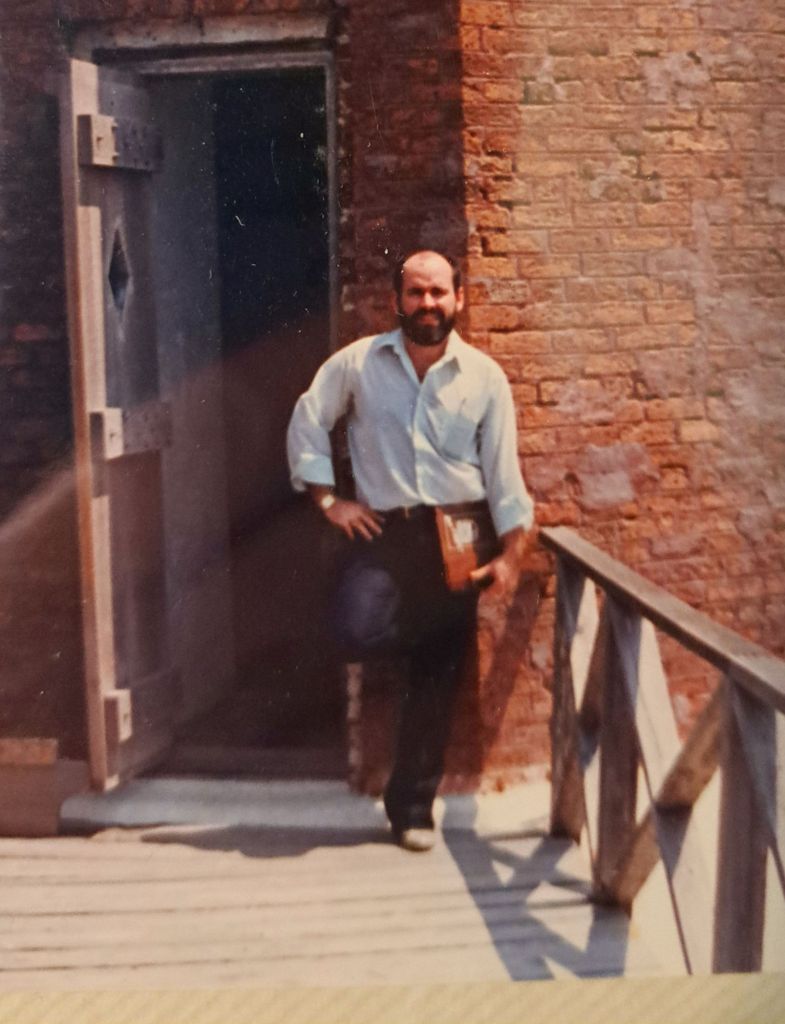
Butt, who had purchased the island in 1973, told me I would be providing a cost estimate and was being considered to project manage the refurbishment of the houses, structures and the lighthouse on Harbor Island.
To say the least, I was anxious but honored. I had on the ground experience building new and refurbishing existing grocery stores across the state, however nothing close to envisioning the complications and problems associated with such a historically significant project on a 25 (give or take, depending upon the tides and weather) acre island.
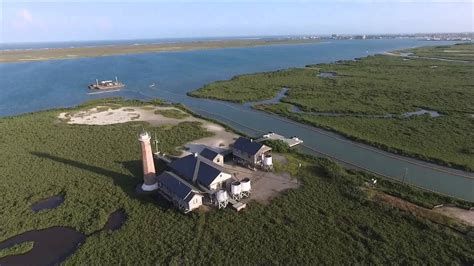
According to the Texas State Historical Association, 90 lighthouses were built since 1811. Today in Texas, there are only seven surviving lighthouses.
Completed in 1857, the original bricks were sent on a ship that had sunk. Even though the crew was rescued, the ship and the bricks were a loss.
This lighthouse suffered severe damage in two hurricanes, the latter in 1919 just two days after the repairs were made from the first one.
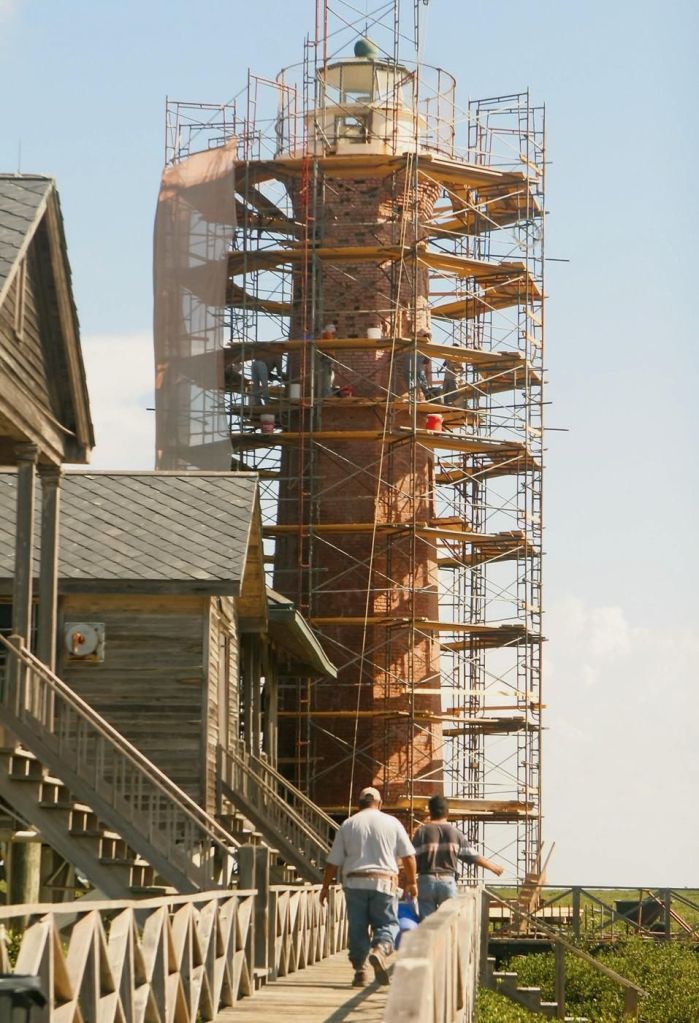
The lighthouse was deactivated in 1952, with just shy of 100 years of service along the Texas Gulf Coast. Today, the lighthouse serves as an iconic spot to visit as it’s the oldest surviving structure in the Port Aransas/Corpus Christi area.
After subsequent meetings with Butt, I gained enough information to ensure shared expectations on workscope, project definitions and his needed desires to begin cost estimates and onsite surveys.
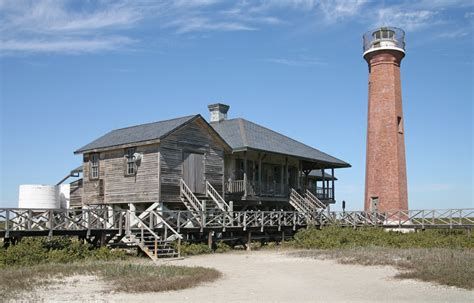
Butt had hired the wife and husband team of Cameron and Rick Pratt in 1984 and wanted me to work closely with them to refurbish and help plan maintainence of the historical landmark.
I brought a structural engineer for my first trip to the lighthouse to meet the Pratts. Rick met us at a covered dock in Port Aransas where we boarded a 20-foot boat to motor us over the semi-choppy waters for about a 15-minute journey to the lighthouse.
Loaded with at least a dozen gallon jugs of water, we passed dolphins, sightseeing boats filled with tourists and small flocks of brown pelicans, finally mooring at the private dock on Harbor Island.
The Pratt’s house stood on pilings next door to the 70-foot lighthouse.

Rick and Cameron told us that their most immediate challenge was water supply as the lighthouse and structures did not have a water system.
The engineer and I determine the three wooden cisterns, also on pilings, were antiquated and could not hold water.
He determined the soil conditions and concerns about toilet waste. I photographed, surveyed and measured details for hours to determine and ascertain needs for cost estimates.
“It’s a very hostile environment,” Rick told us. “We’re surrounded by a corrosive saltwater. Literally, the sea is underneath the houses on high tides. It’s very tough.”
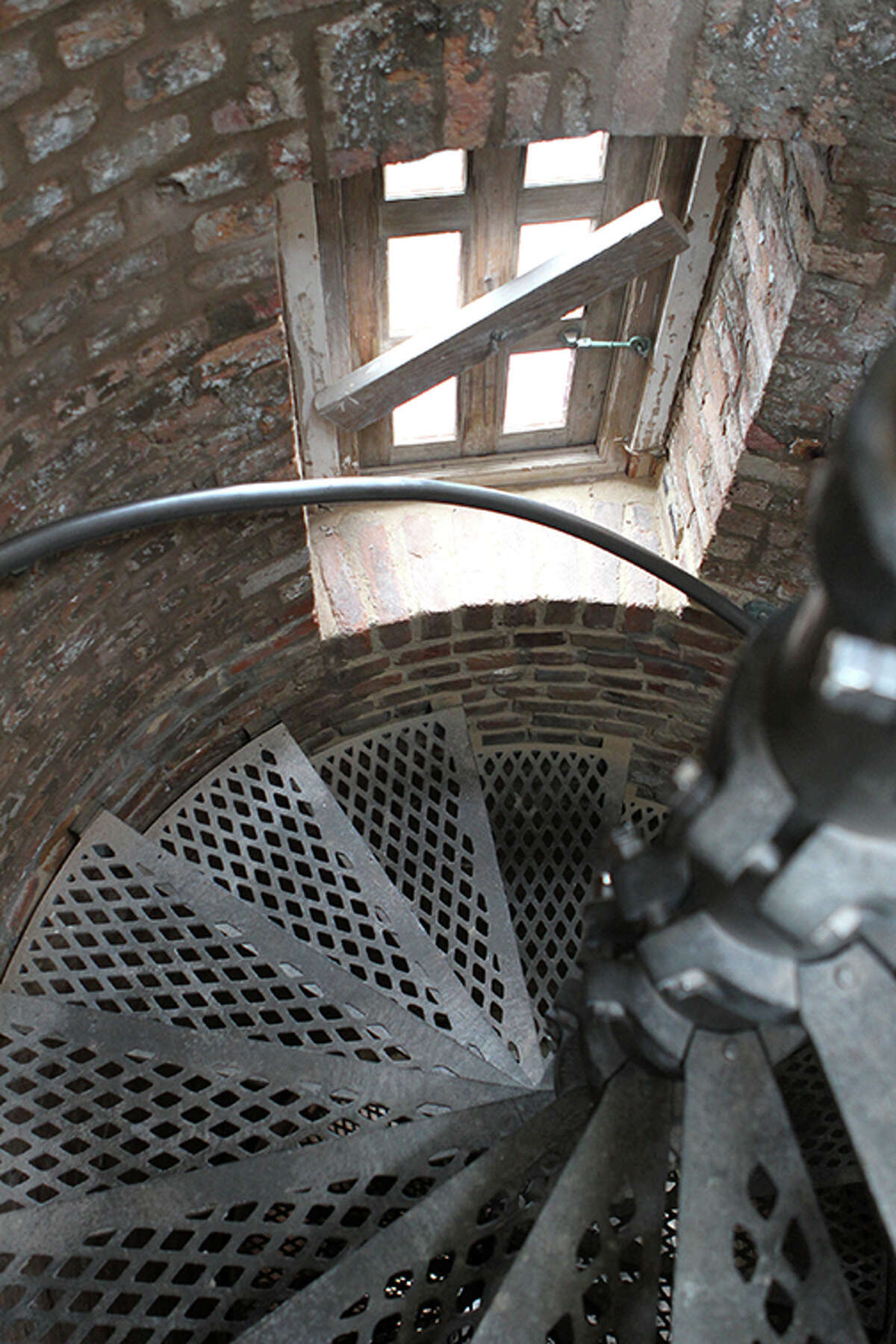
Eventually, Rick walked us up to the top of the lighthouse. Thankfully, at 28 years of age, I still had plenty of breath and strength as we ascended the circular staircase which appeared adequately bolted to both the brick structure and pole that ran up the center. There were a couple of windows on the way up and the view excitedly improved the higher we climbed.
The Pratt’s had not lived on the island very long, but it was evident they loved it.
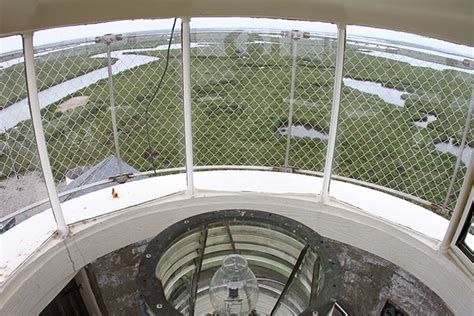
Before Rick boated us back to Port Aransas, Cameron, a biologist, smiled and said she was “a naturalist who gets to live in a place where I’m watching the rhythms of nature. You’re a part of nature, living out here. It’s wilderness. Nothing’s here that isn’t supposed to be here. Everything’s indigenous. It’s just gorgeous.”
They both realized life at the lighthouse was not a piece of cake. Surrounded by natural beauty on an uninhabited island kept them very busy and laborious.
“Everything depends on us,” Rick said. “Out here, you quickly learn the difference between what you need and what you want. You don’t run down to Circle K, Stripes or even H-E-B just because we forgot something.”
After returning back to San Antonio, I reported to Butt and Mehringer again and had the opportunity to clarify questions and concerns.
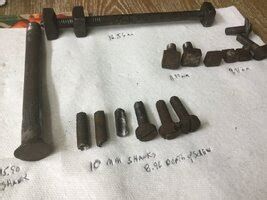
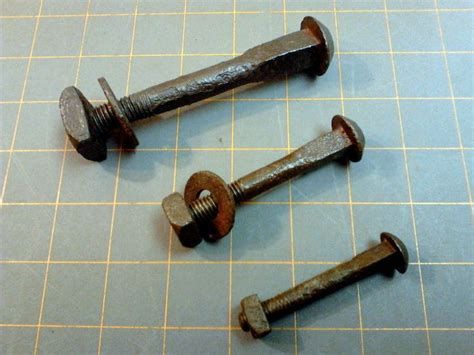
I met with the president of Alamo Ironworks (then located where the Alamodome is now) who was able to clarify (via a Civil War era book and photos I took) they could provide all the hardware, nuts, bolts, and nails needed to maintain the historical credibility. He actually had original parts and the ability to fabricate new ones according to their resources. It was important to do so as we wanted official historical designation.


Continuing to work on the estimates, I was elated to learn Garlan Tschirhart was the construction superintendent selected for the project. I had previously worked for and with him on several jobs, including large new H-E-B stores in nearby Rockport and Victoria.
Larry Colson was to be the painting supervisor and his team would be critical in sealing, staining and providing protective coats throughout the project without sacrificing the potential historic designation from Washington DC.
The three of us traveled back to the lighthouse and what I remembered most about boating across the channel was how still and glasslike the water was. It was surreal, as with pure clarity, any dolphins or fish could be clearly seen.
The big issue for Garlan was the three cisterns, but I thought he was going to fall over when I told him my plan.
“We can’t really seal these wooden cisterns with any integrity to hold water,” I said. “So what we can do is determine the capacity in weight and gallons of water required. Your crew will carefully lift the tops off and we will helicopter and place three industry grade fiberglass tanks into each one.
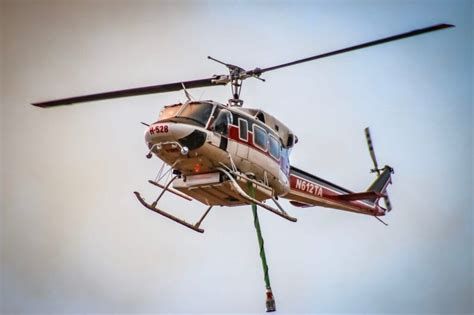
Larry laughed as Garlan turned red-faced. He took a cigarette break and walked off to think about it. Then he nervously agreed it was the best solution.
There were many details that I had laid out with a series of directions, material and equipment lists, planning and delivery schedules, and crews needed by stages of work. After I went over it with Garlan, he agreed, but only had one question:
“How in the hell am I going to find a helicopter to deliver those water tanks?”
We laughed and I replied, “Don’t worry, Garlan, I will get the helicopter. You just get the plumbers to create a way to get shipped in fresh water into the tanks, and from there, into the toilets and sinks in the houses. But, all this without interferring with the new septic system.”
The end result was that each cistern was capable of holding 2,500 gallons of water, equaling about 7,500 gallons. High grade copper gutters were installed around each building to deliver rainwater into the cisterns.
Pratt occasionally boated to town and back with a large plastic container full of water for drinking or when the supply was low.
Some of the construction and reburfurbishment team included Jack Gregory, Kapp Japhet, Mike Renfrow (lighting and energy), and Frank Guerro (painting and staining).
After the project was completed, we debriefed. Garlan and the Pratts agreed the complex job was exciting, different and something to be proud of.
Of course, Garlan (who passed away on April 20, 2024) and his crews all felt a strong sense of historical accomplishment and pride.
The Pratts, for at least 20 years, would climb the spiral staircase in the lighthouse every evening to turn on the main light that guides mariners in the Gulf of Mexico to Port Aransas. And they climbed those 60 steps again every morning to turn it off. But there was always plenty more to do.
“Your work is quite visible,” Rick once said. “And how many people get the chance to be a lighthouse keeper?”
“It’s a wonderful place to watch a storm come in,” Cameron observed. “A lot of energy. It’s kind of scary fun, watching a norther come in from way across the marsh.”
The black mangrove bushes around the lighthouse sometimes attracted thousands of fluttering white butterflies. “This place is just dancing with light when that happens,” Rick offered.

“We watch the dolphins come up the creek during low tide, and they’ll herd the fish into the creek,” he continued. “Then they roll, and it causes big waves, which wash fish on the bank — little bait fish — and they turn around and gobble them up as they come flopping down the bank. It’s incredible. It’s a feeding strategy I never heard of.”
“We’ve had flights of hummingbirds that come through here, as many as 500 or 600 in a day,” he continued. “You sit on the porch and watch them go by at an incredible rate of speed. . . . The natural environment is one that is very nurturing to us.”
The Pratts, who the last I heard, moved out to Fort Davis in West Texas, took pride in what Rick called “the biggest porch light on the coast.” They ended on the island with pomp by Rick playing his bagpipes while Cameron lowered the flags that flew in front of the lighthouse.
“Lighthouses hold this mystical fascination for people. I’m in that group,” Rick acknowledged. “And this is an island — a literal, real island. When you’re here, no one else is here. It’s an absolutely beautiful setting. There’s never been an ugly sunset. Dolphins are our nearest neighbors. . . . There’s a special peace to this place.”
More History of the Light House
The federal government purchased twenty-five acres on Harbor Island and the state of Texas shortly thereafter ceded jurisdiction over the land on June 20, 1855.
A schooner carrying the bricks for the tower foundered on the sandbar at the entrance to Aransas Pass during high seas in late December 1855.
The crew was rescued, but the ship and its cargo were a total loss. During 1856, new bricks arrived at the island, followed later by the lantern room, and finally a fourth-order Fresnel lens.
The keeper’s dwelling and the fifty-five-foot, octagonal tower, with a coat of brown paint, were completed by the early part of 1857. The light from the tower’s lantern room first illuminated the night sky above the pass later that year.
Sometime after the start of the Civil War, the lens was removed from the lantern room for safekeeping. Control of the tower passed repeatedly between Confederate and Union forces.
Then, on Christmas Day 1862, Confederate General John B. Magruder ordered the destruction of the tower. Two kegs of powder were exploded inside the tower, damaging the upper twenty-feet of brickwork and destroying most of the circular staircase.
After the war, Texas’ lights were gradually repaired or rebuilt and returned to service. Early in 1867, a work crew arrived to repair the upper portion of the damaged tower at Aransas Pass.
Acting District Lighthouse Engineer M.F. Bonzano described a winter storm that hampered the work:
“During the progress of the repairs one of the severest Northers ever experienced on the Texas coast occurred. The cold was so severe that frozen fish were hove ashore by the hundreds and birds of all sorts sought refuge in the tower and camp of the workmen where they perished in large numbers.”
Aransas Pass Lighthouse was the last principal light along the coast to return to service, doing so in the spring of 1867.
Parry W. Humphreys was appointed keeper of the lighthouse on June 3, 1869. To supplement the provisions supplied by the Lighthouse Service, the family maintained a vegetable garden on Mustang Island. While the two previous keepers had lasted only a year at the station, Keeper Humphreys spent over sixteen years and apparently didn’t leave the station willingly.
In 1885, the District Inspector felt that Keeper Humphreys, who was about seventy-four years old at the time, was unfit to maintain the station.
The superintendent visited the station and urged the dismissal of Humphreys not only on account of his age but also for “drunkenness, disobedience of orders and refusing to pay his debts.”
The Humphreys finally left the station in March 1886. At the time of their departure, Jane Humphreys had been serving as assistant keeper to her husband for a decade.
Hurricanes periodically swept through the area, inflicting varying degrees of destruction on the station. The most damage was caused by the hurricane of August 18, 1916, which prompted Congress to allocate “$20,000 for repairing buildings and dwellings, out buildings, and appurtenant structures, damaged or destroyed in the hurricane.”
The brick keeper’s dwelling was leveled, while the porches were torn away from the frame assistant keeper’s dwelling and the station’s wharf was wrecked. A temporary walk was built and repairs were made to the assistant keeper’s dwelling, but work on more permanent structures didn’t begin until May 1918.
A double-dwelling of hollow-tile construction was built about thirty feet southwest of the lighthouse atop twenty cast-iron columns that were each supported by a concrete footing that capped a nineteen-foot yellow-pine pile driven into the marsh.
The dwelling had three rooms in each of its two apartments and its roof extended out over a wrap-around porch.
Detached kitchens were built behind the dwelling and were linked to it by a four-foot-wide covered gallery.
Facilities, in the form of a two-compartment, frame privy set atop a brick foundation supported by a creosoted pile foundation, were also separate from the dwelling.
A thirty-foot-long and six-foot-wide wharf was built parallel to the nearby bayou, and a five-foot-wide walkway that was roughly 270-feet-long connected the wharf to the dwelling, oil house, and tower.
On September 13, 1919, two days after the new structures were practically complete, another devastating hurricane struck the station.
The workmen weathered the storm in the new hollow-tile keeper’s dwelling, but the old assistant’s dwelling was swept away. A second small dwelling was subsequently built just behind the tower and adjacent to the double-dwelling. These edifices survive to this day, along with a third dwelling added around 1940.
Electricity reached the station in 1928 when diesel generators were brought in to power a newly installed radiobeacon.
Using a signal from at least two such beacons, mariners could determine their precise position along the coast.
On April 11, 1935, the keeper at Aransas Pass was forced to operate the radiobeacon continuously for two days as the air was filled with dust, limiting visibility to about a quarter mile.
The keeper reported: “The dwelling, tower, and radio room, are covered, inside and out, with a coating of dust that is as fine as chalk.”
When the Coast Guard assumed responsibilities for all lighthouses in 1939, a civilian keeper and three Coast Guard assistants staffed the station. Together, they shared the responsibility for the lighthouse and forty minor beacons marking the channels in the area.
By the middle of the twentieth century, Aransas Pass had slowly inched over one mile south of the lighthouse. To better mark the entrance, a new light was established in 1952 at the Port Aransas Coast Guard Station, and Aransas Pass Lighthouse was deactivated, just a few years shy of a century of service. The Lydia Ann Channel, which runs north from the pass, was now the closest waterway to the tower, and the lighthouse started to be referred to as the Lydia Ann Light.
In 1955, after no government entities expressed interest in the abandoned Aransas Pass Lighthouse, it was sold into private hands. Everett Bohls, of Austin, Texas, submitted the winning bid of $25,151, while the mineral and oil rights were sold separately to Jack Rowe.
☆☆☆☆☆
IN GOD WE TRUST


Thanks for supporting independent true journalism with a small tip. Dodie & Jack


Use Code CLEVER10 for a 10% discount on Green Pasture products today!
CLICK HERE for INFO on GREEN PASTURE BENEFITS



CINDY LEAL MASSEY, TEXAS AUTHOR

CleverJourneys is on Gab.com

 Clever Journeys
Wowza, Jack! That is an amazing and wonderful story! It’s great enough just because I love lighthouses, history, human interest, and I am a former project manager. But the fact that you were personally, directly, fundamentally, and totally involved in its restoration and upgrades 40+ years ago, when you were not even yet 30 years old is fantastic. And so well told! Thank you for sharing this, Jack. Makes me want to go visit it. I might just reblog this post, too. ~Ed.
LikeLiked by 3 people
Thank you very much. I have heard from some of the crew since posting this article & it looks like a future reunion is in the works this summer. It was quite the challenge, but like most of us, we all have our cherished memories. I appreciate you.
LikeLiked by 3 people
This is an interesting post about your role in preserving a bit of maritime history. Kudos to you, Jack. 🙂
LikeLiked by 2 people
Thank you for the story. What I remember about Port Aransas is the great seafood.
LikeLiked by 4 people
Wonderful stories and pictures; brings it all to life. And I thought only Maine had all the good lighthouse stories! I believe that’s called being provincial. Also, I never really thought about the Texas coastline, and lighthouses going back to 1811, but of course they did; this country and its seacoasts were busy early on all the way around, way before we were actually the United States. Ingenious water system you guys set up, and it’s giving me ideas. I particularly loved the photo of Rick playing the pipes with the two dogs obviously singing along. Ready and Abel always sang (ear-splitting) whenever I did or played “Take It to the Limit.”
LikeLiked by 3 people
I am laughing thinking of R & A singing along.
LikeLiked by 2 people