
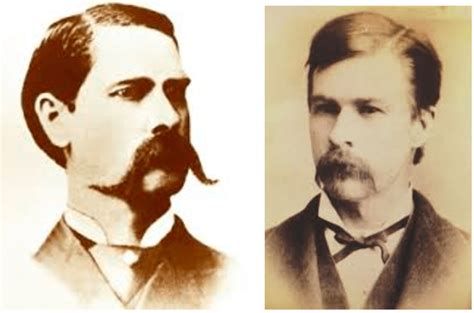
The man on the left in this photo, taken in 1883, is my great, great Uncle Charlie Bassett. Next to him is Wyatt Earp. They were part of the legendary Dodge City Peace Commission
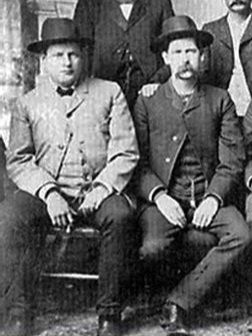
Here is the complete photo:
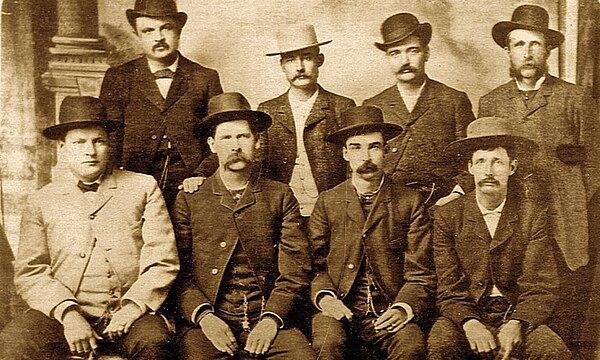
What became known as the “Dodge City War” began when Luke Short returned to Dodge in April, 1881 and went to work at the Long Branch Saloon and in two years became part owner.
In March 1883 his partner, W. H. Harris, was nominated to run for mayor against the “law and order” candidate, Larry Deger, who was backed by the former mayor, who just happened to own the Alamo Saloon, the Long Branch’s chief competitor.
Deger won and suddenly two new ordinances were passed aimed against the Long Branch and Luke Short.
Short and a deputy exchanged gunfire. No one was hurt. Short and three other gamblers were arrested, taken to the train station and told to get the hell out of Dodge.
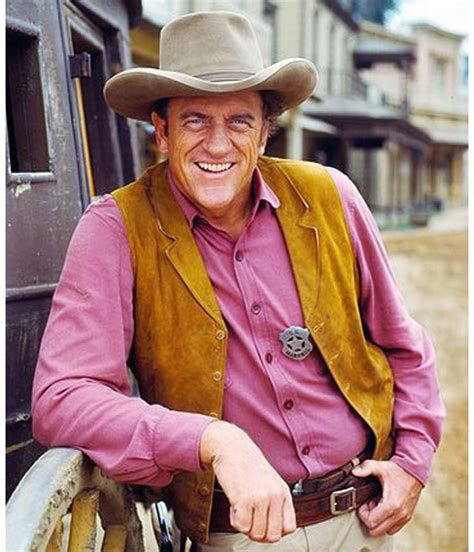
Many of us grew up watching actor James Arness portraying Marshall Matthew Dillon on television as the first law enforcement officer of Dodge City.
Short went to Kansas City where he met with the real life first and former Ford County Sheriff Charlie Bassett.
Between 1873 and 1879, Bassett was the constant law enforcement officer in Dodge City. Not the Mastersons. Not the Earps. Those men wore the badge there for only a couple of years each—and all of them reported to Bassett at one point or another.
Short then wired Bat Masterson in Denver and asked for additional help. Bat headed for Silverton where he met with Wyatt Earp and Doc Holliday. Thus marked the beginning of the bloodless conflict known as the “Dodge City War.”
Thanks to intervention on the part of the Kansas Governor George Glick, Short was told he could return to Dodge and have ten days to close out his business.
What appeared to look like a bloody gunfight war was calmed by the presence of such famous gunmen riding into town to help their friend.
In the end, economics prevailed. Mayor Deger’s action would ruin the cattle business. Pressure came from both the Santa Fe Railroad and Gov. Glick. The two sides met in a dance hall on June 9th and settled their differences.
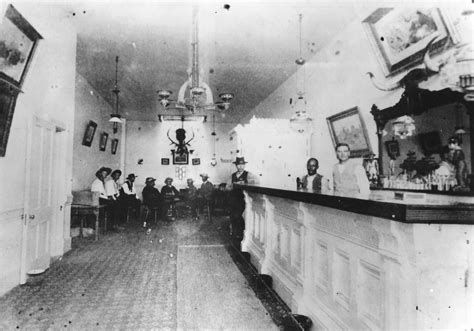

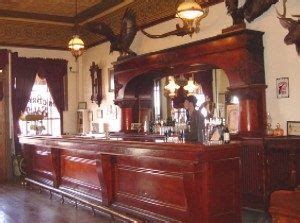
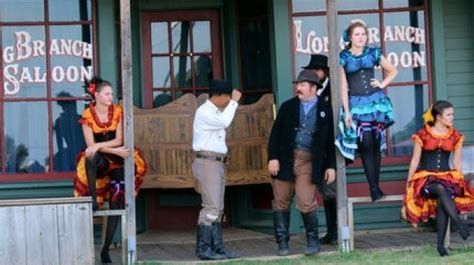
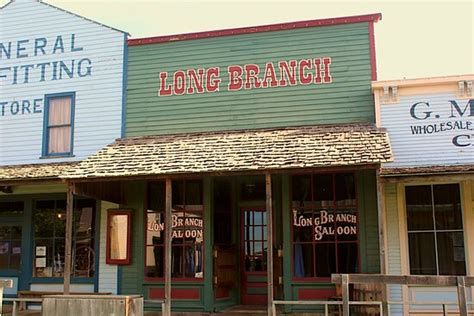
Quickly, the dance halls and saloons were reopened. After the photo was taken Masterson and Earp boarded a westbound train and headed to Colorado.
Apparently Holiday was in Colorado and therefore wasn’t present for the famous photograph.
The Long Branch reopened but Short sold out that November and moved to Texas.
Many believe the fictious tale that two of these Old West’s most legendary characters said their final goodbyes in Glenwood Springs, Colorado. The historically accurate final meeting between Wyatt Earp and Doc Holliday occurred in the lobby of Denver’s Windsor Hotel at 18th & Larimer.
In the spring of 1885 Wyatt and Josephine Earp were staying at the Windsor as part of a business trip. In May 1885 Wyatt became a partner in the Fashion Saloon in Aspen, Colorado.
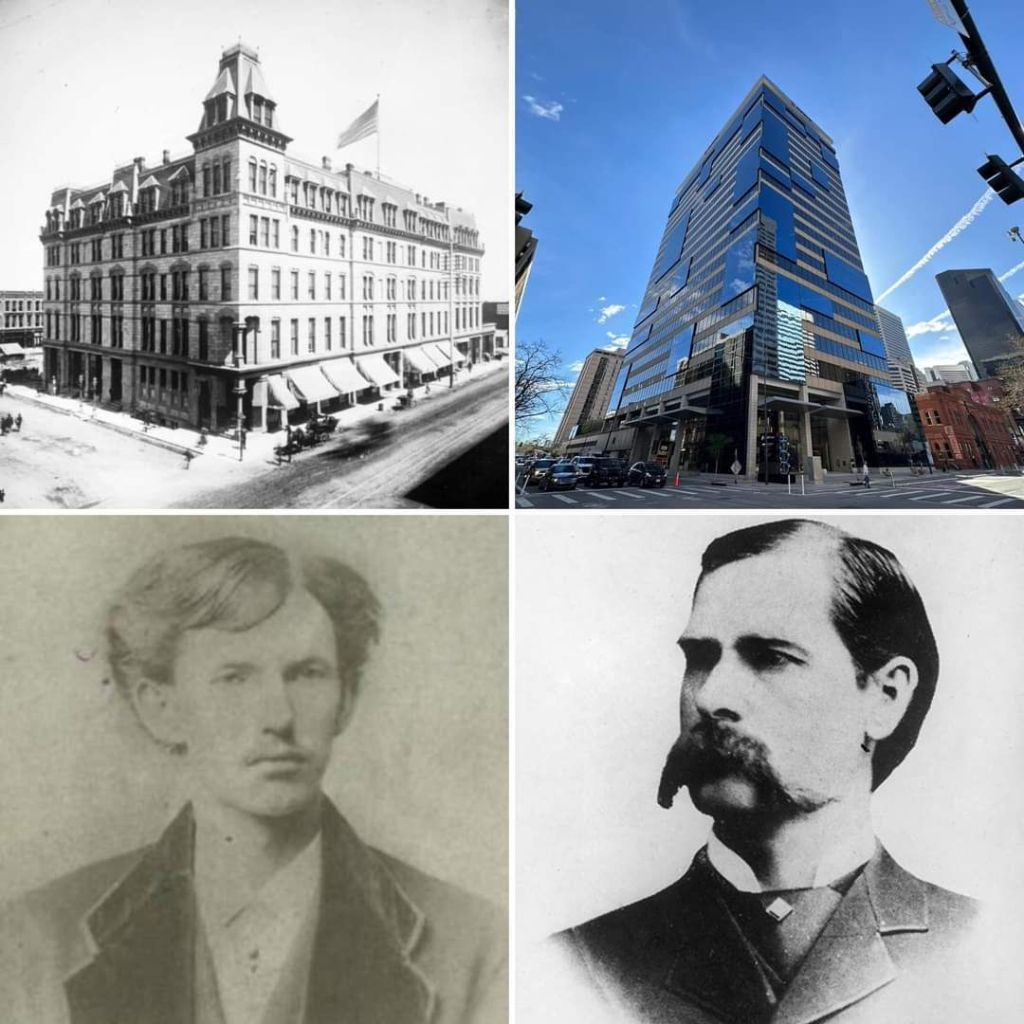
Doc had learned that Wyatt was staying at the Windsor and took the opportunity to see his old friend once more.
Josephine Earp recalled sitting in the lobby when a familiar form appeared: “There, coming toward us, was Doc Holliday, a thinner, more delicate-appearing Doc Holliday even than he had been in Tombstone. I have never seen a man exhibit more pleasure at meeting a mere friend than did Doc. He had heard that Wyatt was in town, he said, and had immediately looked him up. “When I heard you were in Denver, Wyatt, I wanted to see you once more,” he said, “for I can’t last much longer. You can see that.”
“Doc came over and chatted with us for a few minutes, and then he and Wyatt walked away to speak privately, Doc on visibly unsteady legs.”
“They sat down at a little distance from us and talked at some length, though poor Doc’s almost continuous coughing made it difficult for him to say anything. Wyatt repeated their conversation to me later.”
“Doc told Wyatt how ill he had been, scarcely able to be out of bed much of the time.”
“Wyatt was touched. He remembered how Doc had once saved his life…in Dodge City….My husband has been criticized even by his friends, for being associated with a man who had such a reputation as Doc Holliday’s. But who, with a shred of appreciation, could have done otherwise?”
“Besides my husband always maintained that the greater part of the crimes that were attributed to Doc were but fictions created by the woman with whom he lived at times when she was seeking solace in liquor for the wounds to her pride inflicted during one of their violent disputes.”
This obviously is a reference to Big Nose Kate, who Holiday began a ten tear relationship in John Shanssey’s saloon in Fort Griffen, Texas (between Abilene and Witchita Falls) beginning in 1877.
“The old friends laughed and cried together and Wyatt thanked Doc again for saving his life back in Dodge City. Doc had a persistent cough and was unsteady on his feet as he gamely walked away, frail, grey and gaunt.”
“Wyatt’s sense of loyalty and gratitude was such that the world had been all against Doc, but that he should have stood by him out of appreciation for saving his life.”
“Isn’t it strange,” Wyatt remarked to Doc that day in Denver, “that if it were not for you, I wouldn’t be alive today, yet you must go first.”
“My husband was deeply affected by this parting from the man who, like an ailing child, had clung to him as though to derive strength from him. There were tears in Wyatt’s eyes when at last they took leave of each other. Doc threw his arm across Wyatt’s shoulder. “Good-by old friend,” Doc said. “It will be a long time before we meet again.”
“He turned and walked away as fast as his feeble strength would permit. Only a short time after this we heard that he had died.”
Holiday was originally buried in Glenwood Springs, but years later his family moved him back to the private family plot in Griffin, Georgia. They did this before the great flood had pushed bodies into the hill side.
Earp lived in Los Angeles in his later years and spent some time on the movie sets in Hollywood. He became good friends with William S. Hart and Tom Mix, early cowboy stars. The great director John Ford remembered Earp describing a gun fight to him and even drawing a diagram of the action.
Ford used that description to film the fight in My Darling Clementine. The fight is now known as the Gunfight at the OK Corral.
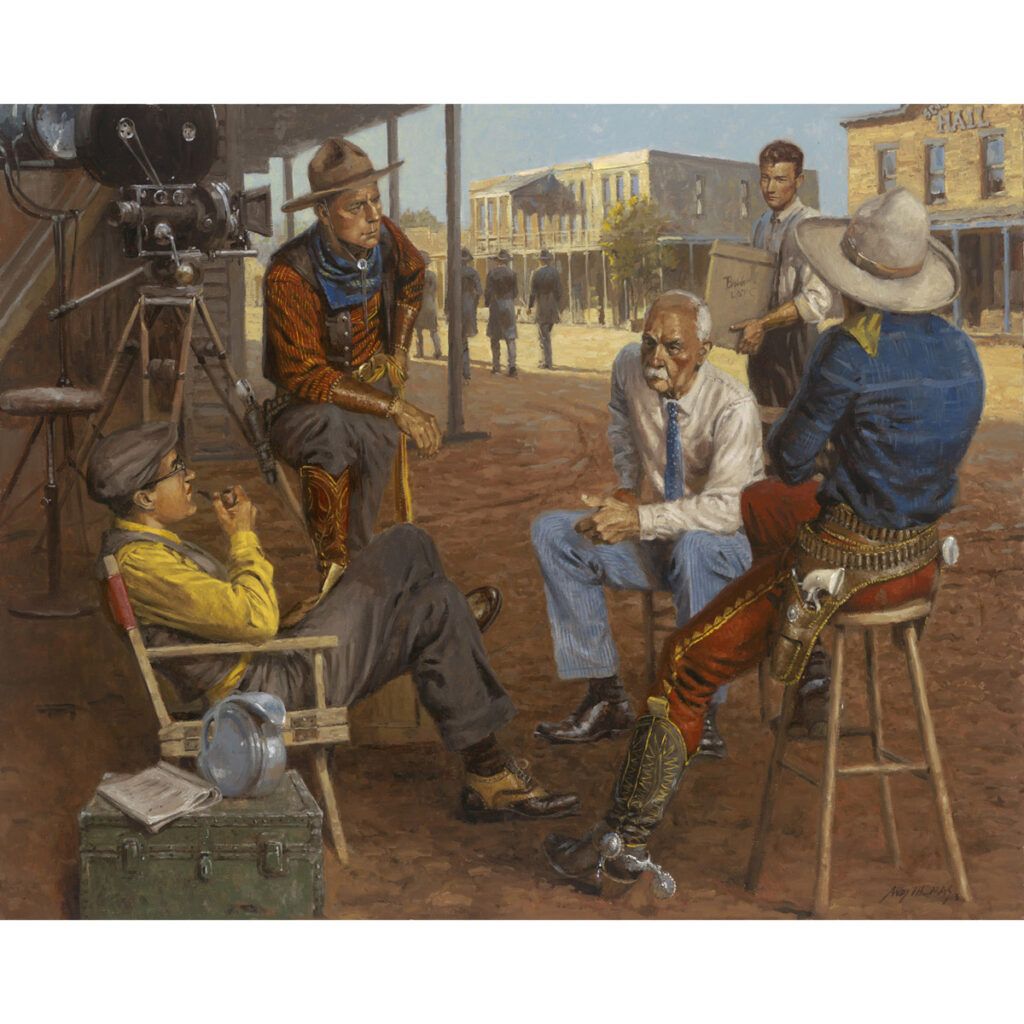
This painting depicts Earp describing the scene as Ford, Hart and Mix listen. The movie front in the background is actually Fremont Street in Tombstone, as the Earp brothers and Doc Holliday, walk down to confront the cowboys. Also listening is a young prop hand, who in his own film career, used Earp’s mannerisms for his own portrayals of tough western characters.
☆☆☆☆☆
IN GOD WE TRUST
Thanks for supporting independent true journalism with a small tip. Dodie & Jack

Green Pasture Here!


Use Code CLEVER10 for a 10% discount on other Green Pasture products today!

CINDY LEAL MASSEY, TEXAS AUTHOR

WWW.KOA.COM



 Clever Journeys
Thanks for posting this.
LikeLiked by 1 person
Love stories of the old west. How cool is that your relative was a part of that historical time period. Thanks for the great recount.
LikeLiked by 2 people
I actually do see a resemblance between you and Charlie. 🙂
LikeLiked by 1 person
That’s great history, fascinating, and you make it feel almost contemporary, alive. I believe one of my neighbors is related to Tom Mix, on her mother’s side. Charlie Bassett is a pretty good ancestor to have!
LikeLiked by 1 person
Tom Mix! That’s a name I haven’t heard in a while. Thank you.
LikeLiked by 1 person
TOMBSTONE was a great western. Val Kilmer had some great lines.
LikeLiked by 1 person
I’ll be your Huckleberry.
LikeLiked by 1 person
“Look, darling, Johnny Ringo.”
LikeLike