

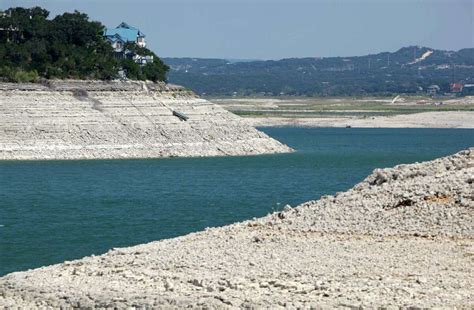
Summer in Texas is shaping up to be hotter and drier than average for much of the state. More than 86 percent of Texas was experiencing drought in 2022, according to the U.S. Drought Monitor. With higher temperatures and less rainfall, water conservation is a hot topic for many communities across the state.

A concern is how rapidly the state’s population continues to trend upward. The Texas Water Development Board’s recent State Water Plan anticipates Texas’ population will increase from over 30 million in 2023 to 51.5 million in 2070, a 73 percent increase. With that growth comes a projected 9 percent increase in total water demand.
Water conservation is one of the major strategies recommended in the state water plan to help meet the projected needs for additional water supplies. Together, every Texan’s individual conservation practices can make a big difference in the state’s overall water use.

Consider the ways you can do your part in saving water this summer with the following outdoor tips.
1. Water landscape in the early morning and at night
Winds are calmer and temperatures are lower in the early morning and late evening, resulting in less water loss due to evaporation. Watering before nightfall gives leaf surfaces time to dry and deters disease and decay.
2. Design a water-wise landscape
Plant water-efficient, well-adapted, and/or native shrubs, trees, and grasses in your landscape. Because native plants have adapted to a region’s climate over time, they conserve water more efficiently than non-native plants. Local nurseries are good sources of information about landscaping tailored to your area.

3. Follow local watering restrictions
Outdoor watering guidelines are common as communities across Texas think about preserving and managing their water supply during drought. Utilities put these restrictions in place to spread out water use when many people are using water at the same time, like when irrigating their lawns.
4. Manage in-ground irrigation and check your sprinkler heads
Manually adjust your in-ground irrigation system according to rain events and seasonal fluctuations instead of leaving the system on an automatic setting. Not all plants have the same watering requirements, so ensure that water is being applied where it is needed and in the amount that is needed. The best type of sprinkler for lawns is one that produces large drops of water close to the ground.
5. Consider installing a rainwater harvesting system
Evidence suggests that people have harvested rainwater since as early as 4500 BC, and a renewed interest in the practice has emerged due to the rising environmental and economic costs of centralized water supply systems. Generally, for every inch of rain that falls on a 2,000-square-foot roof, about 1,000 gallons of water can be collected.
6. Cover your pool or spa when not in use
Leaving your pool uncovered leads to water evaporation, which can add up to the equivalent of your pool’s volume each year! A pool cover will help you avoid the need to refill your pool throughout the summer.
IN GOD WE TRUST




CLICK: PARK LANE by Rebecca Taylor

For free email notice when we post a new article like this, sign up below.

 Clever Journeys
Wish we could pipeline some of our water down there for you. We are loaded; storm after storm, roads washed out, brook rerouting. No lack at all.
LikeLiked by 1 person
Yes, it’s getting serious out this way & further west: NM, AZ
LikeLiked by 1 person