
Forget about the paradigm you have about Native American Indians you learned from television, online or in movies.
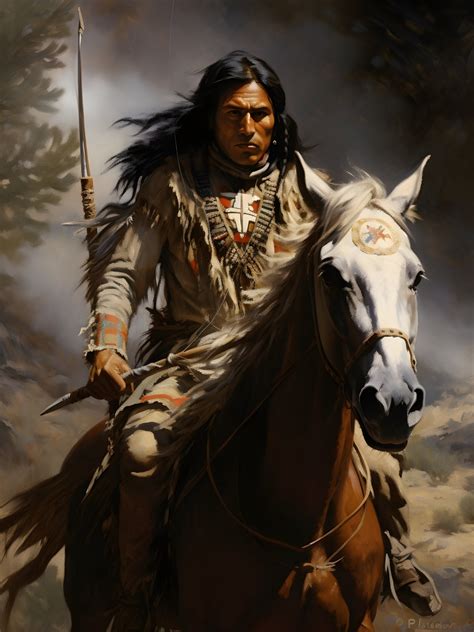
Written in 1885, this account from someone who knew offers real life insight and tactical advice on how to fight Comanches.
“In the event of being pursued, immediately after the preparation of depredations; the Comanches move day and night, very often not breaking gallop except to exchange horses (which they do several times) and water the caballada, until they deem themselves safe.
Under these circumstances they will travel at least 70 miles a day, which is a long distance with the encumbrance of loose animals.
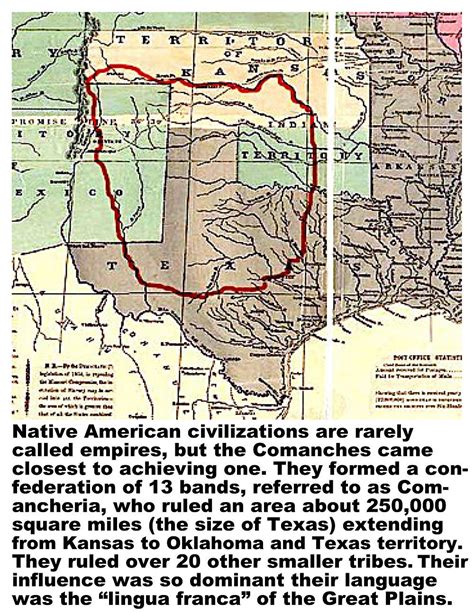
A party of warriors dressed in their trappings – embellished shields, fancy moccasins, long pig tails bedecked with silver, shoulder belts worked with beads and adorned with shells, fine leggings, ornamented cases for bows and arrows – mounted upon spirited horses, singing a war song, and sweeping over a prairie is a beautiful spectacle to a man with plenty of brave fellows to back him.
Their motions are easy and graceful. They sit on a horse admirably, and manage one with a master hand. Charge them and they will retreat from you with double your numbers. But beware when pursuing them; keep your men together, well in hand, with at least half their arms loaded, else you will find when it is too late, the flying Comanches will turn on you and charge you to the very teeth.
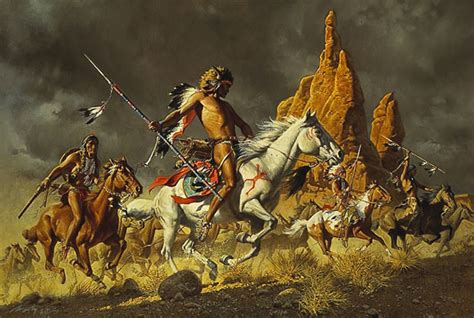
A Comanche can draw a bow when on horseback, standing or running, with remarkable strength and accuracy. They have been known to kill horses running at full speed over one hundred yards away.
In the commencement of a fight, the yell of defiance is borne to you loud, long, and startling. The war whoop has no romance in it. It thrills even a stout heart with an indescribable sensation.
The excitement of battle is quite as evident among these people as among others. Let the tide turn against them, send lead messengers through some of their warriors, and then the mournful wail is heard; its lubricious notes are borne back to you with uncouth cadence, betokening sorrow, anger, and a determination to revenge.
Never ride upon a bowman’s left; if you do, ten to one he will pop an arrow through you. When mounted, an Indian cannot use his bow against an object behind and to his right.
The dead are usually borne from the field. Nothing but the most imminent danger prevents them from performing the incumbent duty of not leaving the body of a comrade in the hands of an enemy.
Over a fallen chief they will make a desperate stand. Their caution seems merged in the determination to risk everything to bear him from the field. To attain this object they will fight furiously, bravely, and often.
If they abandon him, it is usually in despair. Flight is no longer methodical and menacing to the pursuer. Retreat degenerates into route. After this they have seldom if ever been known to resume the offensive.
They will hide themselves in the first chaparral affording security against discovery, remain during the day, and visit the dead at night, and if not able to remove them will spread blankets or some covering over them.
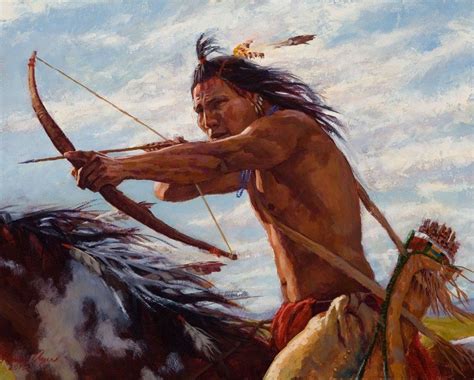
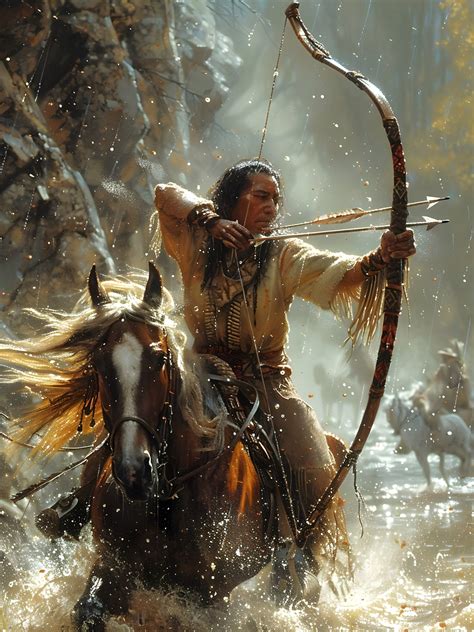
The bow is placed horizontally in shooting; a number of arrows are held in the left hand; the bow operates as a rest for the arrows. The distance – the curve the missile has to describe in reaching the object – is determined by the eye without taking aim.
At the distance of 60 yards and over, arrows can be dodged, if but one Indian shoots at you at a time. Under forty yards the six-shooter has little advantage over the bow.
At long distances the angle of elevation is considerable. It requires a quick eye to see the arrow and judge the whereabouts of its descent, a good dodger to move out of the way, and a good rider to keep in the saddle. A man is required to keep both eyes engaged in an Indian fight.”
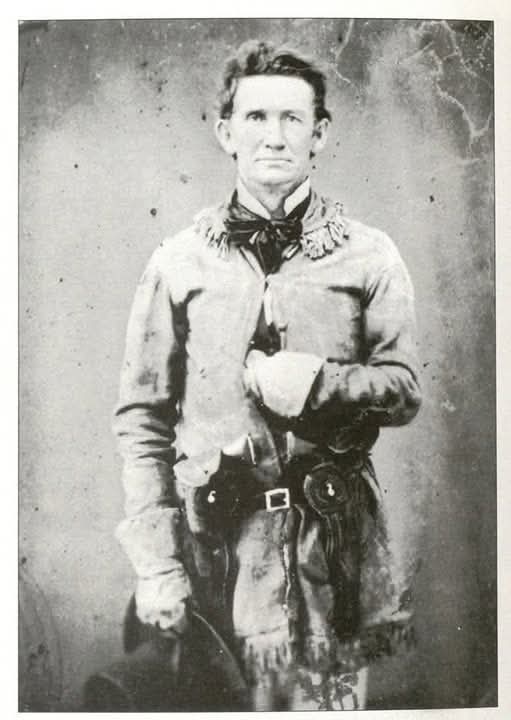
• By John Salmon “Rip” Ford who gave tactical advice for Indians in “Rip Ford’s Texas,” 1885.
To receive free email notification, when we post new articles like this, sign up below. Clever Journeys does & will not sell or share your information with anyone.
IN GOD WE TRUST

Thanks for supporting independent true journalism with a small tip. Dodie & Jack
CLICK HERE for GREEN PASTURE BENEFITS





Use Code CLEVER10 for a 10% discount on Green Pasture products today!

☆☆☆☆☆


☆☆☆☆☆


 Clever Journeys
We are always told to “know your enemy.” That’s good advice for the present.
LikeLiked by 3 people
Always!
LikeLiked by 1 person
My grandmother was a Cherokee Indian raised on the reservation in Oklahoma. She told us cousins some fantastical tales of battles, even into the late 1800s and early 1900s. Her father, Love Simpson, was a U.S. marshal from Arkansas who rode with Bass Reeves. My family tree had some truly badass’es. Oh yes, one more thing, Bell Starr was my grandmother’s aunt, and Quanah Parker was related to my grandmother through her mother.
LikeLiked by 2 people
That is so fascinating. In 2020 while traveling through, I made it a point to go the Bass Reeves area and visit the hanging gallows.
LikeLiked by 2 people
He was a tough one. My great grandfather told my grandmother many stories of their exploits, but she only told me a few of them. We visited Strawn Texas where the show was filmed and ate at Mary’s Cafe, of course and saw the false front buildings they used in the series. My great grandfather died from a damn spider bite instead of a bullet, and he was shot four times.
LikeLike
Most of my father’s side of the family hales Oklahoma (but is not Native American). Nonetheless, while visiting up there in Shawnee, Choctaw, and various other places, I have heard these two points:
LikeLiked by 1 person
Good observation. Thanks again.
LikeLiked by 1 person