
The tremendous wealth and power of Babylon, along with its monumental size and appearance, were once considered a Biblical myth, that is, until its foundations were unearthed and its riches substantiated during the 19th century.
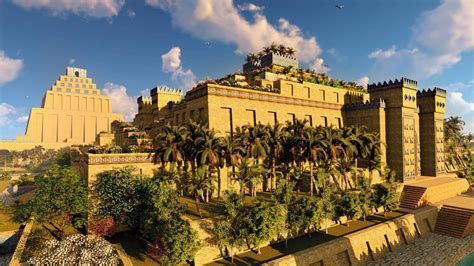

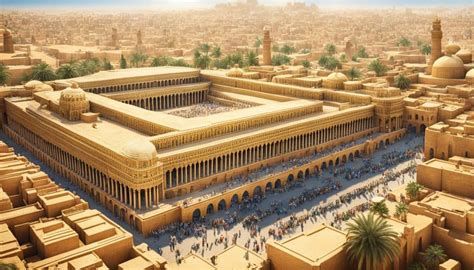
Archaeologists were awed as their discoveries revealed that certain stories in the Bible actually occurred in time.
The Bible records that it was King Nebuchadnezzar II who destroyed Jerusalem, brought the Kingdom of Judah to an end and carried off the Jews into exile.
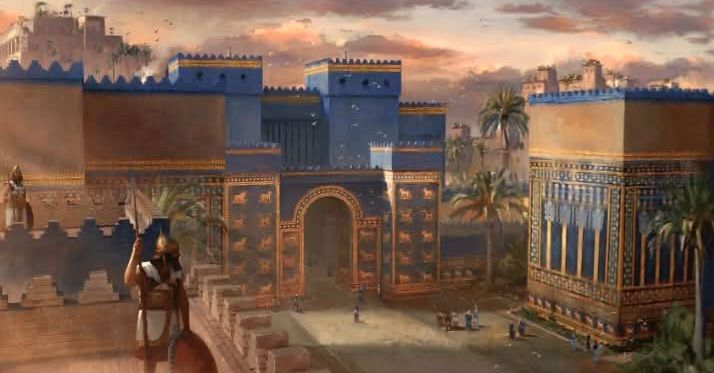
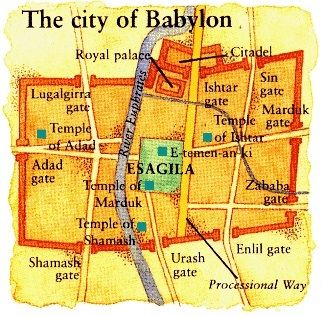
The famous Ishtar Gate of Babylon might have had a different timeline—and possibly a different purpose—than what historians have long believed.

Researchers recently analyzed the magnetic fields trapped inside the gate’s clay bricks to figure out exactly when it was built. While the gate was traditionally thought to commemorate Babylon’s conquest of Jerusalem, this new study suggests it may have been completed years later than previously assumed.
The gate was commissioned by King Nebuchadnezzar II, who ruled between 605 and 562 BC.
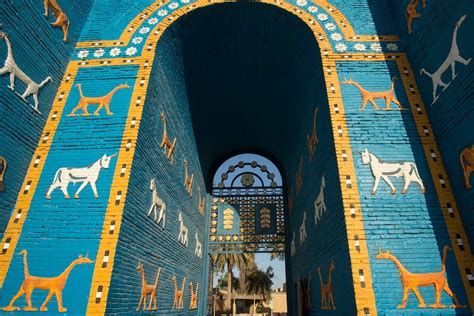
He had it decorated with images of bulls and mythical dragons and built in three phases to serve as a grand entrance to the ancient city of Babylon (now in modern-day Iraq).
For years, the exact timing of each construction phase remained uncertain. Some even speculated that the king may have died before it was finished.
To investigate, archaeologists took tiny samples from five bricks of the Ishtar Gate, which is now reconstructed at the Pergamon Museum in Berlin. They used a technique called archaeomagnetism, which reads the Earth’s magnetic signature locked into fired clay.
This method, recognized by experts at the University of Tennessee, gives more accurate dates than traditional carbon dating.
What they found was surprising: all the bricks had nearly identical magnetic signatures, showing there were no long pauses between construction phases.



This also means that the gate’s entire design was consistent from start to finish, not revised or altered later on. Phases two and three weren’t additions—they were just parts of the original plan.
This means the gate was built in one continuous effort, and likely completed around 583 BC—after the fall of Jerusalem in 586 BC, but still within Nebuchadnezzar’s reign.
The team now hopes to use this technique to date other Mesopotamian buildings. Since fired mud bricks were so common back then, archaeomagnetism might become a key tool in uncovering the real timelines of history.
☆☆☆☆
To receive free email notification when we post new articles like this, sign up below. Clever Journeys does & will not sell or share your information with anyone.
☆☆☆☆☆
IN GOD WE TRUST

Thanks for supporting independent true journalism with a small tip. Dodie & Jack
Dodie & Jack Dennis are regular customers of Green Pasture. Highly recommended.
Green Pasture Here!



Use Code CLEVER10 for a 10% discount on other Green Pasture products today!


Get Your Natural Vitamins A & D from the Sea!

☆☆☆☆☆


See details here!



 Clever Journeys
Archaeology is digging up more and more in lots of areas of Biblical history and making it really tough for skeptics to explain it away. That Babylon gate is stupendous–a little hard to ignore. I love all of that stuff, and there are some very good podcasts on Youtube on the subject of Biblical archaeology and history, too.
LikeLiked by 4 people
Yes, I love to watch them. I teach Bible Study on Wednesdays & Thursdays and these new discoveries are one of my favorite topics.
LikeLiked by 2 people
This is super interesting info about the discovery of Babylon. Here is a link for an amazing podcast with Eric Metaxas (Is Atheism Dead) interviewing Dr Steve Collins (Discovering the City of Sodom: The Fascinating, True Account of the Discovery of the Old Testament’s Most Infamous City). They talk about the cataclysmic event that destroyed Sodom, etc.
https://metaxastalk.com/video/dr-steven-collins-on-discovering-the-city-of-sodom
LikeLike
Babylon the Great
“BABYLON is the spiritual fabric of iniquity; the mystical great city of the great king of darkness; built in imitation of Zion, painted just like Zion, that it might be taken for Zion, and be worshipped there, instead of the true, eternal, ever living God, and King of Zion.”
“And here, in this there is a great difference between the vessels of Zion, and the vessels of Babylon. The vessels of Zion, they are weak, earthen, foolish, contemptible to the eye of man’s wisdom, (which cannot look for any great matter of excellency there); but the treasure, the liquor of life in them, is precious. The vessels of Babylon make a great show, appear very holy, very heavenly, very zealous for God and Christ, and for the setting up of his church and ordinances all over the world. Thus they appear outside; but they are sepulchers; there is rottenness within. Under all this there lodges an unclean, an unsanctified heart; a heart unsubdued to the spirit and power of the gospel, while it makes such a great show of subjection and obedience to the letter.”
“But their souls never knew the fire in Zion, and the furnace in Jerusalem; by which the very inwards of their spirits must be cleansed, before the pure eye of life is opened which can see Zion.”
“And it is a spiritual city, a mystical city, a city built by the working of the mystery of iniquity, 2 Thes 2:7. whereupon she is called mystery. Rev 17:5. It is not a city of plain wickedness, but a city of sin that is hidden; of sin keeping its life under a covering, under a form of godliness; of sin reigning in the heart under zeal, under devotion, under praying, believing, worshipping, hoping, waiting, etc. Where sin lies hidden within under these, there is Babylon; there is the mystery of witchcraft; there is the painted throne of Satan; there is spiritual Egypt and Sodom, where the Lord of life is daily crucified. This is the city, the mystical city, the spiritual city. Rev. 11:8.”
–Isaac Penington
The Babylonish Church | The Road
LikeLiked by 1 person
Wow!
LikeLiked by 1 person
Isaac Penington had some deep insights. He lived in England during the 1600s.
Isaac Penington’s Babylon the Great
LikeLiked by 1 person
Watch out, they will have to admit that there were sources outside of Josephus, Tacitus, Pliny the Younger, Suetonius, the Babylonian Talmud, and Mara bar-Serapion that bear witness of the existence of Jesus.
On the other hand, since they can push the “Russia, Russia, Russia” hoax while President Trump is in his first term, maybe they can continue to deny the existence of Christ.
LikeLiked by 1 person
[…] Babylon Was Not Biblical Myth […]
LikeLiked by 2 people