A Personal Story of Deceit
A friend of over 30 years sent me the following account. We had collaborated on some investigative articles in the late 1990s and I found her to be very honest, with a strong ethic for real journalism.

Today, she owns her own business, bent more towards public relations and advertising.
A reader of my articles (formerly from Examiner, AXS Entertainment, News Legit & now CLEVERJOURNEYS), we share the same concerns and disappointments of mainstream media. Here are her observations:
“An old friend from journalism school asked to come to my company’s office to interview me. She was in town from New York and was apparently intrigued by what I had going on.
It sounded good to me. A chance to see an old friend and have my story told.
The day she arrived was sunny and warm, I was excited. We greeted one another with a hug. She had grown up since I last saw her. She’s a good looking woman with a bright smile and a good head on her shoulders.
We spent 3 hours together, walking around my office, meeting my team, talking about health, medicine and the breakdown of science…
…I walked her out to her car. We hugged and she left. Then a week or so later she sent me a draft of the piece she wrote.
I was perplexed. It was a hit piece. I was crushed by it.

That’s how I felt after only a couple of paragraphs.
My co-workers, who were reading the piece at the same time, looked at me confused several times. They felt bad for me. They knew I’d be hurt by this and that this was not at all what I expected was going to happen.
She changed my quotes, took my words out of context, and made me sound like a lunatic…I realized quickly what this was. This wasn’t a piece to tell my story, it was a piece to build her career off the popularity of my name and company.
I emailed her 30 minutes after finishing my read of it.
I wanted to know if her editor made her construct the piece in the way she did, or whether she chose to frame it this way herself. The meeting we had did not match the piece she wrote, I had to find out what happened.
She responded, refusing to answer the question. I asked again, she dodged again.
Finally I asked her why she used quotes I didn’t say and why she took my words out of context. She simply responded with “I’m sorry you feel that way.”
Her emails were short, blunt, and emotionless. This was not a friend. The hugs and smiles from a week prior started looking different to me now.
Her email responses gave me the sense that she knew what she did was wrong, but had made the decision in her mind that the ends justified the means.
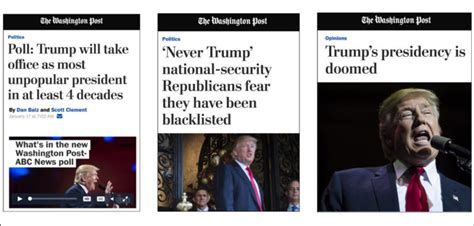
In the end, I learned a lot from the experience. You can’t trust so called “journalists,” but you can navigate them more carefully.
All you need to know is she went on to work with The New York Times and for The Atlantic.
I’m not surprised she ended up working for companies like that. People who want to work for the most ‘prestigious companies’ are sometimes the ones willing to do whatever it takes to climb the ladder.
Maybe that’s unfair for me to say, but I can’t help it, especially after all I have learned about the media industry all these years. This wouldn’t be the first time a journalist does this to get a story, it happens all the time. The shoe fits.
These are the people who, with their shaky ethics in hand, write the stories that shape public opinion. The facts don’t really matter. The truth can be twisted.
These are the people who uphold the story of our existing world at all costs. The ones who care more about their career than they do about truly following where the evidence leads on any story – especially when it goes against the grain. And especially when it challenges what everyone else thinks.
The woman who wrote the hit piece about me also wrote a piece in The Atlantic about masks. Even though the science is weak time and time again, obviously they still provide protective benefit according to her article.
Her determination to uphold the idea of mask effectiveness is immense. The willingness to sift through the science, come up with a well-written piece, yet leave out some of the most important details is uncanny. It’s reflective of mainstream journalism.
Her piece seeks to find the questionable or tiny benefit mask wearing might provide through a reductionist lens, while making no effort to examine the lengths the CDC went to lie about mask effectiveness.
It doesn’t mention the unscientific rhetoric politicians spewed claiming they had certainty about masks when they truly had none. It doesn’t mention the piles of evidence illustrating the negative effects of prolonged mask wearing either.
After all, aren’t we supposed to be measuring the cost/benefit analysis of our interventions? Why does the rhetoric state there are zero costs to mask wearing when we have evidence of many costs?
This is the problem with reductionist thinking like this. It’s unscientific and lost in a vacuum. It doesn’t seek to truly find the truth in complexity, it only seeks to uphold the status quo.
Why? Why the unbalanced inquiry?

In looking through all of her articles I see nothing questioning the rate of damage COVID vaccines are causing. Sure, plenty on why you need to get a booster shot, and why she thinks we witnessed the pandemic of the unvaccinated, but nothing exploring where COVID policy might have gone wrong.
I wonder to myself, how many hours has she spent pulling apart vaccine data? What does she make of the fact that a large percentage of people have had to seek medical attention after being vaccinated?
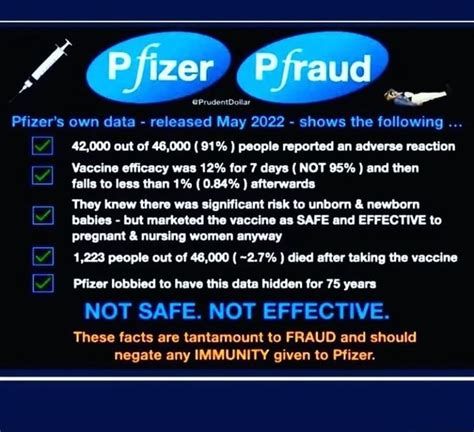
Did she even look at the original Pfizer clinical trial data? Does she realize these vaccines were approved based on only 10 outcomes? What does she make of Brooke Jackson, the Pfizer whistleblower who claims the clinical trials were fraudulent?
Does she agree with the FDAs wildly unscientific decision to recommend COVID vaccines to children? I don’t know, but I wonder.
Where is her reporting on these stories? Why doesn’t she have the same willingness and rigor in exploring ‘the other side’ of the COVID debate? Why only the dedication to upholding the status quo? Is that what she was bred for? Is career more important than truth?
Maybe she’s stuck in an echo chamber at The Atlantic. Maybe at work she’s exposed to the discrimination and jokes shot at the ‘anti-vax idiots’ who question vaccine safety ‘because someone online made a meme about it.’ This culture can keep people in line and can limit their curiosity.
I don’t know what’s going on in her mind. But at least I can admit that.

Sometimes the way to mislead the public is to simply not look at what you don’t want people to think. Don’t balance your inquiry and you can avoid providing an understanding of the whole story.
This is how we end up divided and lost. Not because there isn’t clarity to be gained, but because even those who consider themselves to be scientists and science writers, and who have the loudest microphones, aren’t actually looking at stories and evidence in good faith.
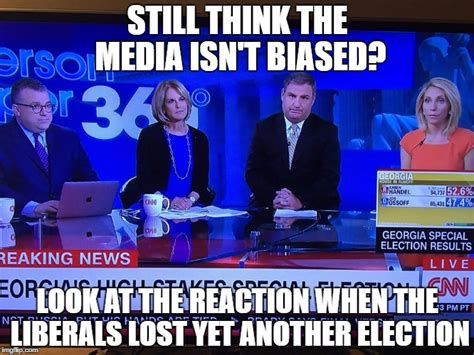
They become part of the problem. Part of the misinformation. Part of misleading the public. Yet they whole heartedly believe they are heroes operating at the high standards science demands.
This behavior from people willing to mislead to get ahead, are we surprised?
☆☆☆☆☆
IN GOD WE TRUST

Thanks for supporting independent true journalism with a small tip. Dodie & Jack
Green Pasture Here!


Use Code CLEVER10 for a 10% discount on other Green Pasture products today!

.

CINDY LEAL MASSEY, TEXAS AUTHOR

 Clever Journeys
Should have named the “journalist” so the rest of us are aware.
LikeLiked by 2 people
It all comes down to not believing in the Lord Jesus Christ and ignoring God’s laws. Journalists who mislead have sold their souls to the devil.
LikeLiked by 1 person
If you are taught from the ground up to only “Look out for Number One,” and you buy that, then you can justify doing anything. Look at the surveys in general, saying that some huge percentage of Americans believe that telling lies is okay. “Truth has fallen in in the streets,” (Isaiah 59:14) affects everybody, till trust is indeed risky; true friends are rare, or at least, not common These days, you have to know that and proceed with caution, but stand in truth.
Hey, what ‘s the occasion for the gorgeous couple in the picture?
LikeLiked by 2 people
Thanks.
Easter at our church.
LikeLiked by 2 people