
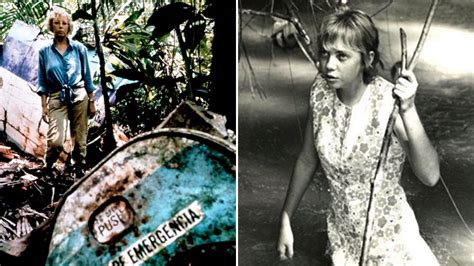
In 1971, 17-year-old Juliane Koepcke was flying over the Peruvian rainforest with her mother when she got sucked out of the airplane after it was struck by a bolt of lightning.
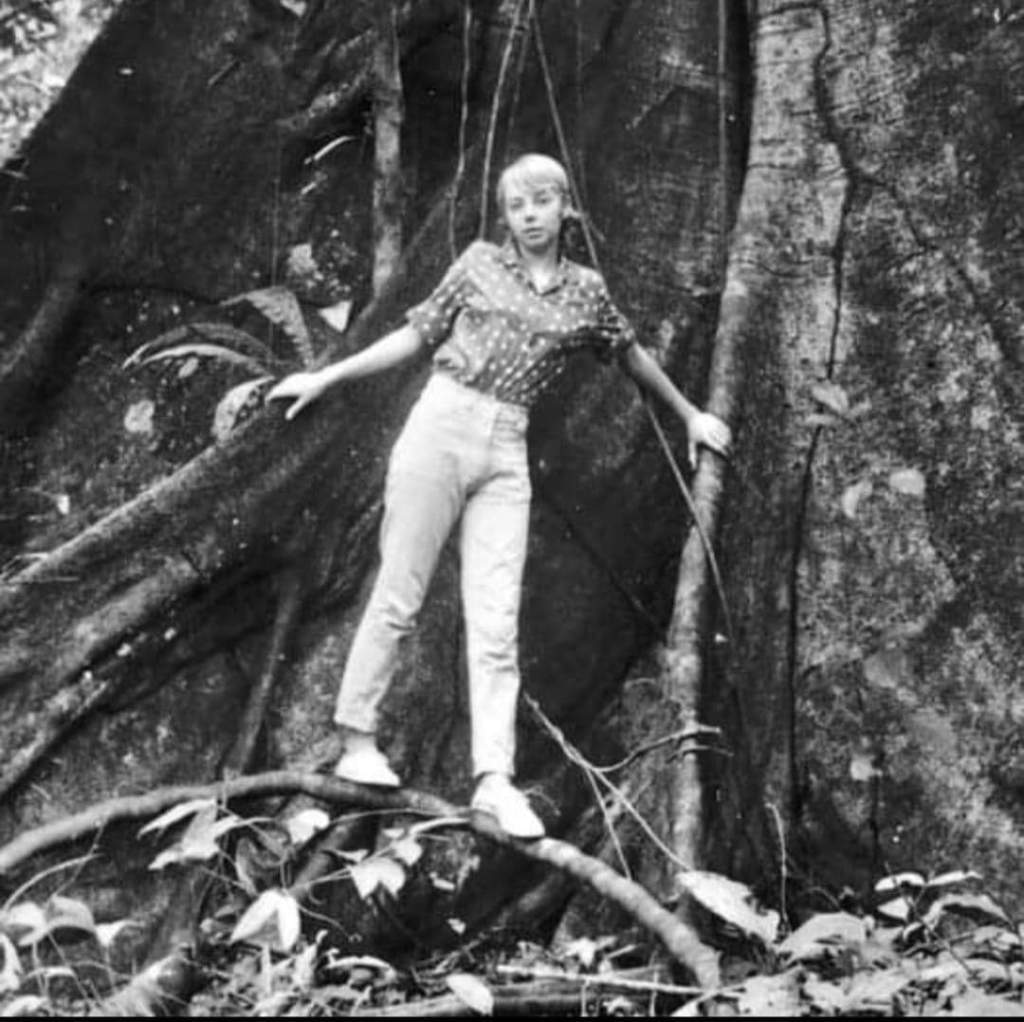
She fell two miles to the ground, strapped to her seat.
“The plane jumped down and went into a nose-dive. It was pitch black, and people were screaming, then the deep roaring of the engines filled my head completely.
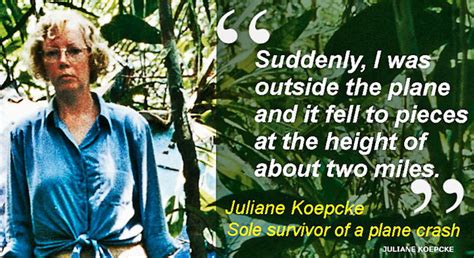
Suddenly, the noise stopped, and I was outside the plane. I was in a freefall, strapped to my seat bench and hanging head-over-heels. The whispering of the wind was the only noise I could hear.
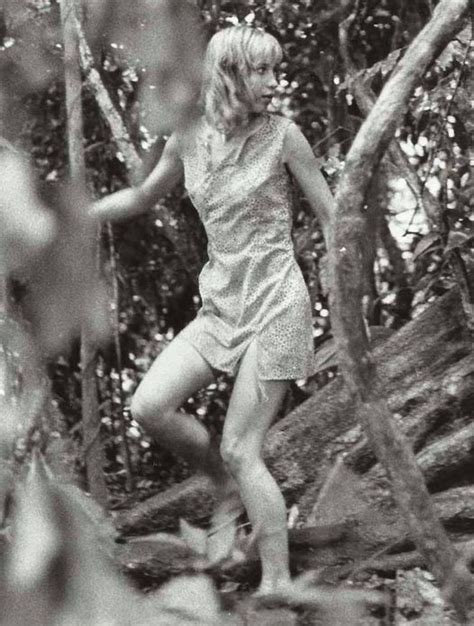
I could see the canopy of the jungle spinning towards me. Then I lost consciousness and remember nothing of the impact.
Later I learned that the plane had broken into pieces about two miles above the ground. I woke up the next day and looked up into the canopy. The first thought I had was: ‘I survived an air crash.'”
Koepcke’s first instinct was to find her mother, but she was nowhere to be found. After eating some sweets found at the crash site, Koepcke waded downstream and followed the river.
After 10 days, she found a moored boat. She poured the gasoline from the boat’s fuel tank on to her wounds, which were infested with maggots. She then spent the night in a makeshift shelter.
“I remained there, but I wanted to leave. I didn’t want to take the boat because I didn’t want to steal it.”
The next day, she was discovered by loggers and was soon reunited with her father. She later discovered that her mother had survived the crash, only to die of her injuries several days later.
Having spent time with her parents in the rainforest before, she had some knowledge about the ways of the jungle – a fact that helped her survive crocodiles, piranhas, and deadly snakes in her eleven-day ordeal.
She boarded a flight again the very next year when she moved to Germany to continue her education.
Like her parents, Koepcke went on to study biology at the University of Kiel in Germany, graduating in 1980. She received her doctorate from the Ludwig Maximilian University of Munich and returned to Peru to research mammalogy, specializing in bats.
☆☆☆☆☆
IN GOD WE TRUST

Thanks for supporting independent true journalism with a small tip. Dodie & Jack
Green Pasture Here!

Use Code CLEVER10 for a 10% discount on other Green Pasture products today!


CINDY LEAL MASSEY, TEXAS AUTHOR

CLICK: PARK LANE by Rebecca Taylor

 Clever Journeys
I am IN AWE that a 17-year-old would know to put gasoline on an open wound!
I’m about 4 times her age and didn’t know to do that until today.
LikeLiked by 4 people
Right?! Sounds like she learned so much about survival in the Rainforest from previously spending time with her parents there. Intelligent, resourceful young lady for sure.
LikeLiked by 1 person
That’s quite a survival story. Here is another great story of survival:
Hugh Glass
https://hughglass.org/grizzly-attack/
LikeLiked by 2 people
As disgusting as this may sound, the maggots may have served a purpose. They remove dead or damaged tissue as well as bacteria. Hugh Glass used them to prevent gangrene. Medicinal maggots are used today to treat wounds in some countries with success.
LikeLiked by 2 people
What a smart brave young lady. Amazing
LikeLiked by 1 person