
When his spaceship died 160 miles above Earth, he had 40 seconds to become the world’s first human computer — or burn up trying.
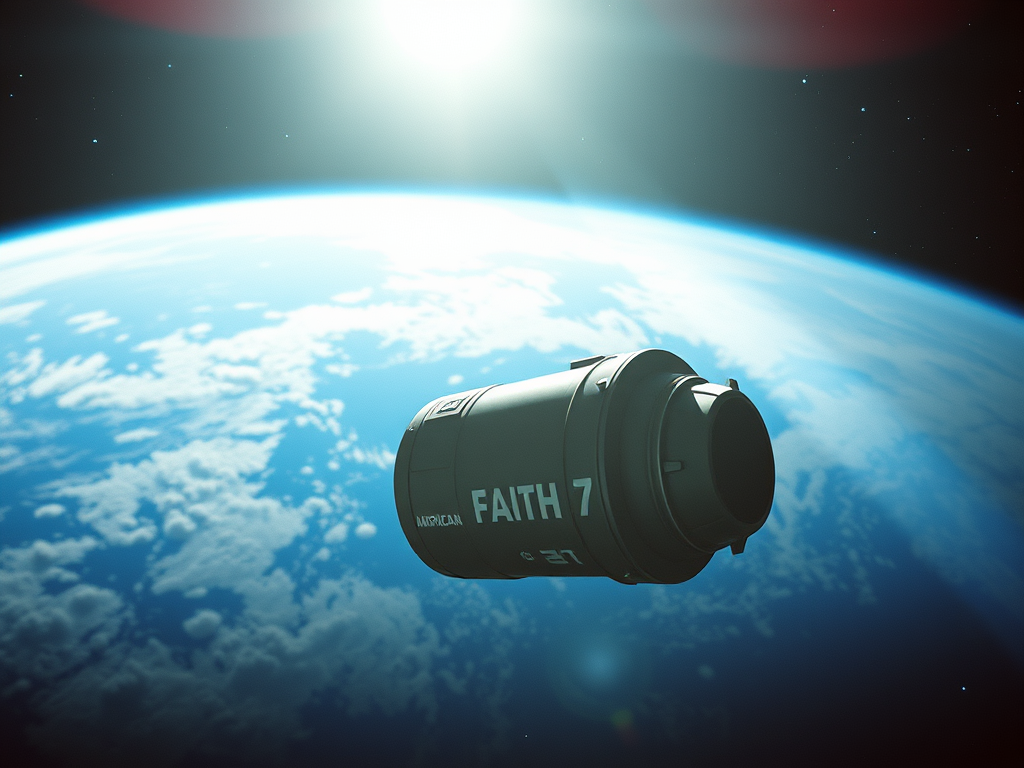
It was on May 16, 1963 that Gordon Cooper was in a metal capsule barely bigger than a closet, racing around the planet at 17,500 miles per hour.
Then the lights start blinking.
First, a faulty sensor screams that he’s already plummeting back to Earth. He’s not. But the warning is terrifying.
Then, on his 21st orbit, a short circuit kills the automatic stabilization system. The system that keeps his spacecraft pointed the right direction. The system that will aim him for reentry.
It’s gone.
The carbon dioxide in his cabin starts climbing. The temperature passes 100 degrees. Cooper is soaked in sweat, breathing air that’s slowly turning toxic.
Mission Control can see the telemetry. They can’t do anything about it. No software patch. No remote override. No backup plan.
Cooper has one chance: manually fly a spacecraft through atmospheric reentry using technology that didn’t exist yet.
So he improvises.
He pulls out a grease pencil and draws reference lines on his window — crude horizon markers. He recalls star patterns he memorized during training, matching them to his mental map of the sky. He calculates the exact second he needs to fire his retrorockets.
No computer. No autopilot. Just a pilot, a wristwatch, and window scratches.
“I used my wristwatch for time,” he said later. “My eyeballs out the window for attitude. Then I fired my retrorockets at the right time.”
Faith 7 slammed into the Pacific Ocean four miles from the recovery carrier.
It was the most accurate landing in Mercury program history.
Think about that. The human backup outperformed every computer-guided landing that came before it.
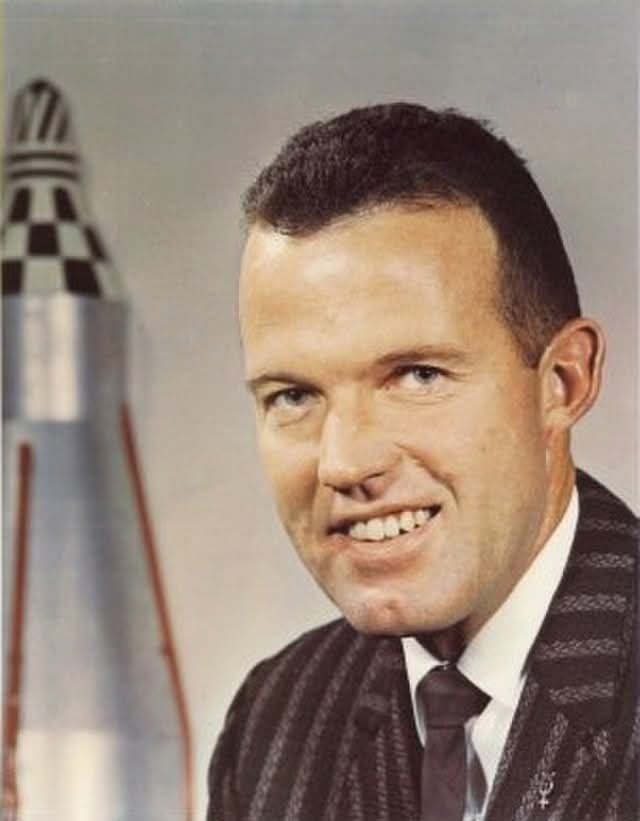
Cooper became a legend. Two years later, on Gemini 5, he spent nearly eight days in space — another record. He was brilliant. Fearless. A natural for Apollo.
But Cooper was also a rebel.
He loved speed, freedom, and bending rules. While other astronauts obsessed over checklists, Cooper flew boats and chased adrenaline. Management noticed.
When Alan Shepard became flight-ready again after years grounded by illness, the Moon slot that might’ve been Cooper’s went to him instead.
Cooper retired in 1970. No moonwalk. No place in the Apollo pantheon.
Later, he spoke openly about UFOs, testifying to the United Nations in 1978 about what he believed was a government cover-up. Some mocked him. Others quietly agreed.
But none of that changes May 16, 1963.
A man in a dying spacecraft, alone above the world, armed with nothing but training, intuition, and a Rolex.
He drew lines on glass and flew himself home.
The lesson isn’t about rejecting technology. It’s about remembering that behind every system, every algorithm, every autopilot — there should be a human capable of taking over when it all falls apart.
Sometimes the backup isn’t a machine.
It’s you.
To receive free email notification, when we post new articles like this, sign up below. Clever Journeys does & will not sell or share your information with anyone.
In God We Trust

______________
Please Support This Stellar American Owned Business
Get Your Natural Vitamins A & D from the Sea!

10% DISCOUNT, Code “CLEVER10”
















 Clever Journeys