
𝗖𝗼𝗻𝗴𝗿𝗲𝘀𝘀 𝗗𝗲𝗺𝗮𝗻𝗱𝘀 𝗧𝗿𝗮𝗻𝘀𝗽𝗮𝗿𝗲𝗻𝗰𝘆… 𝗨𝗻𝘁𝗶𝗹 𝗜𝘁 𝗜𝗻𝘃𝗼𝗹𝘃𝗲𝘀 𝗧𝗵𝗲𝗺
For months citizens heard members of Congress demanding transparency about the Epstein files.
They say they care about victims. They say the public deserves the truth.
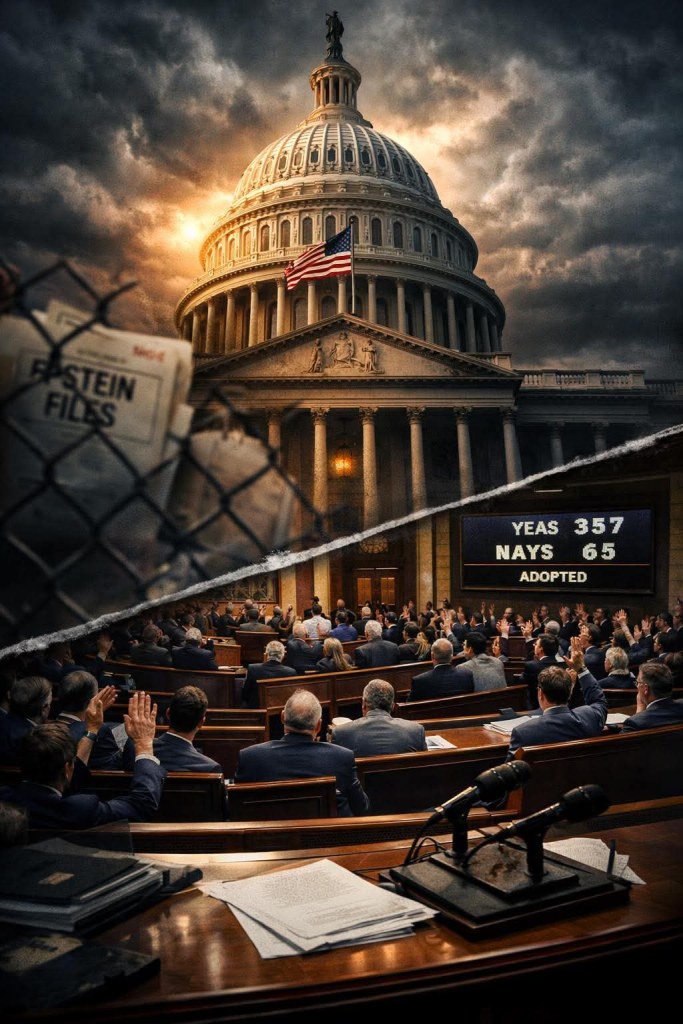
But something “rotten in Denmark” despicably just occurred in the U. S. House of Representatives.
Both houses of Congress had agreed overwhelmingly on Nov. 18, 2025 to release all unclassified records. These records are related to the federal government’s investigations into Jeffrey Epstein. He was the late disgraced financier and accused sex trafficker linked to high-profile individuals.
By a vote of 427-1, the House of Representatives passed the Epstein Files Transparency Act. This bill requires the federal government to release Epstein documents.
The Senate followed suit about three hours later when Minority Leader Chuck Schumer, D-N.Y., introduced a motion for unanimous consent. That allowed the Senate to pass the bill without a formal roll-call vote after it was received from the House. That was approved without objection.
The bill was sent to Trump, who signed it on Nov. 19.
Now, in March 2026, another proposal was introduced. It would require the public release of investigation reports involving sexual misconduct allegations. These allegations are against some members of Congress themselves.
The House voted 357–65 NOT to release those files.
Instead, lawmakers voted to send the proposal to the House Ethics Committee.
Not enough citizens know that “sending a bill to committee” is common code for a procedural way to quietly stop legislation. This particularly affects those glued to CNN or other propagandist media. The process allows stopping legislation without voting directly against it.
In Washington it’s often called “killing something in committee.”
The vote:
- 182 Democrats
- 175 Republicans
Both parties voted to refer the measure to the Ethics Committee. This move is widely seen as preventing the forced release of those records.
Only 65 members voted against blocking it.
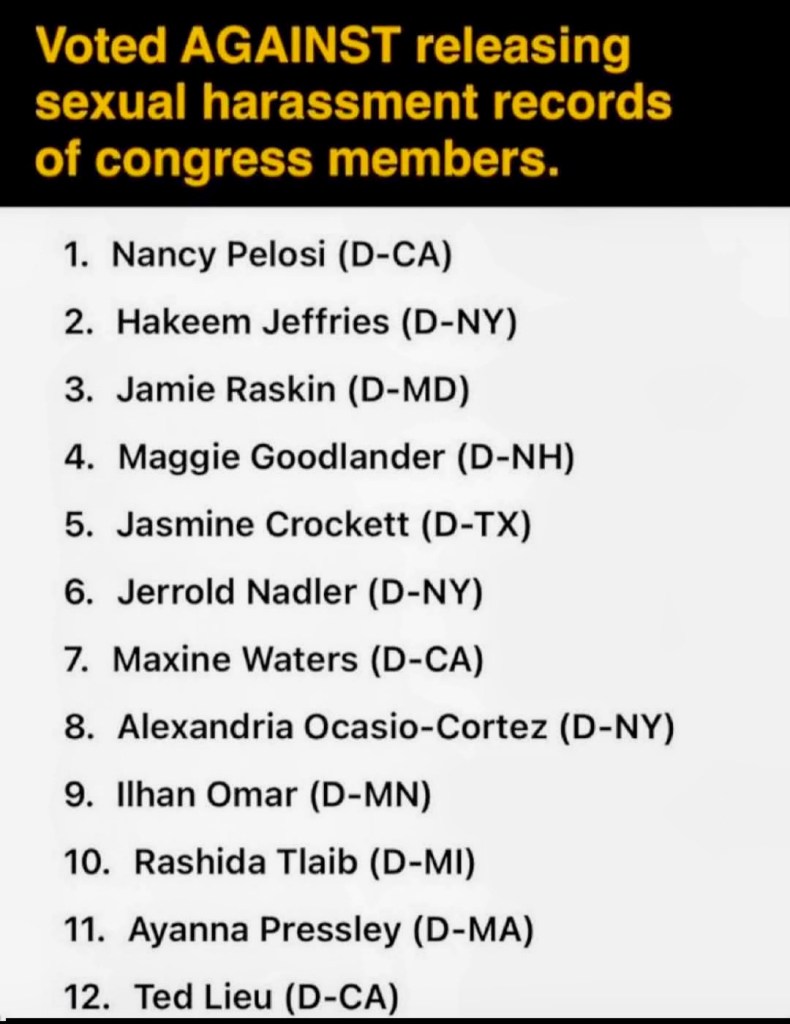
Supporters of the vote say they did this to protect victims and preserve the integrity of investigations. But it still raises a fair question.
Transparency is essential when discussing the Epstein files. We should ask why it changes when the records involve members of Congress.
“Congress has been sweeping this under the rug for far too long. Tony Gonzales may be the latest example, but he’s not the only one,” Rep. Nancy Mace (R-SC) said in a statement on Tuesday after she moved to force action on the resolution. “Staff deserve to come to work without being harassed by their bosses. Women deserve to be safe. And the American people deserve to know when their so-called ‘representative’ is abusing power instead of serving their constituents. No more hiding. No more excuses. It’s time to end the cover-up and drag the truth into the light.”
“Any Member who votes against this resolution is voting to protect the cover-up instead of the victims,” she continued. “Nobody in Congress gets to play by a different set of rules. We are going to shine a light on every single case this committee has been sitting on.”
U.S. Rep. Lauren Boebert, R-Colorado, said she was “disgusted,” saying, “Don’t we all campaign on transparency?”
“Millions of dollars have been used in this slush fund as hush money to silence victims who have been sexually harassed, sexually abused by members of Congress, she announced. “Now Congress is going to do exactly what it does best: investigate itself. And we know that none of that ever goes anywhere. The American people demand transparency.”
The House’s code of conduct prohibits members from engaging in a sexual relationship with a staff member in their office. It also prohibits such relationships on a committee on which they serve. Additionally, it prohibits sexual harassment of staff.
A rule against sexual relationships with staff was added in 2018, as the “Me Too” movement swept the country.
Some allegations of sexual misconduct that reach the Ethics Committee can be disclosed publicly. However, the Ethics Committee does not have to publicly disclose all of them.
Why does transparency suddenly become more complicated and less critical in these situations?
Because when it comes to accountability, the rules should not change depending on who the investigation involves.
To receive free email notification, when we post new articles like this, sign up below. Clever Journeys does & will not sell or share your information with anyone.
IN GOD WE TRUST

Thanks for supporting independent true journalism with a small tip. Dodie & Jack

CLICK HERE for GREEN PASTURE BENEFITS


Use Code CLEVER10 for a 10% discount on Green Pasture products today!

☆☆☆☆☆

☆☆☆☆☆

Advertisement

☆☆☆☆☆


 Clever Journeys
Great article. It’s a shame that justice isn’t the same for everyone and that the ruling class, regardless of party, does everything it can to cover up its misdeeds. And it’s even worse in Europe, even in Switzerland. In the end, they only work for their masters.
LikeLiked by 3 people