

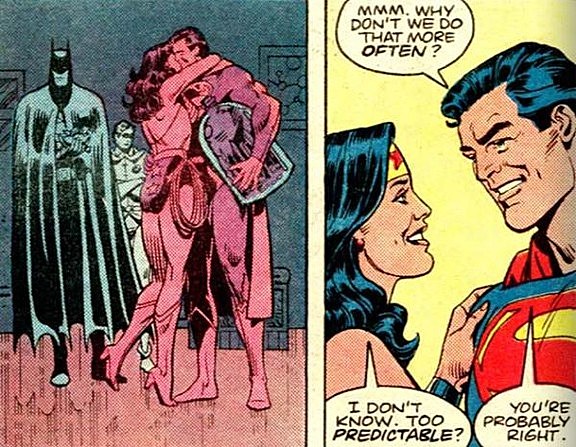
In 2012, before social engineering and woke propaganda became a thing, DC Comics (not Washington DC) had heterosexuals Superman and Wonder Woman lock lips in their now famous Justice League #12 comic issue.
The DC American comic book series, “Superman/Wonder Woman” continued from 2013 through 2016.
Then, in November 2021, in sync with New World Order propanda to target next generations to conform, DC joined the woke movement.
At this point, the son of Clark Kent, Jon, began a same-sex relationship with his friend Jay Nakamura.
The storyline was part of ‘Superman: Son of Kal-El’, a series following Jon as he takes on the mantle of Superman from his dad.


Clearly, in line with other disturbing social engineers (think Disney, Bud Light, Target and Kohls) the series had Jon taking on all liberal propaganda causes: wildfires caused by climate change, preventing a high school shooting, and protesting against the deportation of refugees.
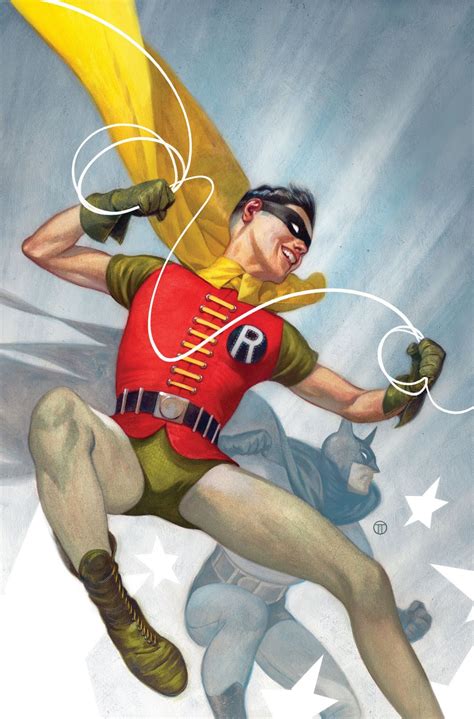
During this time period Batman’s Robin began dating a man, Flash became non-binary, Batwoman became a lesbian, and the Green Lantern was rebooted as a young gay crime fighter.

But a decade ago, dynamic couple of the real Superman (Clark Kent) and Wonder Woman had actually kissed before (as in John Byrne and George Perez’s Action Comics #600 in 1988), but the 2012 tale would lead to an actual relationship, making them the DC Universe’s premiere super-power couple.
Wonder Woman and Superman had long appeared as if they’d make a nice match — they both have blue eyes and blue-black hair, they’re both superheroes with similar powers, they wear matching costumes.
Up until 2012, official DC canon called for Superman and Wonder Woman to remain as just really good friends, even when put in the most dire and tempting circumstances, as in Joe Kelly and German Garcia & Joe Rubenstein’s Action Comics #761, in which the superheroes were transported to another dimension and forced to fight demons for literally a thousand years. In all that time, Superman’s love for his wife, Lois Lane, never wavered.
While Lois has always been the most famous of the Man of Steel’s romances, she’s hardly the only love interest he’s ever had. Let’s look back to once upon a time…
Lois Lane
It’s just about impossible to argue against Lois Lane as Superman’s ideal girlfriend. She was the only character to star in a comic book with the words “Superman’s Girlfriend” right there in the title, and that lasted for 14 years.
It’s similarly difficult to overestimate the character’s importance in the Superman story and basic, core appeal.
Lois Lane was there since Superman’s first appearance in 1938’s Action Comics #1, and she had been in every single adaptation of the Superman story in other media: radio, newspaper comic strips, novels, animated cartoons, film, and television.
The relationship was a bit complex; she spurned mild mannered Clark Kent in favor of the mighty Superman, who in turn spurned her.
Consequently, Lois would think of insane plots to either reveal Superman’s secret identity or trick him into marrying her while jealously fending off any romantic rivals.
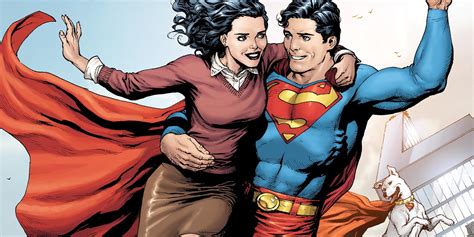
Superman generally kept Lois at arm’s length, unless of course she suddenly took an interest in another guy or her ardor seemed to wane.
This status quo worked for about half a century, but eventually the two developed a more realistic and mature relationship during writer/artist John Byrne’s revamp of the Superman continuity for the emerging post-Crisis On Infinite Earths version of the DC Universe in the late 1980s.
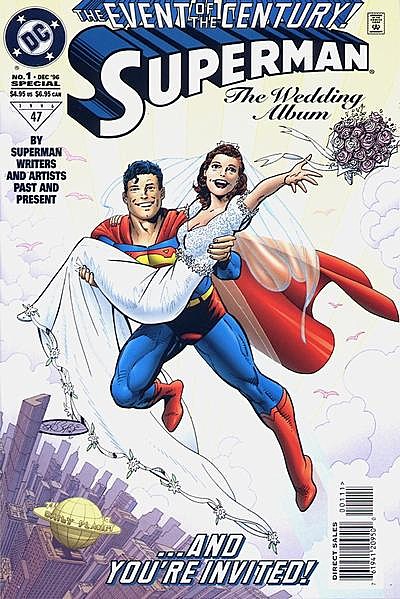
The new Lois Lane wasn’t quite so hard on her Daily Planet co-worker Clark Kent, and Superman revealed his secret identity to her. After a few years as a couple, they finally married in 1996’s Superman: The Wedding Album, and had one of the more healthy and stable super-relationships for the next 15 years.
DC’s “New 52” reboot undid their marriage, courtship and even the fact that Lois knew that Superman and Clark Kent were one and the same, freeing the Man of Steel up for a relationship with Wonder Woman that does not necessitate leaving Lois — if they were never together, there can be no break-up.
Lana Lang
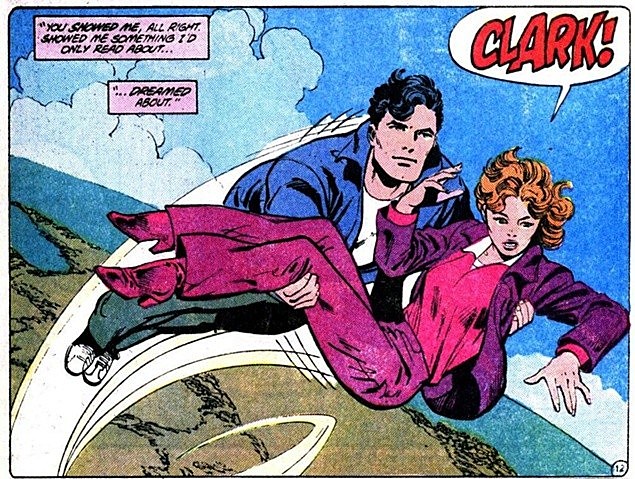
If Lois Lane was Superman’s greatest love, Lana Lang was his first — at least insofar as the mythology goes.
She debuted in 1950’s Superboy #10, back when “Superboy” was “the adventures of Superman when he was a boy,” rather than a different character entirely (if you don’t know what I’m talking about… it’s a long story).
Back in Smallville, Kansas, Lana was essentially a red-haired, teenage version of Lois Lane, but over the years, revisions were made to the character and her precise level of romantic involvement with Clark.
Sometimes, she was just a platonic pal. Sometimes, she loved him, but her feelings weren’t reciprocated, and sometimes, they were high school sweethearts.
The adult Lana spent a lot of time in Metropolis, vying for Superman’s affections in a conflict with Lois. In the post-Crisis DC Universe of the 1980s, Lana had an unrequited love for Clark, and eventually started stalking him when he became Superman.
Things ended more or less happily for Lana when she married Clark’s best friend from childhood, Pete Ross, and they had a baby together, whom she named Clark. Which, come to think of it, was probably pretty weird for Pete.
While Lois is usually the love interest in any other media adaptations, Lana got her turn in 1983’s Superman III, in which she was played by Annette O’Toole, and in the 2001-2011 TV series Smallville, in which she was played by Kristin Kreuk.
Lori Lemaris
I never kept up much with Superman after my youth. My cousins, Marvin and Roger Hepworth played “Superheroes” (not a video game, but actually played outside) in the 1960s. Santa Claus actually left a Superman costume under the Christmas tree for me in 1961.
Marvin, known as “Chip,” and I recall watching George Reeves as Superman (and Clark Kent). Many people today don’t remember a time when DC Comics had Superman dating a mermaid.
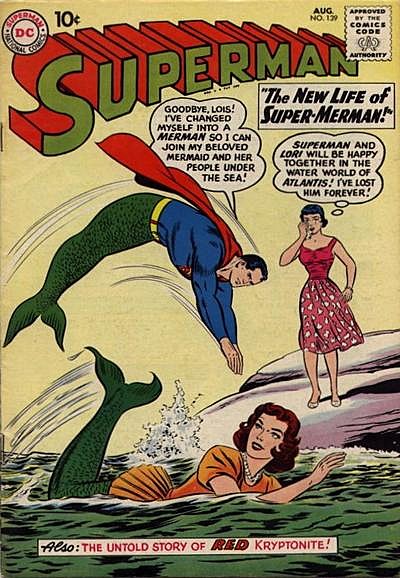
In 1959’s Superman #129, Bill Finger and Wayne Boring revealed “The Girl in Superman’s Past.” It turned out that when Superman’s alter ego Clark Kent was attending Metropolis University, he fell in love with a mysterious girl in a wheelchair who had a strict 8 pm curfew every night.
Despite some of his questions about her unusual behavior, young Clark proposed to the co-ed, who turned him down, saying she had to return to her homeland.
This turned out to be Atlantis, and Lori was all fish from the waist down, a fact she disguised by getting around on land in a wheelchair and covering her fish parts with a blanket.
Lori survived the Silver Age continuity purge of Crisis, although the post-Crisis version grew human legs when on dry land, and would resume her mermaid form only when wet. She’s appeared only rarely since.
Maxima
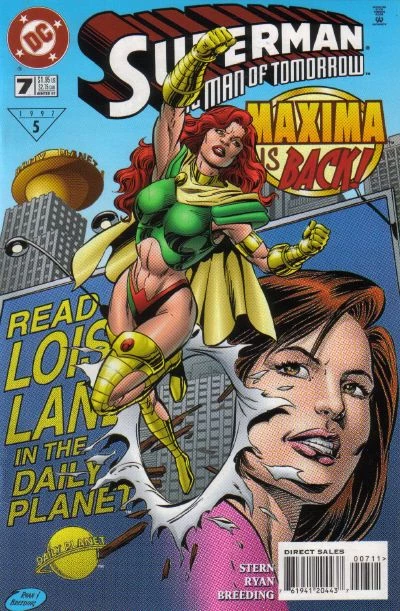
Roger Stern and George Pérez introduced Superman to Maxima in 1989’s Action Comics #645. A super-powered despot from the alien world of Almerac, she came to Earth seeking Superman as her perfect mate.
Unlike Earth women, Maxima was able to produce children with the Kryptonian Superman.
Superman didn’t bite, perhaps because he was already in love with Lois.
While Maxima never hooked up with Superman, exposure to him helped soften her, and she later became a superhero in her own right, serving on a couple different incarnations of the Justice League before ultimately dying in a big crossover event story.

Wonder Woman
Through the years, there were romances between Kal-El of Krypton and Diana of Themyscira were suggested, but basically were non-canonical. In 1998’s Superman: Distant Fires, Howard Chaykin, Gil Kane and Kevin Nowlan depicted a post-apocalyptic Earth where Superman and Wonder Woman were among the only survivors, and where they had a son who, like Kal-El, was eventually rocketed to another planet to save him from his homeworld’s destruction.
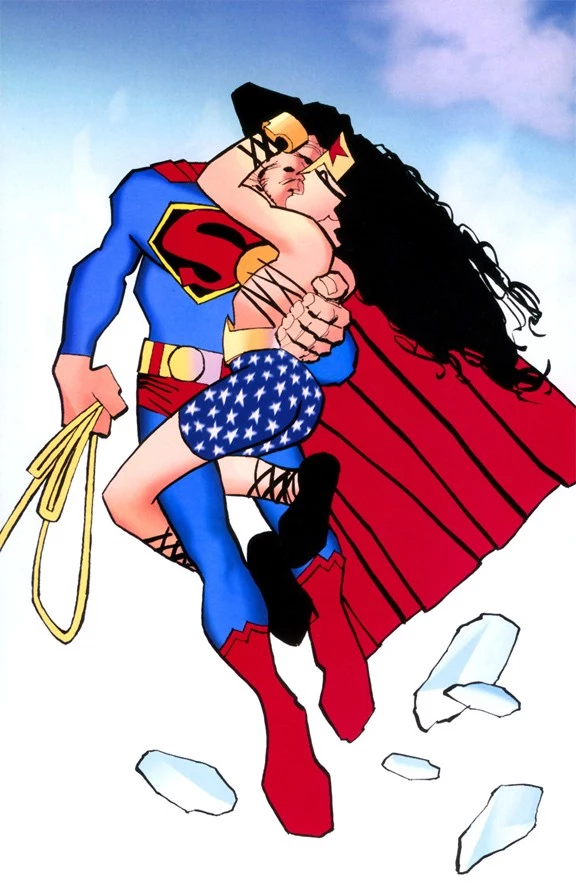
In Frank Miller’s Batman: The Dark Knight Strikes Again, which also takes place in the future, Clark and Diana had a superpowered daughter called Lara, after Superman’s Kryptonian mother, whom they protected from the government.
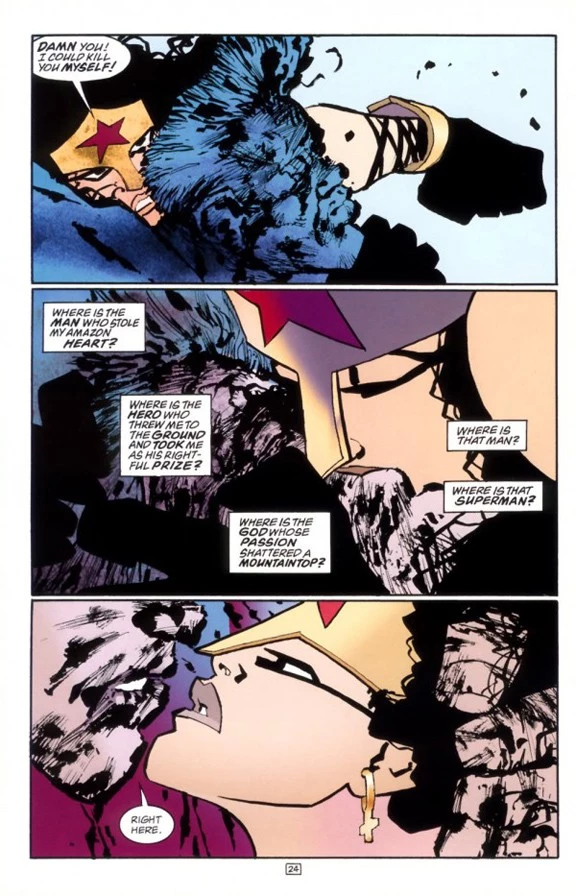
Perhaps most famously, the Kingdom Come graphic novel by Mark Waid and Alex Ross introduced a reality where Superman and Wonder Woman coupled after Lois was killed by the Joker, and where Kal-El and Diana eventually started a family.
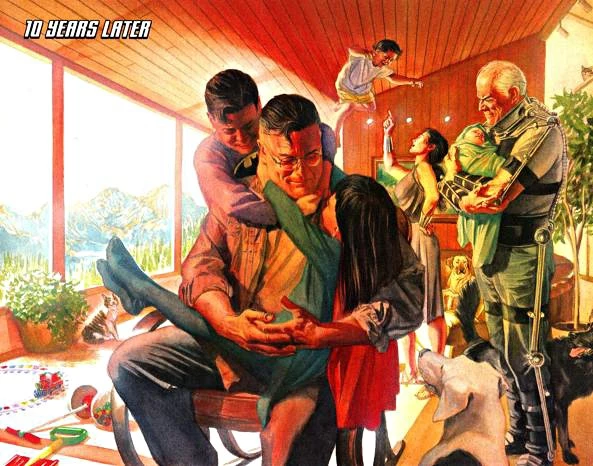
There were more occurrences of this match, but 2022’s Justice League #12 by Geoff Johns and Jim Lee would be the first time the love between Superman and Wonder Woman was presented as canon.
☆☆☆☆
IN GOD WE TRUST

Use Code CLEVER10 for a 10% discount on Green Pasture products today!

Thanks for supporting independent true journalism with a small tip. Dodie & Jack

 Clever Journeys
“Everyday, we ignore the liberal media more and more…
After awhile, they become like road noise…
Until we don’t even know they’re there.”
……Joe Dan from Intellectual Froglegs
The U.S. is wallowing in perversion. Homosexual characters will appeal to diminishing audiences, and the popularity of so called “artistic efforts” will decrease. A person on my street, his 20+ year old grandson is at least temporarily living with him, only the grandson thinks he’s a woman. The grandson wears a bra, often an open top revealing the bra, he wears dresses, mini skirts, and at times, is otherwise scantily clad. He walks with his hands held up, wrist bent, elbows bent, so that his hands are near facial level, I have never seen a woman walk like that. Frankly, he’s overplaying the part.
Homosexual characters (I realize that only part of your blog addressed that peculiarity in these stories, the other part being Superman, Lois Lane, Wonder Woman, etc., and therefore heterosexual) are not going to appeal to a broad audience. But Budweiser, Target, and others, have demonstrated a desire to destroy themselves to push their ideology.
Ultimately, and people should understand this, Globalists on some level want to depopulate the earth significantly. So they propose homosexuality, gender surgeries, and obesity. These are designed to prevent children by the usual heterosexual relationships that produce them, to render our youth sterile while pursuing gender surgeries, to result in premature deaths, and create a state of anovulation that occurs in those morbidly obese, not to mention the diminished sexual attention that morbid obesity can lead to. Frankly, it’s unfair that the DC Comics Series fail to depict morbidly obese super heroes. LOL.
LikeLiked by 1 person