
Despite international sanctions, especially from the United States, China has continued to import a small but significant amount of Iranian oil. They achieve this through third countries and ship-to-ship (STS) transfers to avoid the sanctions.
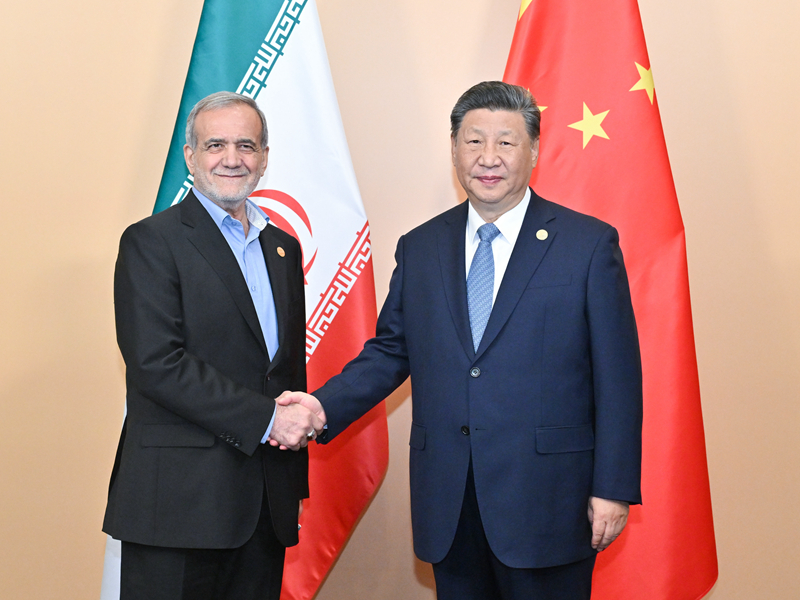
In 2021, the two countries signed a 25-year roadmap for cooperation under a Comprehensive Strategic Partnership. This includes investment over 25 years in Iran’s infrastructure, finance, and oil industries.
The two sides pledged more than tenfold bilateral trade up to $600 billion by 2026.
The Trump administration’s sanction disrupted the economic exchanges between China and Iran.
However, China has become an essential financial partner by importing Iranian oil through various covers.
Iran has the largest active military force in the Middle East region at 610,000 personnel, which is more than double Saudi Arabia’s.
Despite this, its annual military spending of $7.9 billion is far lower than Saudi Arabia or Israel.
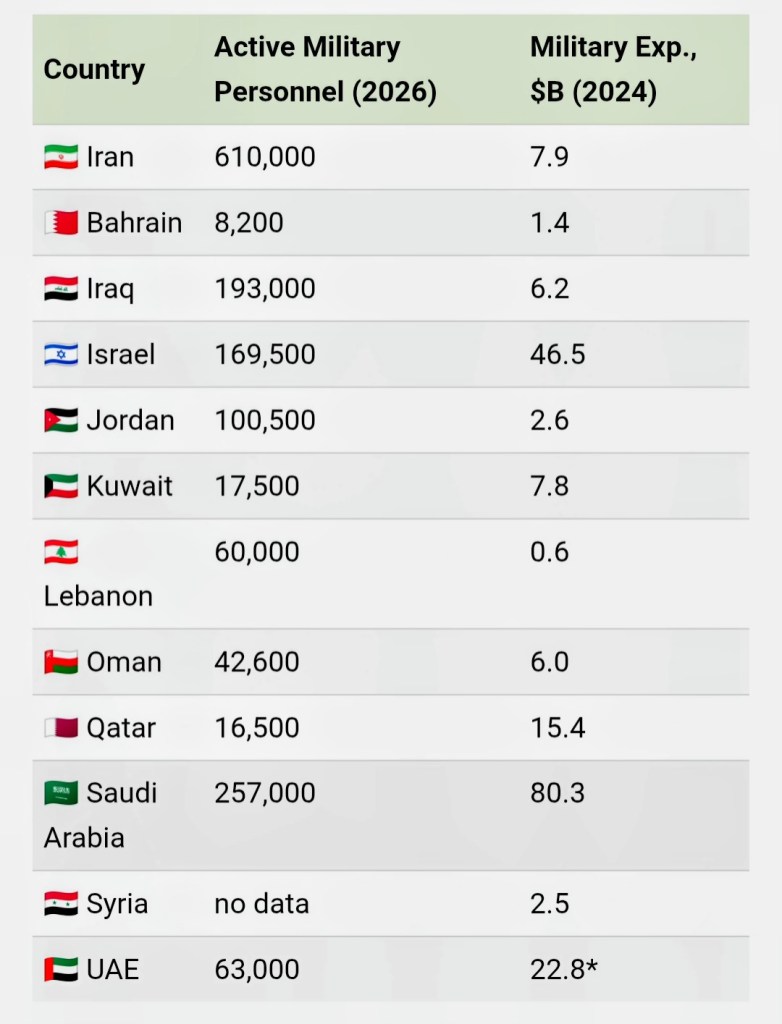
This reflects a different strategic approach than others:
- Iran emphasizes manpower and asymmetric capabilities
- Rivals invest heavily in advanced technology and defense systems
While Israel is often considered more technologically advanced, Iran’s scale and regional influence remain significant factors in the balance of power.
By population, energy resources, and military size, it ranks among the region’s largest players, yet it falls behind wealthier states on economic output per person and defense spending.
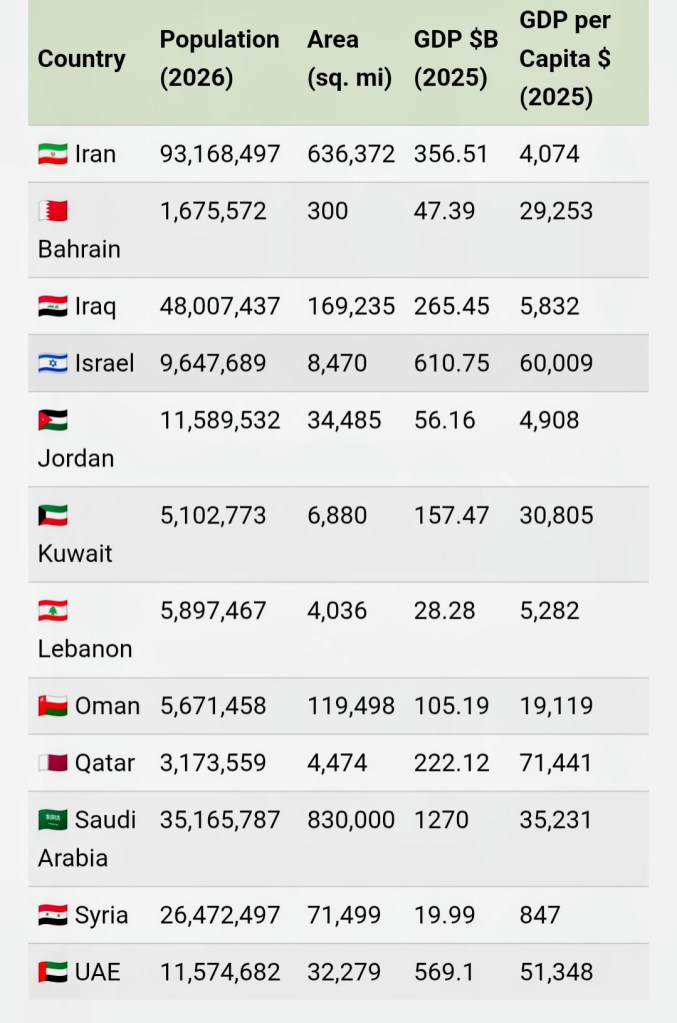
While its total GDP is sizable at roughly $356 billion, it still trails regional leaders like Saudi Arabia and Israel, highlighting the gap between scale and prosperity.
Iran ranks near the top in both oil production and reserves, second only to Saudi Arabia. With roughly 208.6 billion barrels in reserves and daily production of about 4.6 million barrels, it remains one of the region’s key energy players.
Despite this scale, sanctions have constrained exports and investment, limiting output growth relative to Gulf producers like Saudi Arabia and the UAE. Much of the oil exports that do make it out of the country’s borders end up in China.
In 2023, a staggering 89% of Iran’s oil exports went to China, a sharp rise from just 25% in 2017.
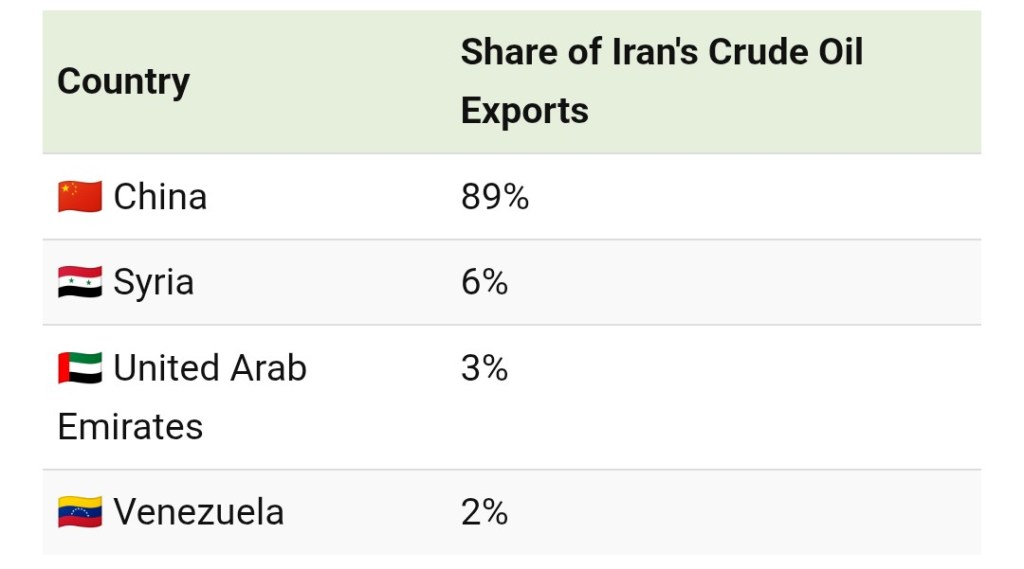
This surge followed renewed U.S. sanctions in 2018, which isolated Iran from most global oil buyers.
Iran is among the world’s largest oil producers, and in recent years, China has become its most critical customer both economically and geopolitically.
As hostilities in the region intensify–marked by U.S. attacks on Iranian nuclear infrastructure. Iranian missile strikes on American bases in Qatar and Iraq occur. China’s access to Iranian oil is increasingly at risk.
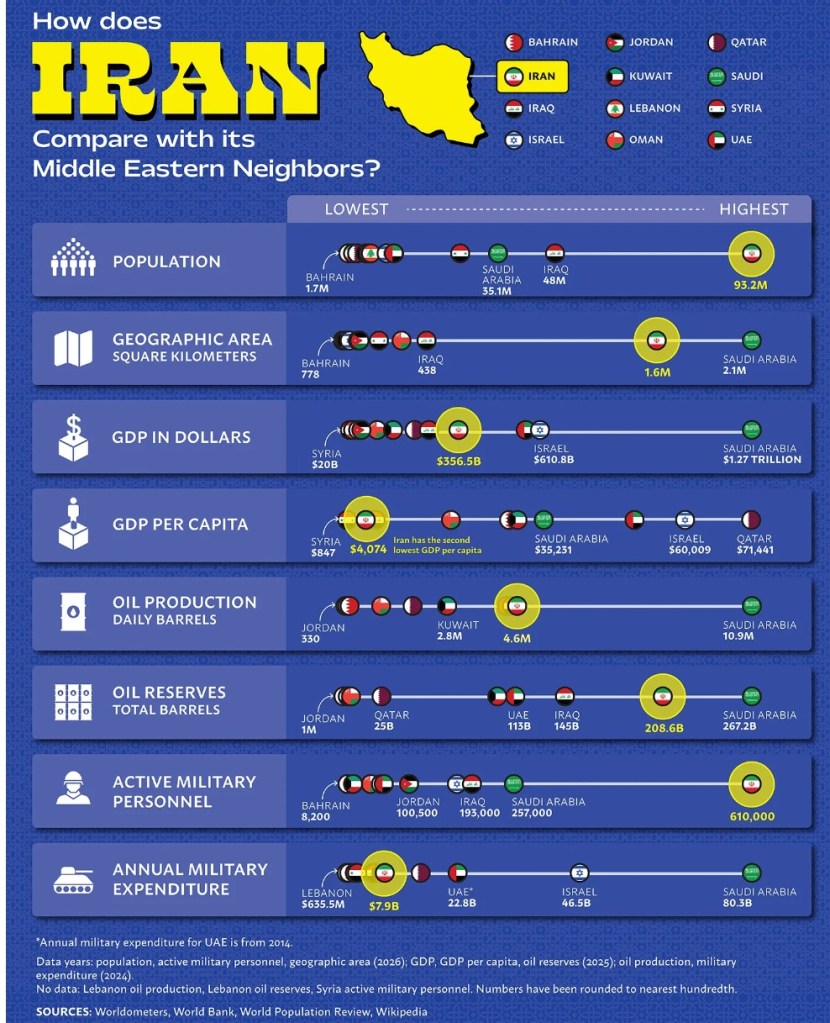
Population size can drive economic potential. However, Iran’s GDP per capita is relatively low at just over $4,000. This suggests that per capita productivity lags behind smaller, richer nations like Qatar and Israel.
To receive free email notification, when we post new articles like this, sign up below. Clever Journeys does & will not sell or share your information with anyone.
In God We Trust

______________
Please Support This Stellar American Owned Business
Get Your Natural Vitamins A & D from the Sea!













 Clever Journeys
So, from a quick view of the graphic, it seems that the one thing that Iran really excels in is that it has a large military (but it hardly pays those soldiers squat).
LikeLiked by 2 people
I know like attracts like, but seems China and Iran should know better than to trust each other.
LikeLike