
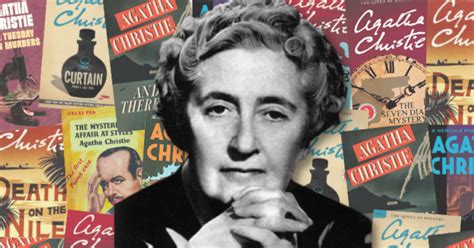
She checked into the hotel under her husband’s mistress’s name—then spent 11 days reading newspapers about her own disappearance.
The world’s most famous mystery writer had become the mystery.
On December 3, 1926, Agatha Christie kissed her daughter goodnight, climbed into her Morris Cowley, and drove into the darkness.
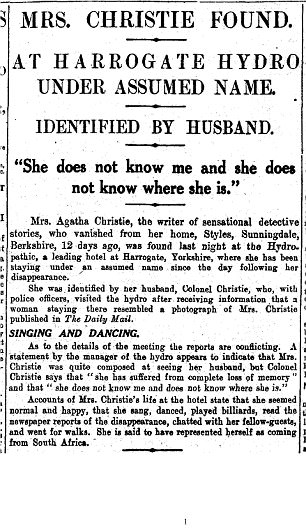
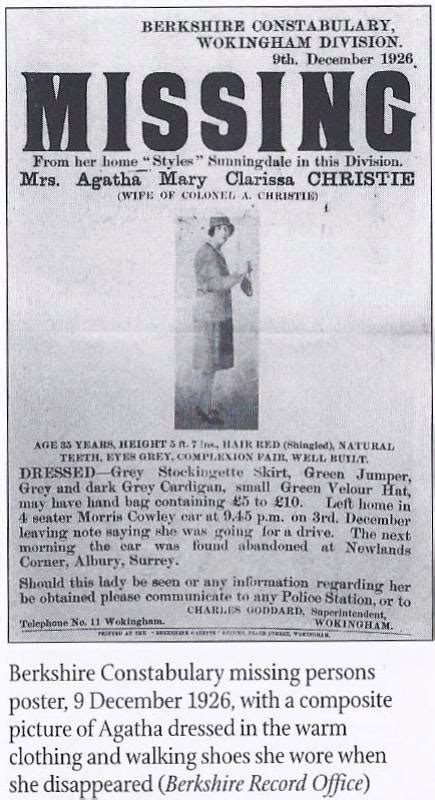
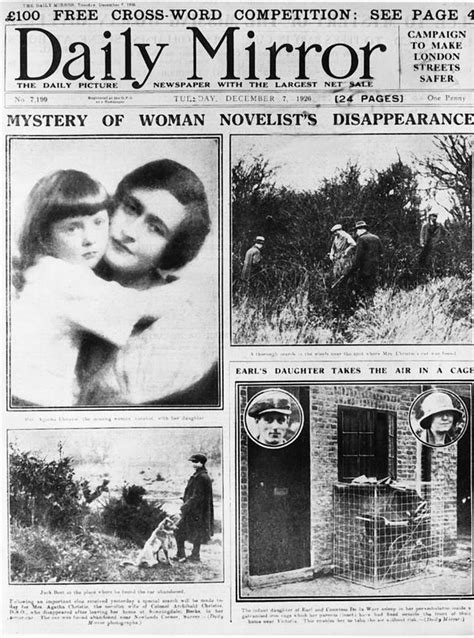
By morning, her car was found abandoned at the edge of a chalk quarry in Surrey—headlights still on, fur coat in the backseat, driver gone.
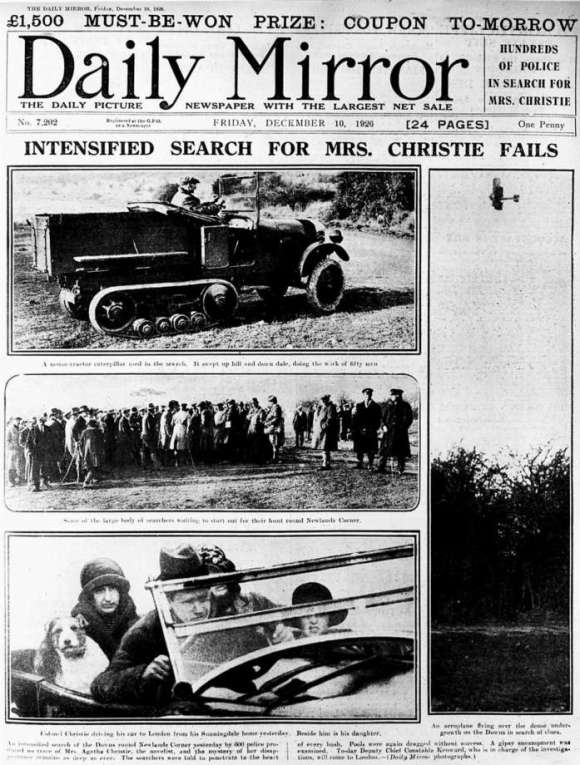
The disappearance ignited the biggest manhunt Britain had ever seen for a missing person.
Over 1,000 police officers scoured the countryside. Fifteen thousand volunteers joined the search. Airplanes—used for the first time in British history for a missing person case—flew overhead scanning fields and forests.
Fellow crime writers joined the hunt. Sir Arthur Conan Doyle gave Christie’s glove to a psychic medium. Dorothy L. Sayers visited the scene, later using it in one of her own novels.
Her husband, Colonel Archie Christie, publicly appealed for her safe return. “I would give £500 if I could only learn where my wife is,” he told reporters.
What he didn’t tell them: he’d asked for a divorce three months earlier. He was in love with his secretary, Nancy Neele, a woman ten years younger than his thirty-six-year-old wife.
The night Christie disappeared, they’d had a vicious fight. Archie left to spend the weekend with his mistress.
The theories flew: Suicide. Murder. Publicity stunt. Revenge plot. The truth was stranger than any of them.
For eleven days, no one could find Agatha Christie.
Because Agatha Christie had ceased to exist.
On December 4th—while police dragged the “Silent Pool” looking for her body—Christie was having tea in London. She visited Harrods, marveling at the Christmas displays.
Then she boarded a train to Harrogate, a spa town 184 miles north.
She walked into the elegant Swan Hydropathic Hotel and signed the guest register.
Name: Mrs. Teresa Neele
From: Cape Town, South Africa
She’d taken the surname of the woman who’d stolen her husband.
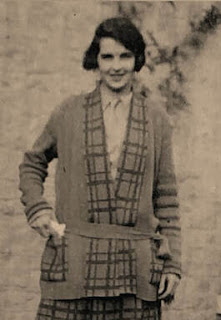
And she’d done it in her own handwriting.
For the next eleven days, “Mrs. Neele” lived a perfectly pleasant holiday. She took the waters at the spa. She played billiards. She danced the Charleston in the hotel ballroom.
She ate breakfast in the dining room, chatting pleasantly with other guests.
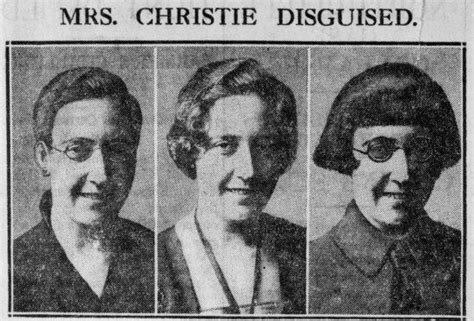
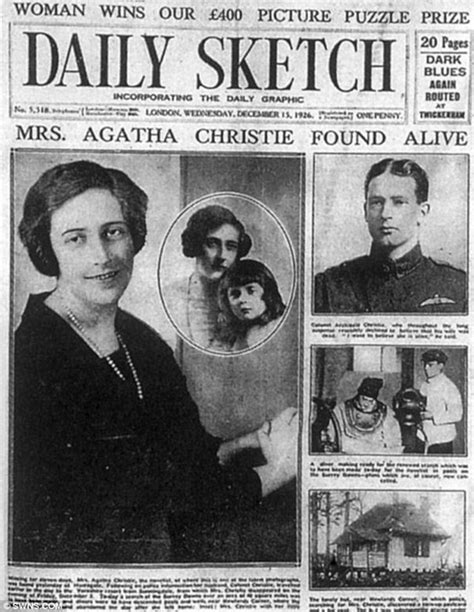
She read the newspapers. Every day. Front-page headlines screaming about the missing mystery novelist. Theories about foul play. Descriptions of the abandoned car. Photos of her own face.
She read them all.
When asked, she said she’d recently arrived from South Africa. This was her first time in England.
Hotel staff and guests found her charming. Lively. Perfectly normal.
None of them recognized the woman whose face was plastered across every newspaper in Britain.
Well—almost none of them.
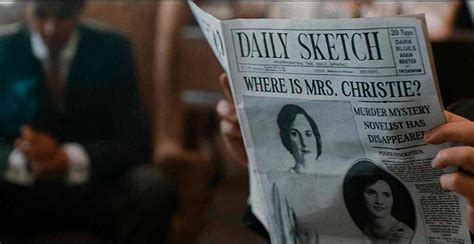
On December 14th, one of the hotel’s banjo players, Bob Tappin, looked at the woman in the dining room. His gaze lingered slightly too long. Then he looked at the newspaper in his hands.
He alerted the police.
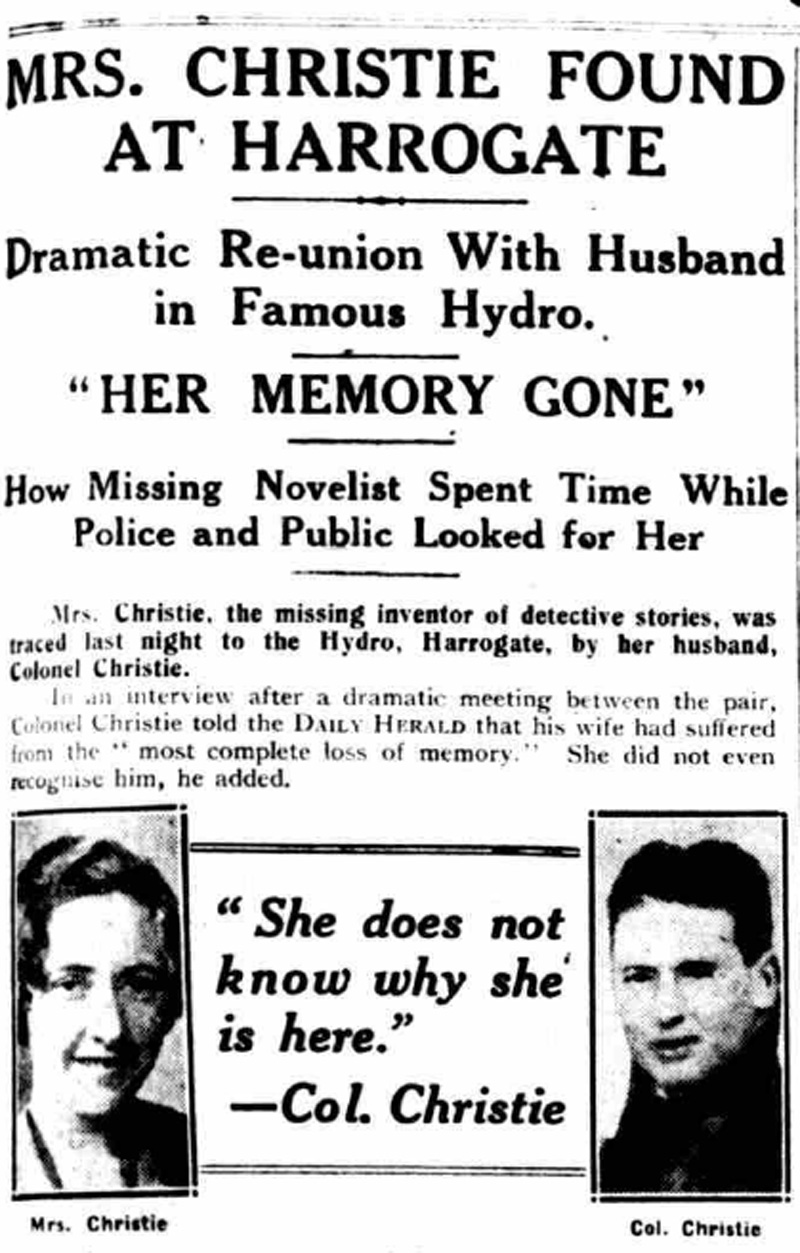
When Archie Christie arrived to collect his wife, she reportedly didn’t recognize him. She called him her “brother.” Two doctors diagnosed her with “complete loss of memory.”
But here’s the thing: You have amnesia. Why would you sign a hotel register with your husband’s mistress’s surname?
Christie never explained. Not to the press. Not to the police. Not even in her autobiography, published after her death.
She wrote only: “The next year of my life is one I hate recalling. So, after illness, came sorrow, despair, and heartbreak. There is no need to dwell on it.”
But researchers later found clues. Christie’s friend Nan Watts left behind papers suggesting Agatha had planned it—not as publicity, but as revenge. To humiliate Archie. To disrupt his affair. To make him the prime suspect in her disappearance.
If that was the plan, it worked.
For eleven days, Archie Christie was Britain’s most hated man. Suspected of murdering his wife to run away with his mistress.
His romantic weekend with Nancy Neele was ruined. His reputation destroyed. His name dragged through the mud.
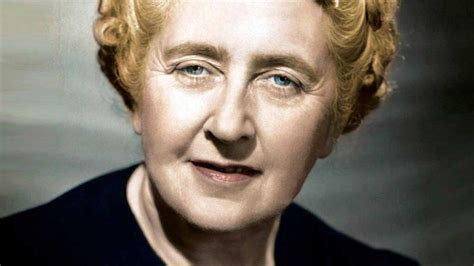
Meanwhile, “Teresa Neele” danced.
The police later charged Christie for the cost of the search—the officers, the volunteers, the airplanes.
She divorced Archie in 1928. He married Nancy Neele a week later.
Christie married archaeologist Max Mallowan in 1930. It was, by all accounts, a genuinely happy marriage. She wrote the vast majority of her 66 novels during this time.
She became Dame Agatha Christie in 1971. The Queen of Crime. The bestselling novelist of all time after Shakespeare.
But she never spoke about those eleven days again.
Not once.
The woman who built a career solving mysteries took her greatest mystery to the grave.
Was it amnesia brought on by grief and trauma? A nervous breakdown so severe she forgot who she was?
Or was it the most brilliant act of revenge ever conceived—a real-life plot worthy of Hercule Poirot himself?
We’ll never know. But here’s what we do know: while the entire country searched for Agatha Christie, she was reading about it in the newspaper. She was drinking tea. She was also dancing under the name of the woman who’d stolen her husband.
If that’s not the most Agatha Christie thing ever, we don’t know what is.
To receive free email notification, when we post new articles like this, sign up below. Clever Journeys does & will not sell or share your information with anyone.
IN GOD WE TRUST


Thanks for supporting independent true journalism with a small tip. Dodie & Jack

CLICK HERE for GREEN PASTURE BENEFITS



Use Code CLEVER10 for a 10% discount on Green Pasture products today!

☆☆☆☆☆
ASEA Wellness
Fueled on Human Potential


Immune Support: Supports cellular health and normal immune function.
Heart Health: Helps maintain healthy circulation and vascular function.
Brain Function: Supports mental clarity and helps reduce oxidative stress.
Digestive Support: Supports digestive enzyme activity and nutrient uptake.

Hormone & Mood Balance: Helps maintain healthy energy and mood signaling.

For more information on ASEA products click here or contact Elizabeth Hajek at 210-779-0994.
Books


☆☆☆☆☆


 Clever Journeys
Intriguing! 🤫✍️📚
LikeLiked by 3 people
Hell hath no fury…. She was a genius! 💕😉📚
LikeLiked by 1 person
That’s exactly the quote I was going to use, Dodie! But you got there first. So, I’ll use one of my own:
“Want to know the fastest way to turn a woman into a B—-? Treat her like she’s got no feelings.”
I wonder if doing that made Agatha feel better?
LikeLiked by 1 person
I like to think so ~ and she pulled it off brilliantly! 💜
LikeLiked by 1 person
Love this. Agatha Christie is one of my favorite authors. I’ve read nearly all of her books; seen the movie and tv serieses. Good stuff!
LikeLiked by 2 people