
To stimulate his creativity, American inventor Thomas Edison used an unconventional technique known as hypnagogia to take advantage of the liminal state between wakefulness and sleep.
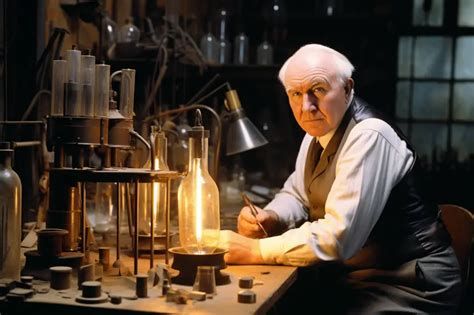
In this state, the mind is between full consciousness and sleep, allowing for greater receptivity to spontaneous ideas and creativity.
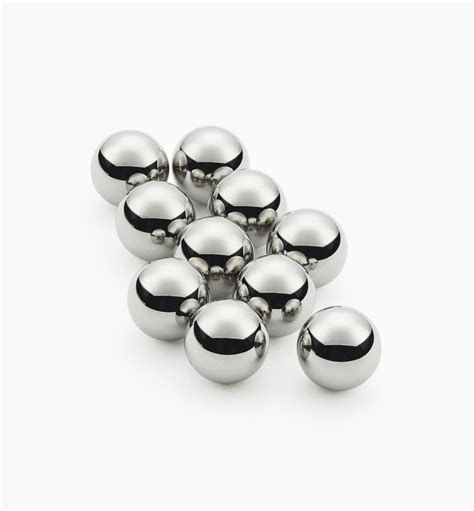
Edison would settle into a comfortable chair, with his arms relaxed, holding steel balls in his hands.
As he drifted into a deep state of relaxation, the balls, which he couldn’t keep in his hands once his mind began to disconnect from wakefulness, would fall to the ground.
The noise from the falling balls would abruptly wake him up, interrupting his drowsiness and giving him access to ideas that emerged in that transitional state between sleep and wakefulness.



This process allowed him to access fragments of thoughts and creative solutions that would not have emerged with a more logical or rational approach.
In the hypnagogic state, the brain undergoes a phase of creative release, when the mind is less constrained by linear logical thinking and is freer to explore unusual connections and associations.
Edison was convinced that this state allowed him to discover revolutionary ideas and new concepts that otherwise would not have arisen in his conscious mind.
Additionally, Edison was deeply interested in the power of the subconscious and how it could be used to his advantage.
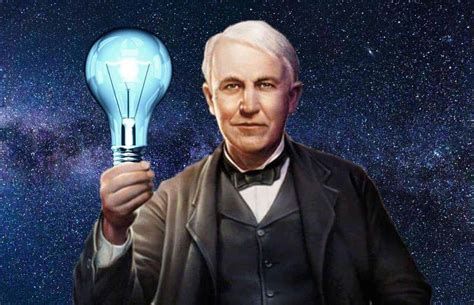
Throughout his life, he advocated for the importance of intuition and nonlinear thinking, which he trusted to find solutions to the complex problems he faced in his inventions.
Using this technique, Edison became one of the most prolific inventors in history, with over a thousand patents to his name.
Among his thousands of inventions were the following:
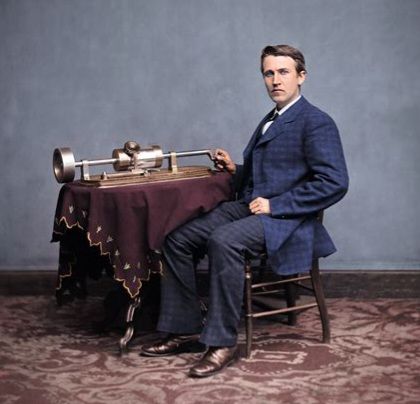
● Phonograph (1877)
● Incandescent Light Bulb (1879). Plus, his complete electrical lighting system included switches, fuses, and meters, ensured that his invention could be adopted on a large scale, ushering in the era of electrified homes and cities.
● Motion Picture Camera (Kinetograph) and Viewer (Kinetoscope) (1891)

● Established the World’s First Industrial Research Laboratory (1876)
● Carbon Microphone (1877-1878)
● Electric Power Distribution System (1882)
● Establishing the world’s first Motion Picture Studio (Black Maria in 1893)
● Alkaline Storage Battery (1901)
☆☆☆☆☆
IN GOD WE TRUST

Thanks for supporting independent true journalism with a small tip. Dodie & Jack

Dodie & Jack Dennis are regular customers of Green Pasture. Highly recommended.
Green Pasture Here!


Use Code CLEVER10 for a 10% discount on other Green Pasture products today!


Get Your Natural Vitamins A & D from the Sea!

☆☆☆☆☆


See details here!




 Clever Journeys
Thanks for the refresher course on Edison. He certainly sparked his fertile imagination using his steel balls. 🙂
LikeLiked by 1 person
i do this once in a while, i call it a power knap, the problem i have is being able to snap out of the power knap before i fall asleep, the balls seem like a good idea, i will have to try it
LikeLiked by 2 people
I am finally getting to the point that I enjoy naps too. Thanks
LikeLiked by 1 person
for me i can’t nap, it affects my sleep, so the power nap does not because i don’t really take a nap, do you understand
LikeLiked by 2 people
Absolutely. When I was a busy executive, I took every chance (planes, etc) to power nap.
LikeLiked by 1 person
He hit on his God connection; the Source of creativity and energy. It’s like when you deliberately get quiet just to listen, which often takes time, just to hear Him. But Edison’s method is like, genius. What a mind.
LikeLiked by 2 people
You are so eloquently observant.
LikeLiked by 2 people
Maybe that springs from my frequent naps–me, who used to go all day without a windup.
LikeLiked by 2 people