
This 11 to 15-year-old girl lived in the Inca empire and was sacrificed 500 years ago as an offering to the gods.
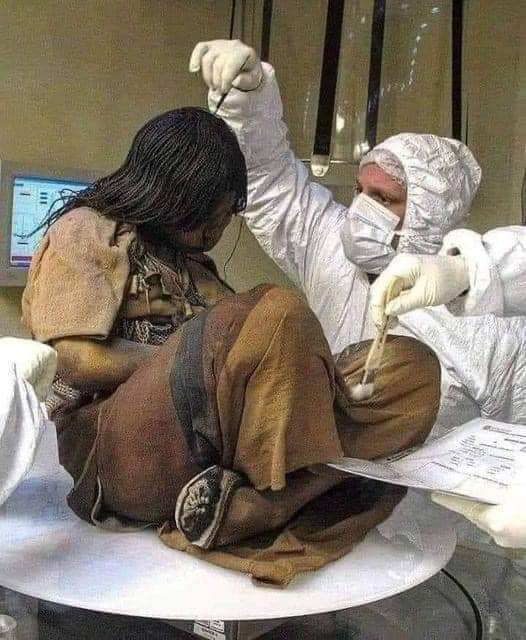
Considered to be among the best-preserved bodies from the Inca period, the so-called Children of Llullaillaco sit on display in a museum in Salta, Argentina, as a grim reminder of the country’s violent past. And, as subsequent discoveries proved, the 500-year-old Inca girl and two other children were plied with drugs and alcohol before they were killed.
She is preserved this well because she was frozen during sleep and kept in a dry cold condition at more than 6000 meters above sea level all this time. No other treatment was necessary.
The Llullaillaco Maiden probably had a name, but that name has been lost to time. While it’s unclear precisely what year she lived — or what year she died — what’s clear is that she was approximately 13 when she was sacrificed.
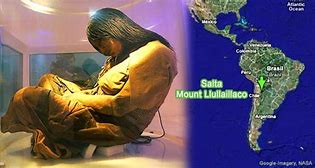
What’s more, she lived during the height of the Inca Empire, in the late 15th to early 16th century. As one of the best-known pre-Colombian empires of the Americas, the Inca arose in the Andes Mountains of what is today known as Peru.
According to National Geographic, scientists tested her hair to find out more about her — what she ate, what she drank, and how the 500-year-old Inca girl lived. The tests yielded interesting results. What they revealed was that the Llullaillaco Maiden was most likely selected for sacrifice about a year before her actual death, which explains why her simple diet was suddenly switched to one filled with maize and llama meat.
The tests also revealed that the young girl increased her consumption of both alcohol and coca — the root plant that, today, is processed for cocaine. The Incans likely believed this allowed her to communicate more effectively with the gods.
“We suspect the Maiden was one of the acllas, or chosen women, selected around the time of puberty to live away from her familiar society under the guidance of priestesses,” said archaeologist Andrew Wilson of the University of Bradford.
Found in 1999 near the top of the Llullaillaco volcano, in northwestern Argentina, she was an archaeological revolution for being one of the best preserved mummies, since there was even blood in her body and her internal organs remained.

Child sacrifice, in fact, was common amongst the Incans, the Mayans, the Olmecs, the Aztecs, and the Teotihuacan cultures.
And while each culture had its own reasons for sacrificing children — and the ages of the children varied from infancy to early teenage years — its main driving factor was the placating of various gods.
In the Incan culture, child sacrifice — capacocha in Spanish, and qhapaq hucha the native Quechua language of the Incans — was a ritual performed often to stave off natural disaster (such as famine or earthquakes), or to document important milestones in the life of a Sapa Inca (a chieftain). The mentality behind the qhapaq hucha was that the Inca were sending off their best specimens to the gods.
☆☆☆☆☆
IN GOD WE TRUST

Thanks for supporting independent true journalism with a small tip. Dodie & Jack
Green Pasture Here!

Use Code CLEVER10 for a 10% discount on other Green Pasture products today!


CINDY LEAL MASSEY, TEXAS AUTHOR
________________

CLICK: PARK LANE by Rebecca Taylor

 Clever Journeys
She looks good for an old lady. Wonder if we could do the same to old sniffer?
LikeLiked by 2 people
A sad story. I can not believe how well preserved she is.
LikeLiked by 2 people